Settler arson in the West Bank: mosques burned and a deadly clash as arrests spike
Reuters wires report Israeli settlers set fire to West Bank mosques after a deadly clash, as the Palestinian Prisoner's Club says roughly 60 Palestinians have been arrested overnight, including women and freed prisoners.
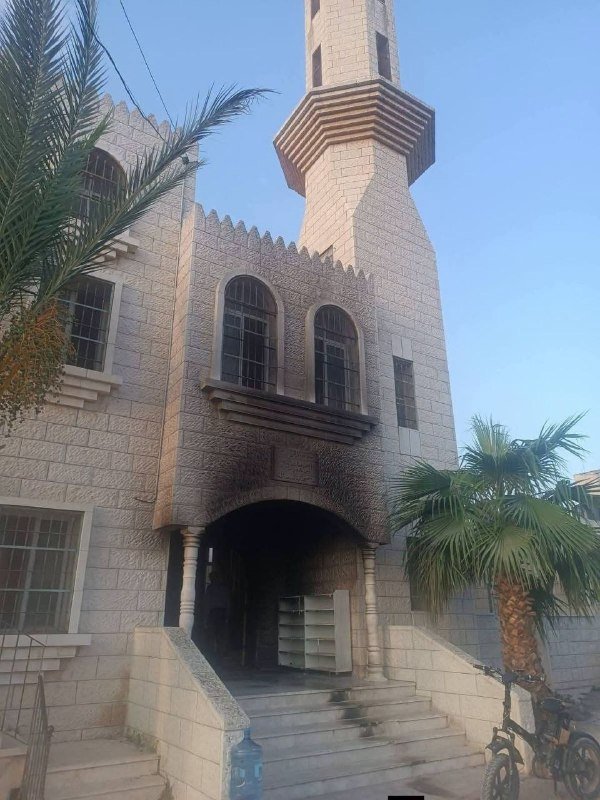
At 09:45 UTC on 26 July 2026, Reuters moved a wire with the headline: "Israeli settlers set fire to West Bank mosques after deadly clash." Twelve minutes earlier, the Palestinian Prisoner's Club had told Al Alam Arabic that occupation forces had arrested roughly 60 Palestinians across the West Bank in a single overnight sweep, including three women and freed prisoners. Twelve minutes after that, the same source described the arrests as part of a "policy of collective punishment" running in parallel with the settler attacks. By mid-morning, Palestine Chronicle had aggregated the day's pattern: settlers and Israeli forces intensifying operations across the occupied territory, with mosques burned, civilians assaulted, and movement restrictions tightened.
The story, in other words, is not one arson or one raid but a coordinated pressure campaign: civilian religious sites targeted, mass arrests running alongside, and the language of "collective punishment" already on the record from a Palestinian prisoners' organisation. What follows is what the wire and the Telegram-side reporting actually establishes, and what it does not.
What the wires confirm
Reuters is the load-bearing source for the headline fact. Its 09:45 UTC post states plainly that "Israeli settlers set fire to West Bank mosques after deadly clash." The Reuters post carries no casualty figure, no mosque name, and no location within the West Bank in the visible text; readers are pointed to the linked story at reut.rs/4fZWBz for the specifics. That link is shortened and the article body is not in the available source items, so the specifics of the "deadly clash", where, who died, which armed actors were involved, are not established by the supplied material. They must be treated as reported by Reuters but not yet transcribed here.
Palestine Chronicle, citing the field reporting it aggregated on the same day, adds the broader frame: "Israeli occupation forces and illegal Israeli Jewish settlers intensified attacks across the occupied West Bank, burning mosques, assaulting Palestinians, and tightening movement restrictions." Palestine Chronicle explicitly characterises the settlers as "illegal," a position consistent with the long-standing international-law consensus that civilian settlement in occupied territory is unlawful. The wire outlets used in this article, including Reuters, generally avoid that characterisation in their own ledes, preferring the neutral "Israeli settlers" phrasing. Both formulations refer to the same population; the political weight differs.
What the Palestinian Prisoner's Club is reporting
The two Al Alam Arabic posts, at 09:27 and 09:30 UTC, give the arrest picture. The Prisoner's Club, a Palestinian civil-society organisation that tracks detentions, says occupation forces arrested about 60 Palestinians overnight, including three women and freed prisoners (people previously released, often in prisoner exchanges, who have since been re-detained). The second post frames the wave as "a policy of collective punishment coinciding with the settlers' aggression."
Two caveats apply. First, the Prisoner's Club is a partisan Palestinian source; its numbers are widely cited in regional reporting but are not independently audited. Second, the framing of "collective punishment" is the Club's own analytical language, collective punishment is a specific legal category under the Fourth Geneva Convention, and the use of the term is itself a claim about the operation's purpose, not a neutral description. Reuters' visible post does not adopt that frame. The gap is meaningful: it tells the reader which side is using which vocabulary.
The structural picture in plain language
West Bank escalation in 2026 sits inside a longer pattern in which settler violence and military operations reinforce each other, with Palestinian civilians caught in the middle of both. The day's reporting illustrates the mechanism in compressed form. A deadly clash, the trigger event whose specifics the available sources do not yet specify, is followed by settler arson against religious sites and a simultaneous mass arrest sweep, with movement restrictions tightened around the same window. Each element on its own would be a serious incident. Bundled inside a single 24-hour cycle, they read as a deliberate composite.
Monexus assessment: the sequencing is the story. When arson, raids, and arrests arrive on the same morning, with an occupying power's forces on scene for at least the third of those three, the operational question is no longer whether violence is occurring but who is coordinating what, and at what level of authority. The available source items do not specify that level. They establish the surface events with high confidence and the underlying command structure with none.
What the sources do not specify
The supplied material leaves several first-order questions unanswered. The Reuters post does not name the location of the burned mosques, the dead from the preceding clash, or the armed actors involved. The Prisoner's Club numbers, roughly 60, three women, freed prisoners, are not yet cross-referenced against Israeli police or IDF statements in the available items. The phrase "collective punishment" is, as noted, a contested legal characterisation rather than a confirmed operational doctrine. And the relationship between the settler arson and the military arrest wave, coincidence, tacit coordination, or explicit order, cannot be inferred from these sources alone.
A reader who needs the operational specifics should watch for the next IDF or Israel Police statement on the day's incidents, and for the fuller Reuters article behind the 09:45 UTC headline. Until those land, the established record is: a deadly clash, settler arson at West Bank mosques, roughly 60 arrests, and a Palestinian civil-society characterisation of the whole day as collective punishment. Everything else is scaffolding.
How Monexus framed this: the wire (Reuters) carries the arson headline; the Palestinian-side source (Palestine Chronicle, Prisoner's Club via Al Alam Arabic) carries the arrest count and the framing. We have kept the two pipelines distinct and labelled each claim to its origin rather than blending them into a single voice.
Wire provenance
This editorial synthesis draws on the following public wire/social posts:
- https://x.com/Reuters/status/2081314874357878807
- http://reut.rs/4fFZWBz
- https://www.palestinechronicle.com/illegal-israeli-jewish-settlers-burn-mosques-amid-escalating-west-bank-assaults/
- https://t.me/PalestineChronicle/3846
- https://t.me/alalamarabic/489956
- https://t.me/alalamarabic/489955