Tehran and Muscat talk Hormuz in plain sight, but the cargo keeps moving
Iranian and Omani envoys met in Tehran across Friday and Saturday to discuss 'safe shipping traffic' in the Strait of Hormuz. Both sides call the talks useful; traffic in the strait is unchanged.
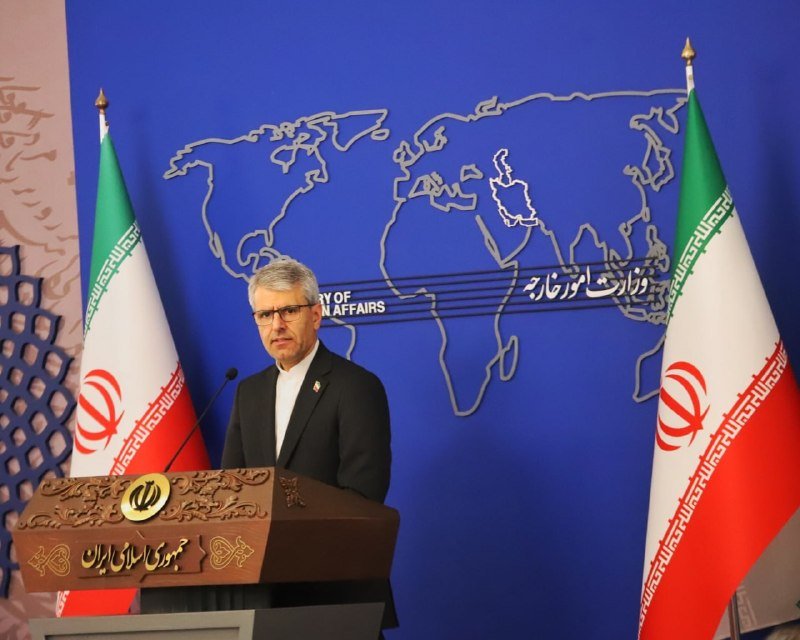
Iranian and Omani negotiators spent Friday and Saturday behind closed doors in Tehran, hashing out the technical and political terms for keeping the Strait of Hormuz open. By the time Iranian Foreign Ministry spokesman Esmail Baghaei briefed reporters on Saturday morning, the read-out from both sides carried the same shape: the talks were useful, progress was made, and nothing on the water had changed.
That combination, movement on paper and stillness on the water, is the story. Tehran and Muscat are negotiating in public view, with statements from the Iranian foreign ministry, Press TV, Tasnim, Fars and Al-Alam landing within a one-hour window on 26 July 2026. Each one frames the talks as productive. None claims a breakthrough. CBS News, cited by Fars, said the discussions had "progressed," quoting two sources, but stopped well short of an agreement. The single most concrete fact in the entire read-out cycle belongs to the spokesman: there has been no change in the traffic situation in the strait.
A chokepoint running in real time
Roughly a fifth of the world's seaborne oil passes through the 21-mile-wide shipping lane between Iran and Oman, and any disruption transmits faster than any communique. So the operational baseline matters more than the diplomacy. Baghaei's Saturday statement, relayed by Press TV, was explicit on the point: technical and political consultations continued, and the strait's traffic situation is unchanged.
That message was reinforced from four other corners of the Iranian media stack within the same hour. Tasnim's English channel said the two sides had exchanged views on "the management of safe shipping traffic" and confirmed no change to flows. Al-Alam, the state Arabic-language outlet, reported the technical talks under Baghaei's name. Fars framed a CBS News item as evidence the discussions had advanced. And OSINTLive, reposting Al Arabiya English, carried Baghaei's characterisation of the talks as productive straight through to a wider Middle East-watching audience.
Read together, the picture is a calibrated one. Tehran is signalling that conversations are happening and that they are constructive. It is not signalling that anything on the water is at risk.
What the Omani role actually is
Oman's position in the Gulf is structurally distinct, and that is what makes Muscat the natural interlocutor. It shares the southern shore of the strait, keeps diplomatic lines open to both Tehran and Washington, and has historically brokered quiet back-channels during periods of escalation. A wfwitness summary of Baghaei's remarks, circulated on Telegram at 06:15 UTC on 26 July, framed the consultations as covering both the technical and the political, a phrase repeated almost verbatim by Iranian state outlets.
That the talks are being held in Tehran rather than Muscat is itself worth noting. It positions Iran as host and Oman as guest, which is consistent with how Tehran wants this read: substantive engagement on Iranian soil, with an actor that the United States and its Gulf partners treat as a credible, non-aligned mediator. There is no claim in the source items of any third-party presence, no mention of US, Chinese, or European officials in the room. The available reporting describes a bilateral track.
The line the Iranian outlets are choosing not to cross
For all the volume, the Iranian-language coverage is disciplined. Tasnim frames the subject as the "management of safe shipping traffic." Press TV describes "useful" talks that "made progress." Fars uses CBS's word, "progressed," and adds nothing of its own. Al-Alam sticks to "technical talks." Baghaei's own line, on the record via state media, is that traffic is unchanged.
The omission is as loud as the content. There is no Iranian official claim, in the source items, of any new leverage exercised, any closure threatened, any precondition set. The implicit message to shippers, insurers, and oil traders is: do not reprice. The implicit message to foreign ministries is: this is a working channel, and it is open.
Stakes and what to watch next
The narrow stakes are immediate. Roughly a fifth of seaborne oil transits Hormuz; insurance and freight pricing moves on the slightest credible signal of disruption, and even verbal signalling from Tehran has historically moved the curve. For now, the curve is being held flat by the parties most invested in moving it. Monexus analysis: the next legible signal will be a second round of consultations, a location, or a third-party acknowledgement. None has yet appeared in the cited reporting.
The wider stakes are structural. Iran and Oman have a recurring interest in keeping the strait open under managed conditions, because the alternative, an uninsured, uninsurable Hormuz, hurts everyone including Tehran. What is unusual here is not the existence of the channel but the volume and synchronisation of the read-out. Five Iranian state-aligned outlets carrying the same line within an hour is a coordinated public posture, not an unscripted leak. Whether that posture holds will be visible in the next 48 to 72 hours: if a second round is announced, or if Oman's foreign ministry issues its own read-out, the channel has become a track. If silence returns, this read-out was the track.
This article relied exclusively on Telegram-channel reporting from Iranian state outlets and the OSINTLive republication of Al Arabiya English on 26 July 2026. No first-party statements from the Omani foreign ministry, the US State Department, or shipping authorities were available in the cited items; Monexus has therefore not characterised any of those actors as silent or absent.
Wire provenance
This editorial synthesis draws on the following public wire/social posts:
- https://t.me/wfwitness/104922
- https://t.me/osintlive/559253
- https://t.me/presstv/200372
- https://t.me/FarsNewsInt/257564
- https://t.me/tasnimnews_en/27949
- https://t.me/alalamfa/347797