Vehicle rams Berlin Pride crowd; one dead, suspect detained
A driver rammed a vehicle into pedestrians at Berlin's Pride march on 25 July 2026, killing at least one and injuring around 15, according to early wire reporting; the driver was later reported detained.
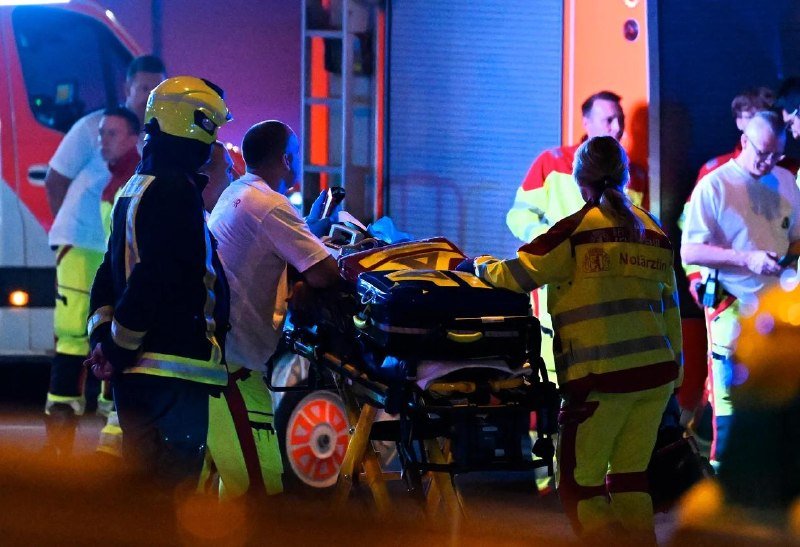
A vehicle drove into a crowd attending Berlin's Pride march in the German capital's city centre on 25 July 2026, killing at least one person and leaving roughly 15 injured, according to early wire reporting. Posts relayed by Telegram channels moved within hours of the incident, and by late evening UTC the driver had been reported apprehended.
The episode lands inside a European public-safety landscape shaped by years of vehicle-ramming incidents at public gatherings. Monexus analysis: even before a motive is established, the targeting of a Pride event in a NATO capital during peak summer puts a familiar set of questions on the table, about extremist intent, about policing of large open-air events, and about how German authorities calibrate a public response that respects both security and the symbolic weight of the gathering itself.
The night of 25 July, in the order the wires moved
The BBC was among the first tier-1 wires to carry the story, posting at 21:33 UTC that "several injured at Berlin Pride after reports vehicle drove into crowd" and that police said an intensive manhunt was under way. The South China Morning Post followed with a headline tally of "1 killed, several injured at Berlin pride parade, after car drives into crowd," relayed through its Telegram channel and on its website.
PressTV, the Iranian state English-language broadcaster, posted at 21:22 UTC and again at 21:55 UTC that several casualties had been reported and a state of emergency declared in Berlin. A third PressTV post at 23:50 UTC added that "the driver of the vehicle that rammed into pedestrians in Berlin has been apprehended," with "one reportedly killed, at least 15 injured." The Russian-aligned tracking channel Russian-Intel, posting at 22:22 UTC, reported that a car had driven into a crowd at the Berlin Pride parade, injuring several, with the suspect still on the loose.
A later post by the OSINT aggregator Osint Live, citing eyewitness accounts carried on X by the German weekly Junge Freiheit, said one suspect had been detained. The casualty figures most consistently carried across the available reporting are one dead and a double-digit injury toll, with the precise count subject to revision as Berlin's state authorities consolidate their numbers.
The available source items do not specify a confirmed identity for the driver, do not specify whether any group has claimed responsibility, and do not specify whether German federal prosecutors have taken over the case from local police.
What the framings already differ on
Even at this early stage, the tone of the coverage was splitting along familiar lines. PressTV's posts emphasised the casualty count and the state of emergency, the language of a major public-order breakdown. The SCMP headline was matter-of-fact, in the style of a regional desk filing. The BBC's framing placed the police response, the manhunt, the official confirmation, at the centre. Russian-Intel cast the incident inside its standing frame of European security deterioration, leading on the suspect still at large in its first post and updating as the picture changed.
Monexus analysis: vehicle-ramming attacks on public events are now an established category in European counter-terror and policing planning, but the political reception of each new incident tends to be shaped less by the underlying tactic than by the identity of the venue targeted and the identity of the suspected perpetrator. A Pride event in a Western European capital draws a particular kind of political response because of the target's symbolic meaning to far-right extremist networks that have historically named Pride gatherings as targets. None of the available source items establishes a motive.
The sourcing for the early hours is also worth naming. The relay traffic that carried the first wave of global headlines came from an unusual stack: an Iranian state English-language broadcaster, a Hong Kong-based English-language wire, the BBC, an OSINT aggregator reposting a German right-of-centre weekly, and a Russian-aligned tracking channel. Monexus analysis: that mix does not mean German agencies were slow; German police typically use press conferences and direct press pool feeds for incident briefings, and those channels may not have surfaced in the immediate aggregator window. What it does mean is that the first wave of globally distributed headlines was shaped by non-German sources, each with its own editorial framing.
What is solid, and what the sources do not specify
The solid core: a vehicle drove into a crowd at Berlin's Pride march on 25 July 2026; at least one person died and a double-digit number were injured; police said an intensive manhunt was under way; the driver was later reported apprehended.
What the available source items do not specify: a confirmed motive; a confirmed identity for the driver; a confirmed statement from Berlin's Senator for the Interior or from the federal interior ministry; a confirmed handover to German federal prosecutors; the exact casualty count beyond "one" dead and a figure around 15 injured; whether the rest of the weekend's Pride events will go ahead as planned. On the vehicle itself, several outlets that surfaced after the initial relay window described it as a van, but those descriptions are not present in the source items available to this article, so the available reporting does not specify whether the vehicle was a car, a van, or another type.
The next 48 hours
Three things will determine the political weight of the incident once German domestic reporting fills the gap. First, the identity of the driver and any prior contact with security services: German federal prosecutors will normally take over if there is an extremist-terrorism angle, and that handover typically triggers a more formal press rhythm. Second, the casualty count, whether the final figure lands closer to the one-dead baseline carried by SCMP and the BBC or the higher count carried in some PressTV posts. Third, whether Berlin's Pride organisers push ahead with the rest of the weekend's events or scale them back, a decision that will be read as both a security and a political signal.
For now, the working assumption from the available sourcing is that one person has died, around 15 are injured, the driver has been detained, and the venue was a Pride march in central Berlin on 25 July 2026. The motive, the identity of the dead and injured, and any official statement from the German interior ministry remain unconfirmed in the public reporting available at the time of writing.
This article draws on early wire and aggregator traffic; German domestic reporting will likely dominate the public record within hours of publication. Monexus will update as Berlin police and federal prosecutors publish confirmed figures and any statement of motive.
Wire provenance
This editorial synthesis draws on the following public wire/social posts:
- https://www.bbc.co.uk/news/articles/clyqzylz3zno?at_medium=RSS&at_campaign=rss
- https://www.scmp.com/news/world/europe/article/3361856/berlin-pride-parade-called-after-car-drives-crowd
- https://t.me/SCMPNews/108229
- https://t.me/presstv/200351
- https://t.me/presstv/200343
- https://t.me/presstv/200340
- https://t.me/rnintel/64932
- https://t.me/osintlive/559227
- https://www.bbc.co.uk/news/articles/clyqzylz3zno?at_medium=RSS&at_campaign=rss
- https://www.scmp.com/news/world/europe/article/3361856/berlin-pride-parade-called-after-car-drives-crowd
- https://t.me/SCMPNews/108229
- https://t.me/presstv/200351
- https://t.me/presstv/200343
- https://t.me/presstv/200340
- https://t.me/rnintel/64932
- https://t.me/osintlive/559227