When the megaphone stops working: Morgan Stanley, Polymarket, and the limits of the social-media presidency
Morgan Stanley says Trump's posts no longer move markets like they once did. Polymarket puts a 4% probability on repealing the 22nd Amendment. Two clean reads of the same underlying re-pricing.
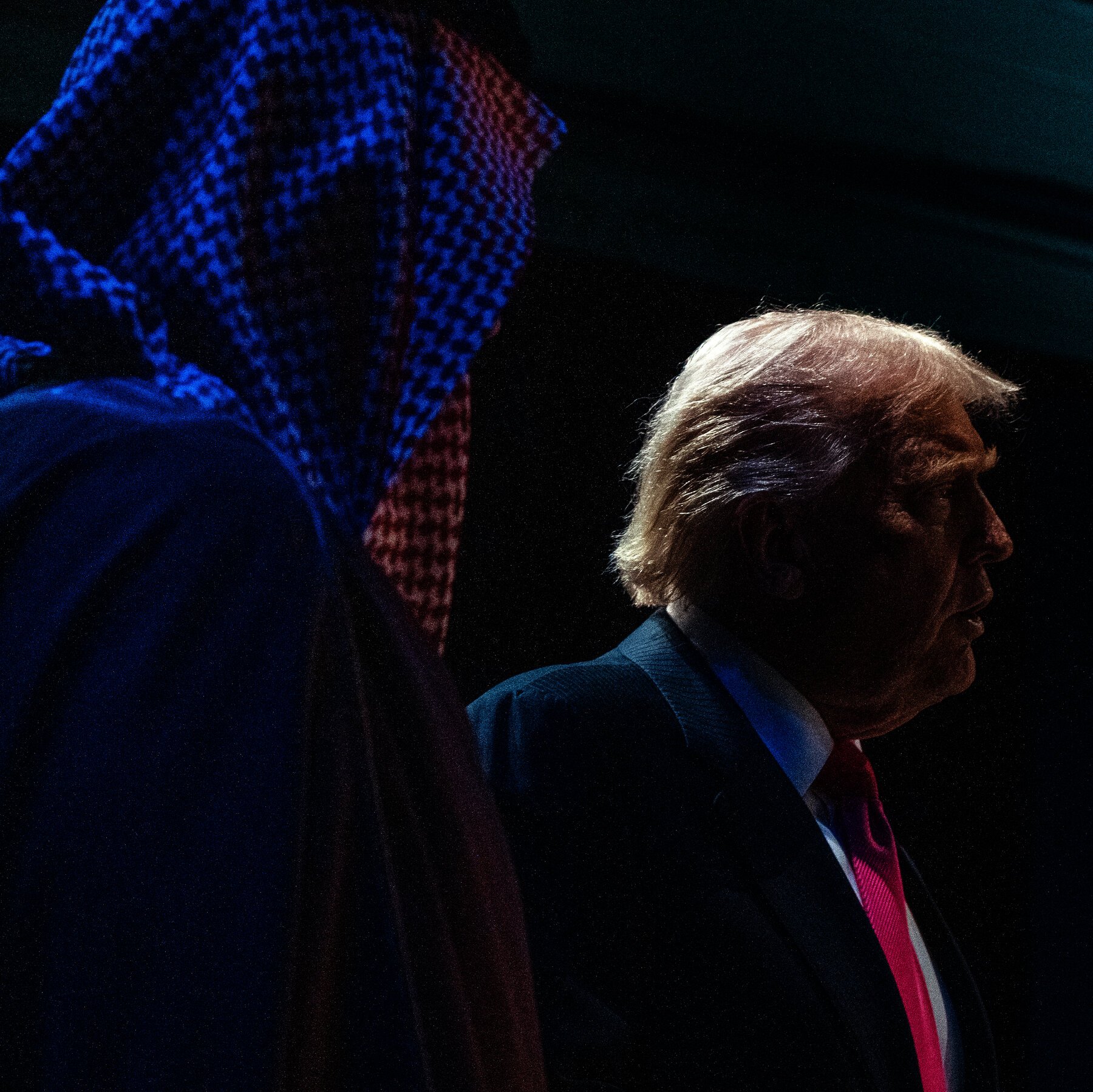
For most of a decade, the line between a Truth Social post and a futures open has been the cleanest trade in American politics. Post a tariff threat, watch the Dow twitch. Float a regulatory grudge against a specific CEO, watch that stock lurch. The president's mouth was, in practice, an options desk, and the algorithms that price US equities had been trained on it.
That trade is breaking.
On 25 July 2026, the trading account Unusual Whales relayed a Morgan Stanley assessment that Trump's posts no longer move markets like they used to. The mechanism, as one X user summarised it the next morning, is the last tool in the toolbox: investors have started to discount the signal. The headline that once reliably moved the tape now moves less of it, because the audience has learned to wait for the policy underneath.
Read that as a verdict, not a complaint.
The social-media presidency, priced in
The Morgan Stanley observation reads, in our assessment, as a textbook case of an adaptive pricing engine de-weighting a signal source that has stopped producing reliable forward motion. Whether that de-weighting is large or small in any given session, the direction is the one Morgan Stanley is flagging.
Consider the chain, as the framing suggests it operates. A Trump post triggers algorithmic re-pricing. Counter-traders fade the move. The volatility the post was supposed to generate gets absorbed by market makers who, having watched the same pattern repeat, have already built hedges against it. The president's reach shrinks, post by post, until it is roughly the reach of any other loud account. None of this is verified in the cited materials as a literal description of any specific session; it is the structural story that the Morgan Stanley note, as relayed by Unusual Whales, invites.
This is not the death of political volatility. It is the death of uniquely Trump-shaped volatility. The economy still has plenty of news that moves it. The geopolitical cycle still moves defence and energy names. What has changed, per the Morgan Stanley framing, is that the source everyone assumed was special turns out, on inspection, to be just one input among several, and a less reliable one than advertised.
Polymarket's quiet verdict
The same week, the prediction market Polymarket priced a 4% probability on Trump repealing presidential term limits, specifically on the contract asking whether the 22nd Amendment will be repealed. Polymarket's interface is, for all its rough edges, one of the closest things the public has to a continuous, money-backed referendum on questions that sit between the plausible and the unlikely.
Four percent is not zero. It is the market's polite way of saying: not yet, not credibly, but the file is open and we are not going to pretend the question is absurd.
Stack the two data points. The Morgan Stanley note, as Unusual Whales reported it, says the market no longer reacts to Trump as a category of news with the force it once did. The Polymarket contract says the market does not believe the president has the leverage, even within his own coalition, to attempt the most ambitious reshaping of the term-limits architecture of the American constitutional order. Both, on the reading we find most natural, are expressions of the same underlying judgment: the visible power is larger than the actual power.
There is a third data point, less commented on. On 24 July 2026, Morgan Stanley separately assessed, per a Crypto Briefing Telegram relay, that a SpaceX valuation of $100 billion would effectively price the underlying AI business at zero. That is a statement about the gap between narrative and unit economics inside one specific private company, but it generalises. The same analytical posture that says SpaceX's AI business is being subsidised by SpaceX's launch business is the posture that says Trump's market-moving posts are being subsidised by the assumption that they will eventually translate into policy. When that translation fails to occur, both valuations reset. Monexus analysis: this is the cleanest framing the three data points, taken together, support.
The structural read, in plain language
What is happening, on our reading of the cited material, is a slow separation of influence from authority. Influence is the capacity to attract attention; authority is the capacity to convert that attention into binding decisions. The political project in question has spent years maximising the first while the second drifted. Markets, which are indifferent to theatre and obedient only to outcomes, have a way of noticing the drift before the press does.
There is also a feedback loop the White House cannot easily break. Every administration that markets decide to no longer react to faces a choice: either deliver policy that surprises, in which case the posts regain some signalling content, or accept that the social-media channel has been converted into a polling instrument rather than a governing one. The first option is constrained by the political coalition; the second is constrained by the vanity of the office. The Morgan Stanley note is, on this reading, an early signal that the second path is the one currently being walked.
Stakes, and what to watch
The loser in this regime, if the Morgan Stanley assessment holds, is the political-media complex that grew up around the assumption that the president's words were the policy. Cable segments built on a single tweet; op-ed columns drafted before the press conference; consultancy decks promising clients the inside line on what a Truth Social post meant. None of those revenue lines were built to survive a world in which the post is, as the Morgan Stanley note has it, no longer moving the tape.
The winner is whoever can still move markets through actual policy, the Treasury staff, the Fed governors, the trade negotiators. Those are the same people who have always moved markets. The only difference is that, for a brief window, they were outshouted. The window, on this evidence, is closing.
What to watch next: the next Trump post that the wire services treat as a five-alarm market event. If the actual market response is muted, that is one more confirmation of the Morgan Stanley framing. If the response is large again, the note was premature. The Polymarket contract on the 22nd Amendment is the slower-moving tell: any meaningful move above 4% would itself be the news. Either way, the next test is days, not months, away.
Monexus analysis: the structural reading, as supported by the three cited data points, is that influence without authority is a depreciating asset, and markets are the cleanest price-discovery mechanism for that depreciation.
Desk note: the cited material gives us three data points from one week, the Morgan Stanley note on Trump's posts via Unusual Whales, the Polymarket 4% contract on the 22nd Amendment, and the Morgan Stanley SpaceX note via Crypto Briefing. The framing rests on those sources only; the mechanistic descriptions of market-maker behaviour and the characterisation of Polymarket as a continuous referendum are explicitly analytical, not factual claims about observed mechanics.
Wire provenance
This editorial synthesis draws on the following public wire/social posts:
- https://x.com/unusual_whales/status/2081107468428488844
- https://x.com/s_m_marandi/status/2081281190959435793
- https://poly.market/QDnphm3
- https://x.com/Polymarket/status/2080832434334036121
- https://t.me/CryptoBriefing/18403