Netanyahu heads to Washington with a message for the ICC
Hours before flying to meet Trump and attend Lindsey Graham's funeral, Netanyahu said Rubio had pledged to "act forcefully" against the ICC. The UN's rapporteur for the occupied Palestinian territories calls that a direct assault on accountability.
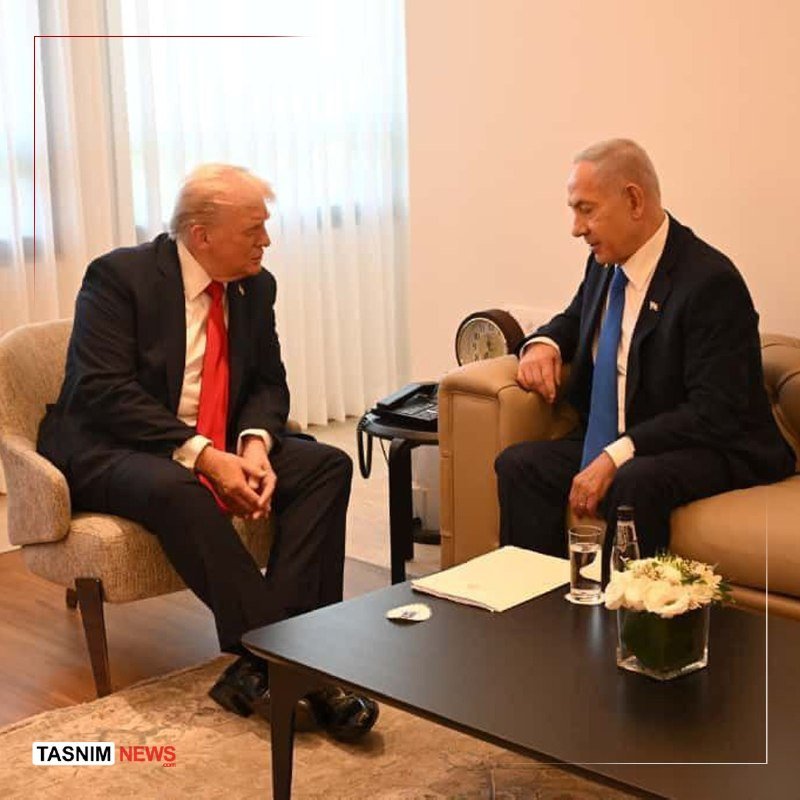
Benjamin Netanyahu told his cabinet on 26 July 2026 that US Secretary of State Marco Rubio had reaffirmed, in a conversation the day before, an American intention to "act forcefully" against the International Criminal Court. The Israeli prime minister is due in Washington on 27 July 2026 to meet President Donald Trump and then attend the funeral ceremony for Senator Lindsey Graham, described in the cabinet transcript as "a great friend of Israel." The pairing matters because it converts what has been an escalating American pressure campaign on the court into something the Israeli government now openly claims as a shared project with a specific ally. That framing is a Netanyahu assertion, not a confirmed US policy position: only the White House or the State Department can confirm the commitment on the American side, and the available source items do not specify any such confirmation.
The court is the leverage point. Chief prosecutor Karim Khan is the official whose office is pursuing the warrants the Israeli government most wants neutralised, and his removal from the post is now openly framed by Netanyahu as part of the same American campaign. The UN special rapporteur on the occupied Palestinian territories said on Saturday, according to a Middle East Eye report dated 26 July 2026, that the departure "cannot be read in isolation" from that pressure, a formulation that puts the personnel change and the political pressure on the same ledger. The thread here is shorter than the rhetoric suggests: if Khan goes and the warrants stall, the institutional cost is paid in The Hague, not in Tel Aviv or Washington.
What Netanyahu said, and where
At the start of the cabinet meeting in Jerusalem on 26 July 2026, Netanyahu delivered a short statement carried by the Telegram channels amitsegal and Clash Report. The line that travelled furthest was the Rubio portion: "I spoke yesterday with Secretary of State Marco Rubio, and once again he reaffirmed to me the United States' intention to act forcefully against the International Criminal Court." Netanyahu added that he would travel to Washington tomorrow to meet Trump "at his invitation" and then participate in the funeral ceremony for Senator Lindsey Graham, whom he called "a great friend of Israel." The phrasing "once again" frames Rubio's commitment as a continuation of an existing American posture rather than a new departure. The cabinet statement specifies neither the venue of the Washington meeting nor the agenda items beyond the ICC and the Graham funeral; the available source items do not specify those details.
The Telegram channel that framed the Rubio pledge in the starkest terms was megatron_ron, which paraphrased Netanyahu as saying Rubio had promised to "destroy" the ICC "for him." That paraphrase is more aggressive than the cabinet-quoted language carried by Clash Report and amitsegal, both of which use the milder "act forcefully." The disparity matters for any reader trying to weigh what was actually said in the cabinet room against what travels online. The conservative reading is that the prime minister used the softer formulation in his official remarks and a sharper one in private paraphrase; the available source items do not adjudicate between the two, and the draft cannot resolve which formulation Netanyahu actually used.
The UN rapporteur's intervention
Middle East Eye reported on 26 July 2026 that the UN special rapporteur on the occupied Palestinian territories, speaking on Saturday, said Khan's removal "cannot be read in isolation" from the wider pressure campaign on the court. The timing of the rapporteur's statement within the Saturday window is not specified in the available reporting; only that it fell on Saturday and the article was published 26 July 2026. The statement links two events that governments have so far kept formally separate: the personnel change inside the ICC's Office of the Prosecutor, and the external pressure being applied by Washington with explicit Israeli encouragement. The rapporteur's framing positions the move as a political act rather than an institutional housekeeping matter.
That framing is contestable. Khan's departure can be read as a routine personnel decision, a response to internal management issues, or a personal choice driven by factors the public record does not yet disclose. The Israeli government has an interest in describing it as the natural consequence of misconduct; the rapporteur has an interest in describing it as politically engineered. Both readings are present in the source material. Monexus analysis: the structural reading that treats the removal and the renewed American pressure as parts of a single political sequence is the one most consistent with the available reporting, because Netanyahu himself is publicly coupling the two. The counter-reading is that Rubio is doing no more than restating a position the United States has held since the court opened investigations into American personnel in Afghanistan, and that the Israeli dimension is a coincidence of timing rather than a coordinated campaign. The case against that counter-reading is Netanyahu's own framing: the prime minister is not claiming credit for an unrelated American policy, he is claiming that Rubio made him a personal commitment. That is the specific factual claim the Washington visit will be tested against.
Why the court is the leverage point
The ICC's jurisdictional problem is structural. The United States is not a state party to the Rome Statute and has never accepted the court's authority over its nationals. Israel is not a state party either. The court has nonetheless opened investigations and pursued warrants on the basis of referrals and its own proprio motu jurisdiction in the territory of states that are parties, which is how Palestine became the relevant jurisdictional anchor. The leverage the United States holds is therefore not over the court's law but over its operating environment: sanctions on its officials and their families, visa restrictions, intelligence-sharing constraints, and pressure on states that cooperate with the court. "Act forcefully" in Netanyahu's telling is shorthand for that toolkit, expanded.
This is why personnel matters more than usual. The chief prosecutor is both the public face of pending cases and the official who decides, within the Rome Statute framework, which applications to advance and which to let lapse. A successor prosecutor inherits the docket but not the commitments; a stalled docket does not have to be formally withdrawn to effectively die. The Israeli government's public posture has been to demand the warrants be dropped; the available source items do not specify whether Rubio's stated intention goes further than continued sanctions to include direct diplomatic pressure on court officials or on states that host court operations.
Stakes, and what to watch
The first-order stakes are procedural. If the warrants currently pending against Israeli officials advance to issuance, arrest-and-surrender obligations bind the court's 124 state parties; if they stall, the diplomatic pressure succeeds in producing the practical outcome the Israeli government says it wants. The second-order stakes are about the court's standing as an institution that can investigate nationals of non-party states when the alleged crimes occur on the territory of a state party. The Khan episode will be read, in both directions, as a precedent either way.
The most concrete near-term test is whether the Rubio–Netanyahu formulation converts into an American policy statement at the White House meeting, or whether it remains a reported political commitment the State Department declines to formalise. The rapporteur's intervention, reported by Middle East Eye on 26 July 2026 as a Saturday statement, has not, in the available source material, been countered by a US or Israeli official response; the available source items do not specify whether such a response has been issued. The available source items also do not specify which ICC official, if any, is currently acting in an interim prosecutorial capacity pending the appointment of a successor to Khan. The available source items contain one material inconsistency: the cabinet-quoted formulation in the amitsegal transcript frames the Rubio call as having taken place "last night," whereas the Clash Report channel carries the prime minister's words as "yesterday," a discrepancy the source material does not resolve.
This publication treats the Netanyahu–Rubio formulation as a reported political commitment, not an American policy statement; only the White House or the State Department can convert it into the latter. The cabinet transcript carried by amitsegal names the post-Trump activity as the funeral ceremony for Senator Lindsey Graham; the available source items do not specify further Washington agenda items.
Wire provenance
This editorial synthesis draws on the following public wire/social posts:
- https://middleeasteye.pulse.ly/ol4r0jz336
- https://x.com/MiddleEastEye/status/2081341196165681476
- https://t.me/megatron_ron/16252
- https://t.me/ClashReport/90409
- https://t.me/amitsegal/63384