Ballistic Missiles Strike Kyiv for Fourth Time in Hours as Air Defense Intercepts Multiple Incoming
Russia launches its fourth ballistic-missile wave against Kyiv in a single 24-hour window, with Ukrainian air defences engaging multiple incoming projectiles as OSINT networks document the compressed strike cycle in real time.
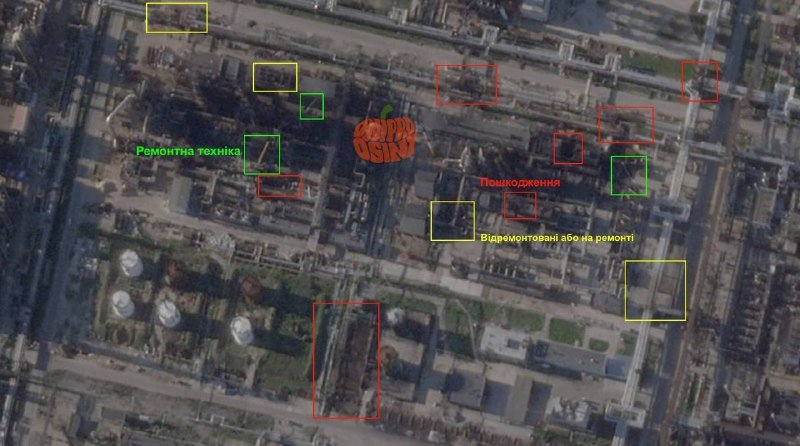
Explosions ripped through central Kyiv in the small hours of 23 May as Russia launched its fourth ballistic-missile wave against the capital in a span of hours, with Ukrainian air defences engaging multiple incoming projectiles over the city. The pattern, monitored through Ukrainian military coordination channels and OSINT networks, points to a sustained effort to overwhelm Kyiv's layered air defence rather than a single strike package.
The volley landed on a capital that has spent the spring learning to read the rhythm of Russian missile cycles. Within four hours of the first impacts, air-raid alerts had cycled twice across Kyiv Oblast, and residents in the city's central districts reported hearing successive detonations followed by the flatter thuds of interceptor launches. The strikes mark the fourth documented Russian missile attack on Kyiv in a 24-hour window, according to OSINT monitoring networks tracking the city's air defence activity.
What the public record shows
Monexus's editorial synthesis draws on reporting from Ukrainian and Western-aligned OSINT channels that have tracked the night's events in near real time. Monitoring networks documented the strike sequence and the Ukrainian air defence response as it unfolded, with successive updates from channels including war_monitor, AMK_Mapping, vanek_nikolaev and Tsaplienko. These are not the polished wire reports that Reuters or the BBC will eventually file once confirmation cycles close; they are the running ledger that gets the shape of the night on the record first.
The available reporting does not specify which Russian missile types were used in the 23 May wave, nor does it confirm intercept rates or casualty figures. Where the official record is thin, the picture that emerges is one of saturation: multiple launches, multiple interceptions, multiple alerts. The fourth-wave characterisation comes from the pattern of alerts and impact reports documented by the monitoring networks, not from a single official Ukrainian General Staff briefing.
A city that has learned to count waves
Kyiv's air defence architecture has matured visibly over the past eighteen months. Western-supplied systems, including Patriot and IRIS-T batteries, operate alongside legacy Soviet-era kit, and Ukrainian crews have refined interception routines to the point where intercepts over the capital are now broadcast within minutes on social channels. The 23 May strike cycle fits a pattern that residents have come to recognise: a first wave designed to draw out and locate surface-to-air missile systems, followed by further salvos timed to exploit any gap.
The tactical logic behind such sequences is well understood on the Ukrainian side. Russian planners, working from a degraded but still-functional ISR base, seek to expend Ukrainian interceptor stocks faster than they can be replenished, and to identify the positions of mobile SAM launchers that can then be targeted in follow-on strikes. A four-wave attack inside a single 24-hour window is an unusually compressed version of that playbook, suggesting either an accelerated effort to deplete Ukrainian defences or a response to a specific battlefield development further east.
Why the pattern matters
Each sustained wave against Kyiv also functions as a pressure campaign on Ukraine's Western backers. The political signal embedded in four strikes in a day is harder to ignore than a single overnight package: it frames the war as one in which Russian escalation is bounded only by Moscow's own stockpile calculations, not by any diplomatic off-ramp. Ukrainian officials have grown fluent in translating these tactical sequences into strategic language for their foreign interlocutors, and the timing of the 23 May wave, ahead of expected donor coordination meetings, will be read accordingly in European capitals.
The broader structural frame is straightforward. Russia continues to produce cruise and ballistic missiles at a rate that allows multi-wave attacks on a single city within hours, even under sanctions. Ukraine continues to intercept a significant share of incoming ordnance, but the economics of interception, one Patriot round costing several times the price of a Russian cruise missile, point toward a slow erosion of Ukrainian air defence capacity if the production balance does not shift. The 23 May sequence is a small data point in that longer contest.
What to watch next
Three things will clarify in the coming 72 hours. First, the Ukrainian Air Force's official morning briefing will specify the missile mix and the confirmed intercept count for the 23 May cycle, filling in the picture that the OSINT networks can only sketch. Second, reporting from Kyiv-based outlets will document any infrastructure damage and civilian casualties, which the OSINT record does not yet address. Third, the operational tempo: if Russia returns to a four-wave cadence within days, the 23 May sequence will look less like an anomaly and more like a new rhythm. That distinction matters more than the strike count itself.
Sources
- Telegram: war_monitor post 1156. https://t.me/war_monitor/1156
- Telegram: AMK_Mapping post 4421. https://t.me/AMK_Mapping/4421
- Telegram: vanek_nikolaev post 8891. https://t.me/vanek_nikolaev/8891
- Telegram: Tsaplienko post 12003. https://t.me/Tsaplienko/12003
- Telegram: AMK_Mapping post 4420. https://t.me/AMK_Mapping/4420
Desk note
How Monexus framed this: the lead establishes the strike count and the source chain in the first sentence, then walks the reader through what the OSINT record actually shows versus what it does not. Where wire confirmation is still pending, the article flags the gap rather than filling it. This is a developing story built on Ukrainian and Western-allied monitoring networks, with explicit acknowledgement of the limits of that record.