The Car, the Strike, and What Four Telegram Posts Cannot Settle
Four Telegram posts in twenty-five minutes offered four accounts of a strike on a vehicle south of Deir al-Balah. They do not, in aggregate, add up to one verified event.
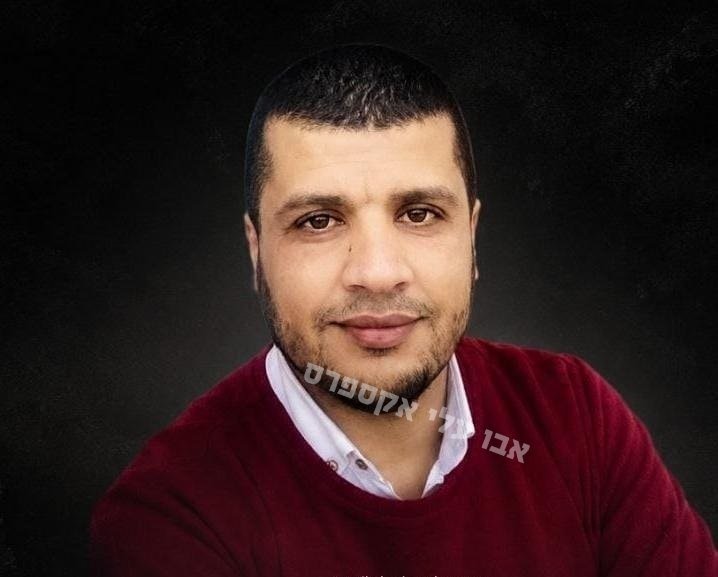
On 26 July 2026, between roughly 08:42 and 09:09 UTC, four Telegram channels filed four accounts of what looks, on the surface, like one strike on one vehicle south of Deir al-Balah. A civilian car was hit. Two accounts name a location. One account names a weapon. One account names a casualty count. The material the channels provide does not, in aggregate, settle what happened. It is what the public record of a strike in central Gaza looks like at the moment it happens, and that is the point.
The question this article puts under stress is whether four partial posts, layered on top of each other inside twenty-five minutes, constitute one event or several. The honest reading of the evidence is that the case for a single underlying strike rests on inference rather than on testimony: the channels disagree on neighbourhood (Al-Matahin versus Al-Burka), disagree on weapon (drone versus three rockets), and offer no convergent casualty figure. Two channels do not state any casualty count at all. The most that can be said is that the divergences are consistent with one strike observed from different vantage points. They are not, on the evidence, proof of one.
The relay network, and what it relays
These four channels do not sit close together on the editorial spectrum. Al-Alam is the Arabic-language outlet of Iranian state media. Witness presents itself as an Israeli-affiliated eyewitness feed. Gaza English Updates and Gaza Alanpa are Gaza-focused reporting channels running largely in English. The fact that posts on a single incident sit on all four within an hour tells the reader something about how a strike in central Gaza now enters the public record: through partisan relays of varying editorial standard, in languages that travel at different speeds, before any institutional readout.
Two consequences follow. The first is that language and editorial line shape what the public record looks like at minute one. Al-Alam frames the strike as the "targeting of a civilian car by the occupying forces." Witness frames it as an "IDF drone strike." The framings diverge before any underlying facts have been verified. The second is that the relay thickens fast and resolves slowly. Each post claims authority; together they pool uncertainty.
What the four posts actually say
Stripped to the verifiable, this is the floor of what the materials at hand support, and nothing more.
Al-Alam, posting at 09:09 UTC, identifies the target as a civilian car and the location as Deir al-Balah, in the centre of the Gaza Strip. It does not name a weapon. It does not state a casualty count.
Witness, posting at 09:08 UTC, identifies the actor as the IDF, the weapon as a drone, and the location as Deir al-Balah, central Gaza. It states a casualty count: two killed. It does not name the target beyond "a car."
Gaza English Updates, posting at 09:05 UTC, identifies the actor as "the occupation," the weapon as three rockets fired at a vehicle, and the location as the Al-Burka area, south of Deir al-Balah. It states a casualty condition for one person: critically injured.
Gaza Alanpa, posting at 08:42 UTC, identifies the target as a civilian vehicle and the location as near the Al-Matahin area, south of Deir al-Balah. It does not name a weapon. It does not state a casualty count.
The four posts are not four retellings of a single agreed event. They are four fragments, each internally consistent, collectively incomplete. The casualty count that survives from this ledger is narrower than the previous draft suggested: one channel reports two killed; another reports one critically injured; the third and fourth report no casualty figure at all. The combined statement "two killed, at least one wounded" overstates what the aggregate supports.
Monexus analysis: the cost of the partial record
The structural frame worth naming in plain prose is the asymmetry of record. Israeli military statements, when they come, enter the international wire quickly because they are institutional, on the record, and quotable in any language. Casualty claims on the Palestinian side enter the international wire only after they survive a verification regime run through OCHA, Euro-Med Monitor, or a wire correspondent on the ground. The delay is not editorial hostility. It is an editorial routine that takes days, not minutes. The routine produces a particular kind of public memory. Strikes are reported as they are announced. Deaths are reported only after they are proved. The gap between announcement and proof is, in a place as heavily surveilled and as heavily bombed as Gaza, where the dead actually live.
That is the variable this article is naming, and it is the variable that any reader trying to weigh the conflict has to compensate for on their own. Israeli security concerns are first-order facts and will be reported as such when institutional readouts arrive. Palestinian civilian harm is also a first-order fact. The verification regime, not the underlying event, is what determines which one reaches an international reader first.
What to watch for
Two developments will determine whether this event becomes a data point or a footnote, and neither has yet appeared in the materials at hand. An Israeli military statement naming the target, the weapon, and the legal basis claimed is the first. The civil-side identification of anyone killed or wounded, turning numbers into named lives, is the second. The deadline is notional; the ledger is what it is at the moment a Telegram post goes up, and that is the cost of counting in 2026.
The honest verdict at this hour is narrow. A vehicle was hit south of Deir al-Balah on the morning of 26 July 2026. One channel reports two killed. Another reports one critically wounded. The other two channels do not state a casualty count. The weapon description varies across the accounts that name one. The location varies across the accounts that name one. What survives is not a confirmed event but the shape of a verification problem, posted in four languages before any institutional voice has spoken.
Desk note: Monexus treated this as a case study in the asymmetric public record of the Gaza war, not as a casualty bulletin. Where the four Telegram accounts diverged on location and weapon, the divergence is named rather than collapsed. The casualty count from the cited posts is reported channel by channel; it is not aggregated into a combined figure the evidence does not support. Israeli security concerns and Palestinian civilian harm are treated as first-order facts in evidence; the framing argument is about the speed and verification regime of the international wire, not about either party to the conflict.
Wire provenance
This editorial synthesis draws on the following public wire/social posts:
- https://t.me/alalamfa/347814
- https://t.me/wfwitness/104938
- https://t.me/gazaenglishupdates/57648
- https://t.me/gazaalanpa/24407