White Phosphorus Allegation, Polymarket Odds, and the Iran Escalation Ladder
A Kurdish party says Iranian drones dropped white phosphorus. A prediction market puts US invasion odds at 30%. The diplomacy in between is doing what diplomacy does: gesturing, very loudly, at nothing.
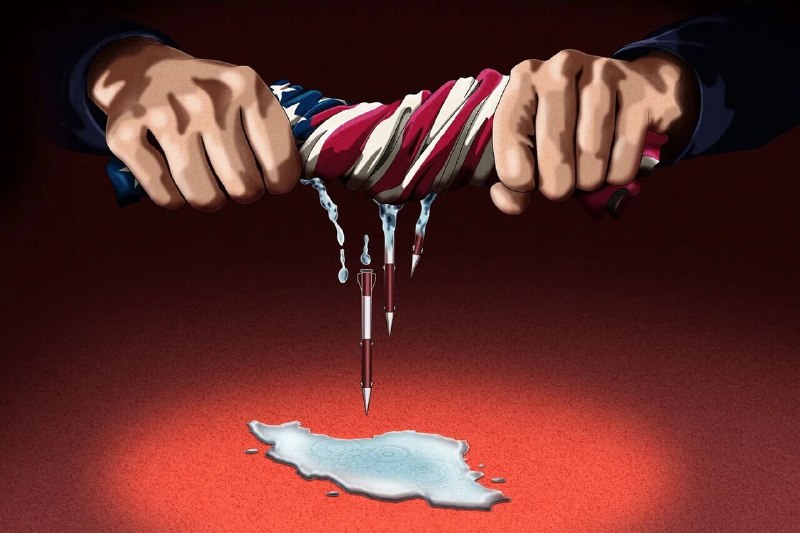
A Kurdish party operating inside Iran alleged on 20 July 2026 that an Iranian drone strike deployed white phosphorus munitions against a target it described as producing extensive, persistent fires, citing eyewitness accounts and medical examinations. The Jerusalem Post reported the allegation in its 11:30 UTC dispatch. Independent verification was not immediately available. White phosphorus is not categorically banned as a chemical weapon under the Chemical Weapons Convention when used as an incendiary or smokescreen, but its use against personnel or in populated areas is restricted; either framing turns the allegation into a serious one, not a procedural one.
Three things are happening at once in the Iran file this week. A battlefield allegation from a non-state actor. A diplomatic warning from Tehran's UN ambassador about "necessary measures to protect its sovereignty." A prediction market, Polymarket, pricing the probability of a US invasion of Iran before 2027 at roughly thirty percent. The story is not any single one of these items. It is the volume at which they are now sounding together.
The allegation on the ground
The 11:30 UTC Jerusalem Post item attributes the white phosphorus claim to a Kurdish party. The party cites three evidentiary buckets: eyewitness observations, medical examinations, and the fire behaviour at the impact site. None of those three buckets is, on its own, conclusive. Together they describe a specific physical signature: an incendiary load that burns hot, sticks, and re-ignites on contact with oxygen, which is the visible behaviour of white phosphorus rather than conventional thermite or napalm. That is consistent with the claim. It is not proof of it. Sample analysis, munition remnants, or a munitions-export-trails investigation would be.
The source itself is a non-state party with its own political alignment. Kurdish parties inside Iran have a documented incentive to publicise Iranian-state abuses, and they have, over years, also produced credible documentation. Both can be true at once. The reporting should be treated as a serious lead, not as a confirmed fact, and not dismissed as obvious propaganda either. That is the lane Western wires have generally held on previous Kurdish-region allegations, and it is the right lane here.
The diplomatic register from Tehran
At 05:31 UTC the same day, Iran's UN ambassador told the chamber that "good neighborliness" matters and warned of "necessary measures to protect" sovereignty, per a Unusual Whales summary of the remarks. The phrasing is the kind of generic, dual-use language that does two jobs at once: it sounds reasonable in English-language UN transcripts, and it reserves the right to escalate in Persian-language domestic coverage without committing to anything specific.
Read it as positioning, not as news. Iran is signalling to Gulf neighbours that any further action will be framed as defensive, not offensive. Theatrical references to sovereignty work as a legal cover story for action already taken or about to be taken, which is precisely why they are useful in this register.
The market's read of the odds
A Polymarket contract is pricing a US invasion of Iran before 2027 at approximately thirty percent, per Unusual Whales reporting on 18 July 2026. That number is not a forecast. It is the marginal price at which contracts have changed hands, and the marginal trader in those contracts skews younger, more online, and more reactive to cable-news spikes than to intelligence briefings. It is, however, a useful proxy for how a specific slice of the American commentariat is pricing tail risk right now. Thirty percent is not trivial. It is not war either. It is the awkward middle: a market that believes escalation is more likely than not but cannot agree on whether it will arrive as a strike, a blockade, a sustained covert campaign, or something uglier.
What the framing misses
The dominant Western frame reads Iran escalations as pressure on a regime nearing collapse, with white phosphorus allegations and UN warnings treated as symptoms of that pressure. The counter-frame, held across much of the Iranian state-aligned press and a meaningful slice of Global-South commentary, is the inverse: a state responding to external siege with calibrated force, and a Western commentariat primed to read any Iranian action through a chemical-weapons lens regardless of evidence. Both frames contain something. The honest read is that the evidentiary base, as of 20 July 2026, supports neither a confirmed war crime nor a clean refutation of one. The white phosphorus allegation is unverified. The Iranian ambassador's remarks are diplomatic boilerplate. The Polymarket number is a sentiment gauge dressed up as a probability.
What to watch next
Three dates do most of the work in the weeks ahead. First, any independent forensic read on the 20 July strike site, whether through UN channels, OPCW involvement, or Kurdish-region documentation getting cross-corroborated. Second, the next Polymarket repricing event, which will tell you whether the 30 percent figure holds or decays as news cycles move on. Third, and most quietly, what Gulf states actually do, not what they say at the UN. The most consequential Iran moves of the last decade were made by neighbours in corridors, not by ambassadors in chambers.
The Monexus desk is treating the white phosphorus allegation as an unverified serious lead, the UN ambassador's remarks as diplomatic signalling, and the Polymarket figure as a sentiment proxy rather than a forecast. The Western wire line and the Iranian-state-aligned line are both reproduced above at proportionate weight; the synthesis is in the framing section, not the lede.