Trump opens new 60-day war window with Iran, says blockade is back on
President Trump has notified Congress that hostilities with Iran resumed on 7 July, opening a fresh 60-day window for military action without a fresh vote. CENTCOM says it struck Iran for a third consecutive night, and markets are already pricing the risk.
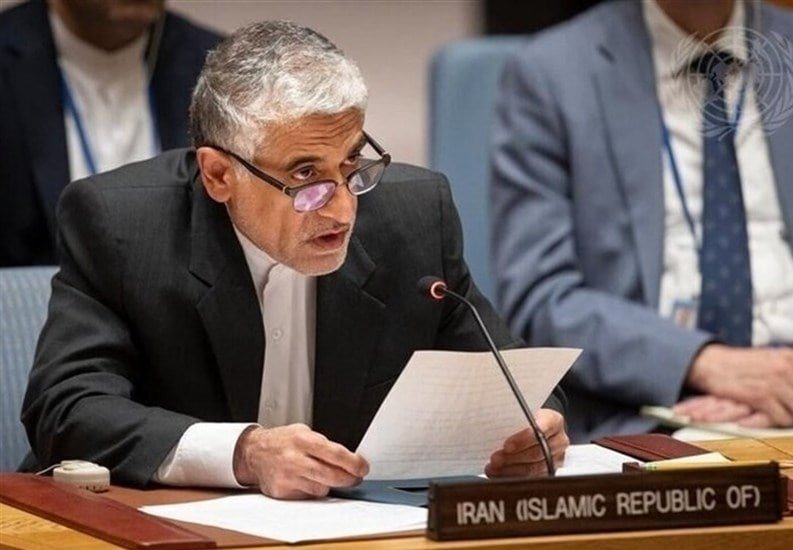
At 00:05 UTC on 14 July 2026, US Central Command announced it had launched a third consecutive night of airstrikes against Iran, acting "at the order of President Trump." Twelve hours earlier, the White House had sent Congress formal notification that hostilities with the Islamic Republic had resumed on 7 July 2026, a letter the administration views as opening a new 60-day window to use military force without seeking a fresh authorisation. By the time Asian markets opened, US equities were sliding, crude was bid, and a Reuters/Ipsos poll already in the field showed four in five Americans expecting the war to drag on for an extended period.
The sequence matters. The 7 July date stamps the legal pivot, not the night the bombs fell; the 13 July notification is what resets the constitutional clock. The administration is betting that a 60-day clock, running from a date it chose, is enough to compress the political reaction before the runway runs out.
The 60-day clock and the case for notification
Under the War Powers Resolution, the president must terminate US armed forces' involvement within 60 days of submitting a written report unless Congress authorises continued use of force, extends the deadline, or is physically unable to convene. Trump's letter, reported by Reuters and POLITICO, treats the resumption of hostilities on 7 July as the triggering event, restarting that clock now, in mid-July, rather than from any earlier flashpoint. The practical effect is to buy the administration until early September before lawmakers are required to vote on whether the strikes continue.
POLITICO, cited via the @unusual_whales wire, reported the notification frames the conflict as a "new war" with Iran, a phrasing that gives the White House rhetorical distance from the June strikes and from the broader post-October 2023 regional posture. The administration is not arguing that the conflict is the same one it inherited; it is arguing that this is a discrete, restarted war with its own legal calendar.
That is a contested claim. Critics in both parties have argued in past iterations of this debate that piecemeal notifications can be used to evade the statute's intent, and that the executive branch has historically interpreted "hostilities" narrowly to stretch the clock. None of that is novel; what is new is the explicit dating of resumption to a week before the strikes, and the use of that date to frame the conflict as freshly begun rather than continuing.
What CENTCOM is actually striking
The CENTCOM statement at 00:05 UTC on 14 July described a third night of strikes "against Iran" without naming specific targets in the public release captured in the thread. Trump's own remarks, distributed by the @sprinterpress feed at 00:08 UTC, promised "very hard" strikes "tonight" and "tomorrow" and asserted Iran "has nothing but loud words." Trump separately claimed overnight strikes had "destroyed key Iranian military sites," a description that has not been independently verified in the public sources available to this publication.
In the same set of remarks, Trump announced he would "reinstate a blockade of Iranian ports," according to the Reuters wire at 00:40 UTC. The word "reinstate" does the political work here: it implies a prior posture, paused and now resumed, rather than a new escalation. The economic signal travelled fast. Reuters reported that tech shares pulled US stocks lower on the blockade announcement, and that oil prices jumped on the same headlines, a pattern consistent with markets repricing a sustained closure of Iranian export routes rather than a one-off strike cycle.
The Hormuz dimension and the toll question
In remarks circulated earlier the same day, Trump said the United States would become "guardian" of the Strait of Hormuz and impose tolls on traffic, with revenues framed as reimbursement for US defence spending. The Strait carries a large share of seaborne oil and liquefied natural gas exports from the Gulf, and any sustained disruption would bear on importers from China, India, Japan and South Korea long before it shows up in US consumer prices.
The toll idea is the part least tested by the legal record in the thread. The administration has not, in the available sources, specified who would collect the toll, under what international-law authority, or how compliance would be enforced against non-cooperating flag states. A toll regime is a maritime-policy decision as much as a military one, and the Gulf's neutral shipping lanes have historically been policed by combined-task-force arrangements rather than by a single power levying transit fees. The announcement is therefore best read at this stage as a negotiating posture aimed at Tehran and at Gulf allies, rather than as an operational plan.
Public opinion, market plumbing, and what the next two weeks hold
The Reuters/Ipsos poll, fielded as fighting escalated and the blockade was declared, found roughly four in five Americans expecting the war to drag on for an extended period. That is a striking baseline for a conflict entering its first full week of formal notice, and it tracks with the pattern of past US interventions where initial public tolerance narrows sharply once casualty counts and fuel prices move.
Market plumbing has begun to follow the legal clock. Crude is up on the blockade headline, equity indices are off, and the dollar has been used as the funding-currency hedge of choice in the relevant Reuters market wrap. The structural question for the next two weeks is whether any move to physically interdict Iranian port traffic translates into a measurable disruption of Iranian crude exports or, more consequentially, into a response from Tehran against shipping in the Strait. Either outcome would extend the duration of the risk premium now being priced in.
Trump has scheduled a nationwide address for 9 PM EST on 16 July 2026, framed in the Telegram circulation as built around "newly declassified intelligence reports." That address, and whatever it claims about Iranian nuclear intentions, will be the next hard data point. Until then, the legal architecture is settled and the operational architecture is not.
The 60-day window runs from 7 July. It expires in early September. Congress returns from recess in that window. The political fight over whether this is a new war or a continuation of an old one will run on the same clock.
Desk note: this publication is sourcing the legal characterisation of the notification to Reuters and POLITICO wires, the operational characterisation to CENTCOM via the @sprinterpress feed, and the public-opinion baseline to the Reuters/Ipsos poll. Trump's claims about destroyed Iranian military sites and a 350% Iranian inflation figure are reported as presidential assertions, not as corroborated facts.
Wire provenance
This editorial synthesis draws on the following public wire/social posts:
- https://t.me/rnintel
- https://t.me/bricsnews