Trump claims US will 'run' the Strait of Hormuz, warns Iran after overnight strikes
In a string of remarks on 13 July 2026, the US president said Washington would take stewardship of the chokepoint and bill users for it, while claiming overnight strikes had destroyed key Iranian military sites.
At 12:17 UTC on 13 July 2026, the @WatcherGuru channel on Telegram flashed a single line: "JUST IN: 🇺🇸 President Trump says the US is taking over the Strait of Hormuz." Within forty minutes the same platform had logged seven further statements from the US president: that Washington would "run" the waterway, that it would be reimbursed for defending it, that Iran was "getting their ass kicked," that Iran had been "minutes away from a nuclear weapon," and that overnight US strikes had destroyed key Iranian military sites. By 12:57 UTC, the @BRICSNews wire had added a closing line: Iran "always breaks agreements, so the US will strike them hard."
The remarks, transmitted through Telegram channels with no visible transcript from a White House pool reporter, do not by themselves prove a policy shift. But read together they describe a posture: unilateral stewardship of the world's most consequential oil chokepoint, paired with an escalating rhetorical campaign against Tehran. The structural claim embedded in the comments is older than the Trump administration. It is that the United States, having borne the security cost of the strait for half a century, is now entitled to collect like a toll-keeper.
The chokepoint in plain numbers
The Strait of Hormuz sits between Iran to the north and Oman and the United Arab Emirates to the south. The channel is roughly 21 miles wide at its narrowest point, with shipping lanes reduced to two-mile-wide corridors in each direction. According to longstanding estimates from the US Energy Information Administration, more than a fifth of globally traded crude oil passes through it, alongside a comparable share of liquefied natural gas. Any actor that physically or politically controls the strait holds a lever over the price of fuel from Berlin to Bangalore.
The president's framing on 13 July rested on that leverage. "We guarded the strait for 50 years," he said, according to a clip posted by @ClashReport at 12:24 UTC. "We are going to keep the strait. We will probably run it. We will become the guardian of the strait, and when we do that, we will be reimbursed for it." A follow-up @WatcherGuru flash at 12:24 UTC spelled out the logic in shorthand: countries must pay the US for defending the waterway. The @Middle_East_Spectator account, which bills itself as a translation layer for Middle Eastern political speech, condensed it further at 12:49 UTC: "guardians of the Strait of Hormuz and impose tolls."
That is a different proposition from the multilateral naval mission that has patrolled the strait for years, in which the US Fifth Fleet operates alongside European and Gulf state partners under a combined task force. A unilateral US toll regime would be a unilateral reorganisation of the corridor's security architecture, and would put Washington in direct commercial negotiation with Beijing, Tokyo, Seoul and New Delhi over the price of safe passage.
The strike narrative, in the president's own words
The Hormuz remarks came bundled with a parallel set of claims about Iran's military position. @ClashReport logged the exchange in pieces: at 12:31 UTC, "They are a bad group of people, let me tell you that. I don't say that often. Right now, they are getting their ass kicked." At 12:39 UTC, "Iran was minutes away from a nuclear weapon." At 12:48 UTC, in response to a reporter's question about Iranian reconstruction, "They have no chance. We have them on the run."
The most concrete claim arrived through @wfwitness at 12:45 UTC, which reported that the US president "issued a sharp warning to Iran following the collapse of a military agreement, saying U.S. forces carried out major strikes overnight that destroyed key Iranian military equipment." That phrasing leaves the location, the weapons used, and the specific targets unspecified. Telegram-channel translations of presidential remarks often lose the qualifier that a White House transcript would retain. The claim of "major strikes" therefore cannot be cross-checked from the materials available in this thread against, for example, Iranian state media's own damage reporting, which is the usual counter-claim venue.
The economic frame was the most concrete item in the set. At 12:51 UTC, the same channel logged: "Iran's inflation is 350%. It was 5% six months ago." Whether that figure derives from a fresh Iranian statistical release, an IMF projection, or rhetorical inflation is not specified. Iran's Central Bank has historically reported annual inflation rates in the high tens, not the hundreds, but the country has also endured spells of hyperinflation during sanctions periods, and any sharp acceleration would be politically combustible inside Iran.
The leadership claim
At 12:49 UTC, @ClashReport logged one further sentence: "Khomeini is gone. The son is 90% gone." The phrasing is opaque. Iran's current Supreme Leader is Ali Khamenei, who succeeded Ruhollah Khomeini in 1989 and is in his eighties; references to "the son" are not standard shorthand for any official in the Iranian system as commonly reported in Western or Iranian exile outlets. The clipped line reads more like an elliptical boast about degrading Iranian command than a confirmed personnel change. Telegram channels that translate presidential remarks frequently collapse qualifiers, and a sentence fragment without context can easily invert a politician's intended meaning. Until a fuller transcript is in the public record, the claim should be read as the president's rhetoric, not as a confirmed fact.
What this posture would mean if it became policy
Three concrete consequences follow if Washington's words translate into action. First, shipping insurance and freight rates through the strait would reprice. War-risk premiums for tankers transiting Hormuz have historically spiked during periods of Iranian-US tension, and an explicit US toll layered on top of military escort duties would push them higher still. Second, the political geography of the corridor would shift. A US-administered toll regime would likely face Chinese and Indian objections at the United Nations and inside the IMO, given that both countries rely heavily on Gulf crude and have, in the past, proposed regional security arrangements that exclude US dominance. Third, Iranian retaliation would not necessarily take the form most often discussed. Iran's playbook against the US Fifth Fleet has historically mixed direct harassment of tankers, drone and mine threats, and proxy action through the Houthis in the Red Sea, rather than symmetrical naval engagement.
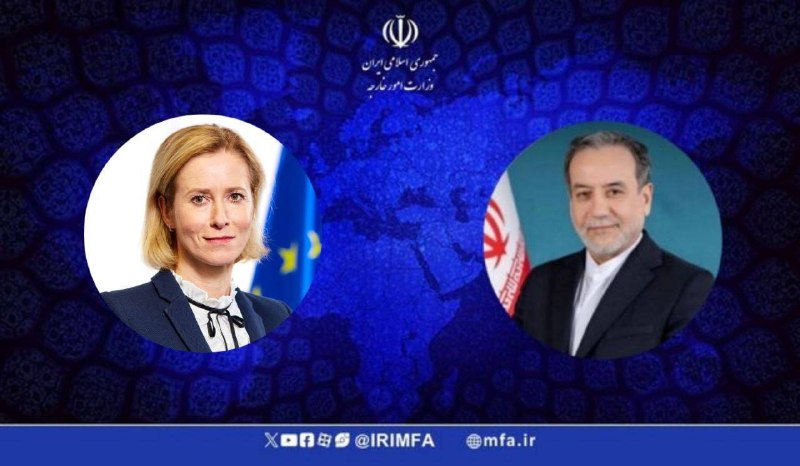
Iranian state media has not, in the materials available to this publication, been given equal airtime to rebut these claims in real time. That asymmetry is itself part of the story. When a US president speaks at length and the Iranian response circulates only through Foreign Ministry statements filtered into Telegram a few hours later, the framing of the day's events is set before the counter-claim arrives. The structural pattern is familiar: a hegemon defines the day's terms, and the subordinate party's voice plays the next day's tape.
What remains uncertain
Several threads of the story have not been independently corroborated in the materials available. The "overnight strikes" claim is unverified outside the president's own remarks. The 350% inflation figure does not match publicly available Iranian Central Bank data over the recent period and has not been matched to a specific release. The "Khomeini is gone" line is too ambiguous to interpret without a fuller transcript. And the proposed toll regime on Hormuz shipping has not, as of 13 July 2026 13:00 UTC, been matched to a published executive order, a Pentagon fact-sheet, or a Congressional notification. Readers should treat all four claims as presidential assertions, not as established policy.
The broader proposition the remarks imply, though, is legible without confirmation. The United States is signalling that the security architecture of the global oil trade is no longer a multilateral burden but an American asset to be priced. Whether that posture survives contact with allied capitals, with a UN Security Council that includes Russia and China, and with Iran's own retaliatory playbook, is the question that the next seventy-two hours will start to answer.
This publication tracked the remarks through Telegram channels that aggregate presidential statements in near real time; the resulting picture is closer to a wire monitor than to a press pool. The framing above treats the president's words as the news, not as the truth.
Wire provenance
This editorial synthesis draws on the following public wire/social posts:
- https://t.me/watcher_guru
- https://t.me/watcher_guru
- https://t.me/ClashReport
- https://t.me/ClashReport
- https://t.me/wfwitness
- https://t.me/Middle_East_Spectator
- https://t.me/bricsinfo