Two maritime incidents, one question of who protects Indian crews
Indian crews are dying in Vietnamese waters and getting attacked off Oman within hours of each other. The repatriation question matters more than the headlines suggest.
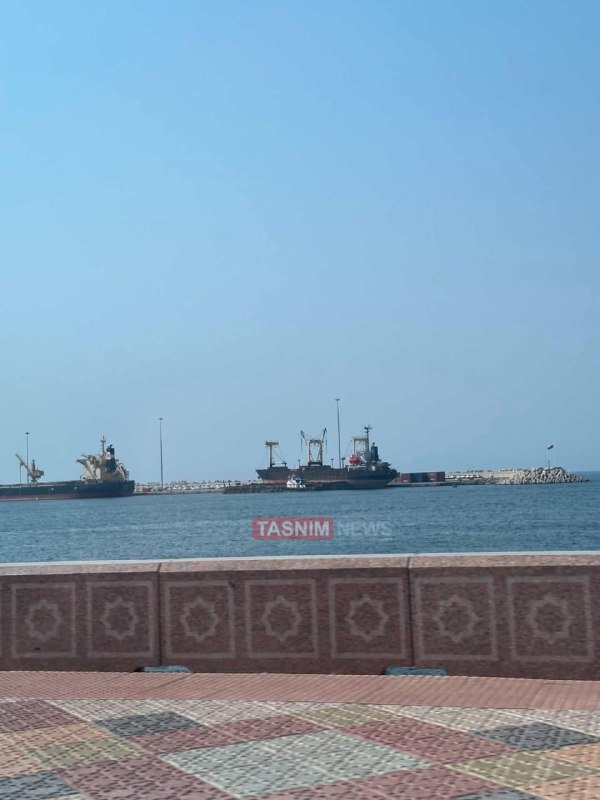
At dawn on 12 July 2026, Indian consular staff began the paperwork to bring home the bodies of Indian nationals killed when a vessel capsized off Vietnam. By mid-morning, the Ministry of External Affairs in New Delhi had issued a separate statement condemning an attack on a commercial ship off the coast of Oman, where ten Indian crew members had been pulled from the water and one remained missing. Two maritime disasters, half a world apart, landing in the same news cycle, both with Indian labour at the centre of the incident.
The pattern is the story. Indian seafarers crew a meaningful share of the world's merchant tonnage, and when vessels founder or get hit, the victims are disproportionately Indian. The policy question that follows is unglamorous but consequential: who is on the hook for evacuation, identification, and repatriation, and on what timetable.
What happened off Vietnam
According to The Indian Express's reporting on 12 July 2026, repatriation proceedings have begun for Indian nationals who died in a capsize incident in Vietnamese waters. The newspaper's live updates describe the logistics of bringing the dead home, not the cause of the wreck, which remains under investigation by Vietnamese authorities. The Indian mission in Hanoi is coordinating with local officials; the families of the deceased have been notified.
The structural point is that the capsize was not a one-off. Vietnamese coastal waters have seen repeated losses of small commercial craft and, periodically, larger vessels. Vietnamese rescue capability has improved but is uneven outside the main ports. For Indian families, the practical question is whether post-mortem and consular paperwork will move at a pace that respects grief. Early reporting suggests that it is, which is itself worth noting because the diplomatic machinery between New Delhi and Hanoi is rarely tested on this scale.
The attack off Oman
The second incident, also reported by The Indian Express on 12 July 2026, is more troubling. India has publicly condemned an attack on a vessel off the Omani coast. Ten Indian nationals have been rescued; one remains missing. The ship's name, flag state, and cargo have not been disclosed in the wire copy, and the perpetrators have not been claimed.
The waters off Oman sit on one of the world's most sensitive shipping arteries: the approaches to the Strait of Hormuz, and the broader Gulf of Aden corridor that connects Indian Ocean trade to the Suez route. Attacks in this region have historically come from non-state actors, including Houthi forces operating from Yemeni territory, and from unclear perpetrators during periods of regional escalation. Indian Ocean shipping has spent the last three years adapting to a higher baseline of risk, with reroutings, insurance premia, and naval escorts becoming normalised. That an attack producing Indian casualties has produced a New Delhi condemnation rather than a joint investigation announcement tells the reader where the diplomatic temperature sits: denunciation without yet a partner in the inquiry.
Who actually protects Indian crews
Indian seafarers man somewhere in the order of a tenth of the world's merchant marine, by most industry tallies. That makes Indian labour load-bearing for global shipping in a way that is rarely credited in trade press coverage, where the focus is on flag states, charterers, and owners. When something goes wrong at sea, the crew's nationality shapes the consular response more than the flag on the stern.
This produces a quiet division of labour. The crew's home government handles the diplomatic and welfare work: identification, repatriation, coordination with the families, and eventual compensation claims. The flag state handles the regulatory investigation. The owner handles the insurance. In practice, the home government ends up doing the most visible grief work, and the most visible diplomatic work, for an incident whose legal accountability sits elsewhere.
The Vietnamese capsize and the Omani attack land in the same week because Indian crews are everywhere merchant shipping is risky. The structural exposure is not new; what is new is the speed at which both stories move through the same press cycle, and the implicit demand on New Delhi to respond to two maritime tragedies on two fronts in a single working day.
What remains unclear
Neither source specifies the cause of the Vietnamese capsize, the identity of the Oman attackers, or the cargo and ownership of the vessel struck off Musandam. Press reporting on attacks in these waters is often slow to establish attribution, and the Indian government has historically declined to speculate before the flag state's investigation. For the families of the missing crew member, that timeline is the operative one. For the wider Indian maritime workforce, it is the cumulative pattern, not the single incident, that will eventually move policy.
Monexus treated both incidents as a single labour-and-diplomacy beat rather than as two unrelated maritime stories, because the through-line is the Indian seafarer rather than the geography.