The Queue in Tehran: What Khamenei's Funeral Tells Us About the Architecture of Resistance
Delegations from Bangladesh, Afghanistan, Nicaragua, Uzbekistan and Pakistan are paying respects in Tehran. The list of visitors is a working map of the alliance system that survived its founder.
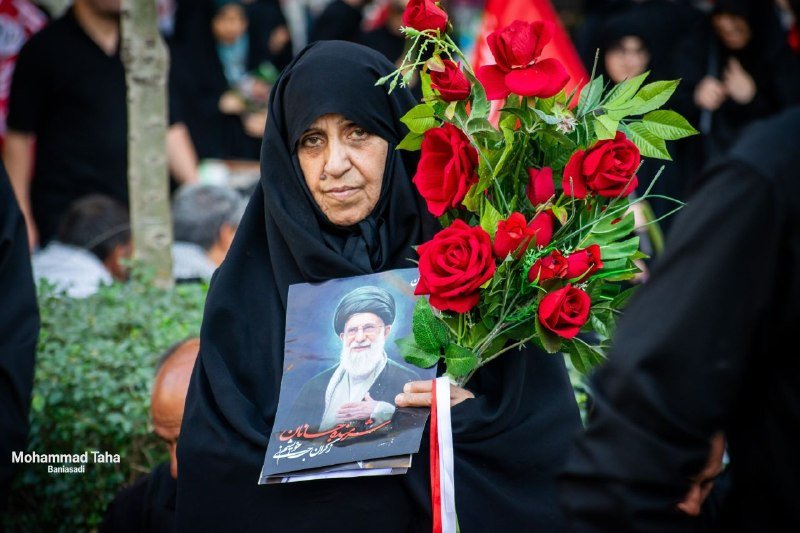
The line of foreign dignitaries filing into Tehran on 3 July 2026 reads less like a condolence book and more like a roll call. By 13:13 UTC, the official channels of the Iranian Supreme Leader's office had logged visits from the Speaker of Bangladesh's parliament, the Deputy Prime Minister for Economic Affairs of Afghanistan, Nicaragua's foreign minister, the Speaker of Uzbekistan's parliament, and the Prime Minister of Pakistan. Each was photographed at the farewell hall for the body of Grand Ayatollah Imam Sayyid Ali Hosseini Khamenei, the figure whose name defined the Islamic Republic's posture abroad for almost four decades.
What the queue actually measures is the durability of the network he built — and where its load-bearing columns now sit.
A map drawn in visitors
The geography of the mourners is the argument. Dhaka sent its Speaker, Hafizuddin Ahmad. Kabul sent Abdul Ghani Baradar, the Taliban's senior economic figure, in the role described officially as Deputy Prime Minister for Economic Affairs. Managua sent its foreign minister, Valdrack Jaentschke. Tashkent sent its parliamentary Speaker, Nurdinjon Ismailov. Islamabad sent Prime Minister Shehbaz Sharif.
That list spans three continents and four very different political systems: a South Asian parliamentary democracy under civilian strain, a Taliban administration that most of the world still refuses to formally recognise, a Sandinista-led Nicaragua that remains under US sanctions pressure, a Central Asian secular republic, and a nuclear-armed neighbour with a 900-kilometre border and a complicated history with Tehran. The binding agent is not ideology in any tidy doctrinal sense. It is a working relationship — built over sanctions years, through energy swaps, port access, drone cooperation, and the quiet infrastructure of the "Axis of Resistance" — that has outlived the man it was built around.
The parts Western analysis tends to miss
Western commentary on Iran's regional position has spent years treating the country's external network as a chain that snaps at the top. The premise is intuitive: a system built around a single religious authority figure should, the argument goes, lose coherence when that figure is gone. Tehran's official read of its own mourning roster offers an inconvenient counter-example. The visitors are not tribute-bearers. They are counterparties. Each of them has an active file with Iran — sanctions evasion, electricity supply, wheat contracts, weapons procurement, or diplomatic cover at the UN — that does not evaporate with the passing of one man.
This publication finds that the standard frame misreads the structure. The Axis of Resistance was never a personality cult exported. It was a portfolio of bilateral relationships with shared incentives, and the incentives remain.
The structural frame, in plain prose
What is being displayed in Tehran this week is an alliance system operating in a sanctions-dense environment, where formal Western-led institutions are inaccessible to most of its members. Nicaragua cannot use the dollar-based financial system without friction. Afghanistan is largely frozen out of it by design. Pakistan lives with a permanent waiver-and-renewal relationship with the IMF. Uzbekistan is recalibrating its great-power alignment after years of careful hedging. Bangladesh is pricing its options between Indian, Chinese, and Gulf capital.
For governments in that situation, Tehran offers something the Western architecture does not: a non-conditional partner willing to do business under secondary-sanctions risk. The funeral is the visible ceremony. The working partnership is the substance. The fact that the visitors are senior enough to send — Speakers of parliament, a Deputy Prime Minister, a sitting Prime Minister — is itself the signal: these are not ceremonial regrets; they are maintenance calls.
Stakes, and what remains uncertain
The immediate question is whether the next Iranian leadership inherits this network intact, narrows it, or redirects it. The corollary question is whether the network was always more transactional than ideological, which would predict continuity; or whether it was held together by a specific clerical authority that no successor can replicate, which would predict contraction. The wire of condolence visits is consistent with continuity, but a single week's protocol is not yet a verdict.
What the sources do not specify — and what the next several months of reporting will need to test — is whether the bilateral files mentioned above actually deepen under a successor leadership, or whether they quietly thin as each counterpart recalculates exposure. The visitors' feet in Tehran on 3 July are evidence of one thing only: that the relationship was substantive enough to require representation at this level. The rest is still being decided.
Wire provenance
This editorial synthesis draws on the following public wire/social posts:
- https://t.me/Khamenei_en
- https://t.me/Khamenei_en
- https://t.me/Khamenei_en
- https://t.me/Khamenei_en
- https://t.me/Khamenei_en
- https://t.me/Khamenei_arabi
- https://t.me/Khamenei_arabi