Vance on the Strait: Reading the Subtext of an Oil-Throughput Quip
The Vice President's three-word answer about Iranian crude told Gulf finance ministries, Tehran, and the markets three different things at once. The chokepoint is now the contested surface.
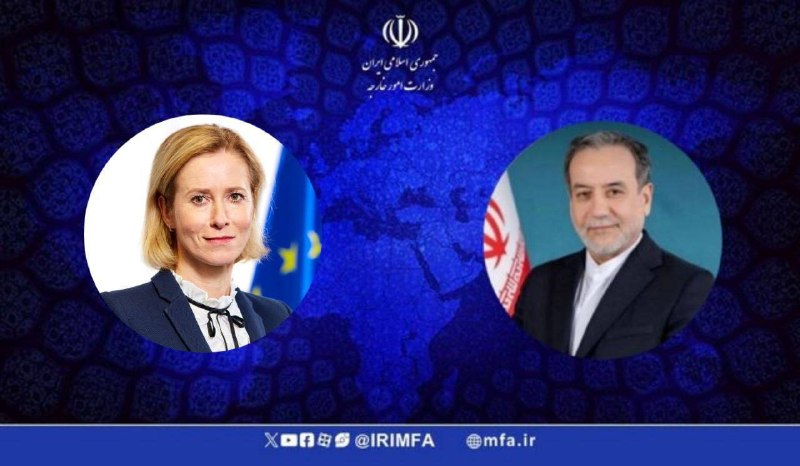
On 18 June 2026, Vice President JD Vance made a remark to reporters that, taken at face value, is a throwaway: when asked about life for Iranians living under tightened US sanctions and the closure of an oil chokepoint, he gestured at throughput and said, in substance, that the volume of crude moving through the Strait of Hormuz is set to drop because Iran's own exports are "largely gone," and that Tehran is "not going wild" in response. The line landed as scheduled colour during a sit-down that ran almost entirely on script about a Switzerland-track nuclear file no Western capital has yet seen the text of. Read forward, however, and the same seven words carry the architecture of an administration telling markets, Gulf monarchies, and Tehran what kind of escalation curve it is actually underwriting. That is the line worth parsing.
Strip the diplomatic varnish and three claims sit inside the quip. First, that Iran's crude exports have been pushed into a structural decline that the United States no longer expects to reverse through this round of sanctions enforcement. Second, that Tehran's bandwidth for retaliation has narrowed accordingly. Third, that the chokepoint itself is therefore unlikely to become a weapon, because there is not enough Iranian oil left in the stream to weaponise. None of those three claims is wrong on the facts available; all of them are doing more signalling than explaining. The Vance comment is the second major US signal of the week that frames energy throughput, not kinetic action, as the contested surface of the dispute, after earlier Treasury moves targeting shadow-fleet tonnage.
The chokepoint as policy instrument
The Strait of Hormuz carries roughly a fifth of global seaborne crude, and a substantially larger share of the LNG trade whose spot prices set European and East Asian power-generation costs. Iran's announced closure of the waterway in 2026, as reported by France 24, framed the move as retaliation for Israel's military campaign in Lebanon and a warning that upcoming Swiss-channel talks with the United States would struggle to advance without movement on that front. The Iran's statement follows a wave of US sanctions designations and ship-to-ship transfer interdictions that pushed Iran's export book from above 1.5 million barrels a day in early 2025 to levels Iran itself now appears to accept as residual. The Vance phrasing acknowledges that arithmetic in plain English.
What the phrasing does not engage with is how other chokepoint users price the news. Riyadh, Abu Dhabi and Doha ship through Hormuz; so does Kuwait. Their crude does not move on Iranian tonnage and is not subject to Iranian snap sanctions. If Tehran closes the strait, those barrels stop too, and the premium they carry spreads across Mediterranean and Asian benches within hours. The administration's public posture, that Iranian oil is "largely gone" and Tehran is "not going wild," implicitly instructs Gulf partners that the United States will underwrite that premium through naval posture, SPR coordination, and the diplomatic cover of an active talks track, all of which cost money the Treasury is currently pretending not to spend.
What the Gulf capitals actually heard
The line a sovereign wealth fund reads is not the line a cable-news viewer reads. Gulf finance ministries are now working from a planning assumption in which Iran's export book is structurally throttled, in which the strait is treated as an instrument rather than a corridor, and in which the United States expects to keep the waterway open for non-Iranian crude while letting Iranian volumes wither. That is a comfortable scenario for the Gulf: Iranian market share migrates to spare capacity on the Arabian side, refining margins in the integrated Gulf majors expand on the volume that is no longer competing, and the security guarantee that comes with it is paid for in American naval deployments rather than Gulf capital. The discomfort comes on the second derivative. If Iranian exports fall toward zero while the strait remains nominally open, the question becomes who absorbs the political cost when Tehran does not, in fact, stay quiet, and whether the United States will pre-commit to a naval response that has nothing to do with Iran's own barrels.
The Iran signal inside the line
Tehran's own statement that the strait is closed, carried by France 24 and echoed across regional desks, is itself a signal, not a posture. Iran has claimed closure before and chosen not to enforce it; the meaning of the announcement now is to set the price of any de-escalation, and to remind negotiators in Switzerland that the chokepoint is the only asset of scale Iran still holds. The Vance retort that Tehran is "not going wild" is the administration's way of telling the same audience the United States believes that. The problem with that signal is that "not going wild" is what a treasury official says about a counterparty that has already lost most of its throughput. It is not what a defence planner wants to hear about the operator of a chokepoint through which non-Iranian crude also moves.
The Switzerland file the line is sitting on top of
Behind the quip is a negotiation the public has not seen the text of. Tehran and Washington are scheduled to talk in Switzerland, with the deal described as having hit an obstacle ahead of those talks. The obstacle, per the reporting on France 24, is the linkage Tehran insists on between any nuclear file and the Lebanon campaign Israel is conducting, a linkage the United States has no reason to accept and no leverage to dissolve. Vance's "expect," "largely gone," and "not going wild" form the verbal budget the administration has allocated to managing both sides of that track: low enough to keep the Swiss channel alive, high enough that Tehran reads it as a description of how the United States intends to underwrite the regional energy market if the talks collapse.
What to watch next
Three dated signals will tell the room how the line resolves. First, whether the Swiss track produces even a framework communiqué by the end of the month, or drifts into the kind of procedural extension that confirms the obstacle is the obstacle. Second, whether Iranian-flag or Iranian-insured tonnage reappears in the satellite-tracked dark-fleet corridors south of Bandar Abbas, which would be the operational tell that Tehran reads the Vance comment as invitation rather than warning. Third, whether the Pentagon pre-positions mine-countermeasure assets in Bahrain and the Gulf of Oman at a tempo consistent with the "not going wild" framing, which is the only signal that the United States is pricing the same risk as the sovereign wealth funds it just addressed.
Until then, the quip is the policy. The administration is telling its own audience and Iran's that the chokepoint is a market problem, not a war problem, and that the United States intends to manage it as one. Whether the Gulf reads that, and whether Tehran believes it, is what the next seventy-two hours will price.