Both sides quiet the guns for a second day, with Oman still the post office
NPR reports a second consecutive day of US and Iranian strike pauses on 26 July 2026, while an OSINT Telegram channel relays Iran's readiness to talk on uranium enrichment with Oman in the middle.
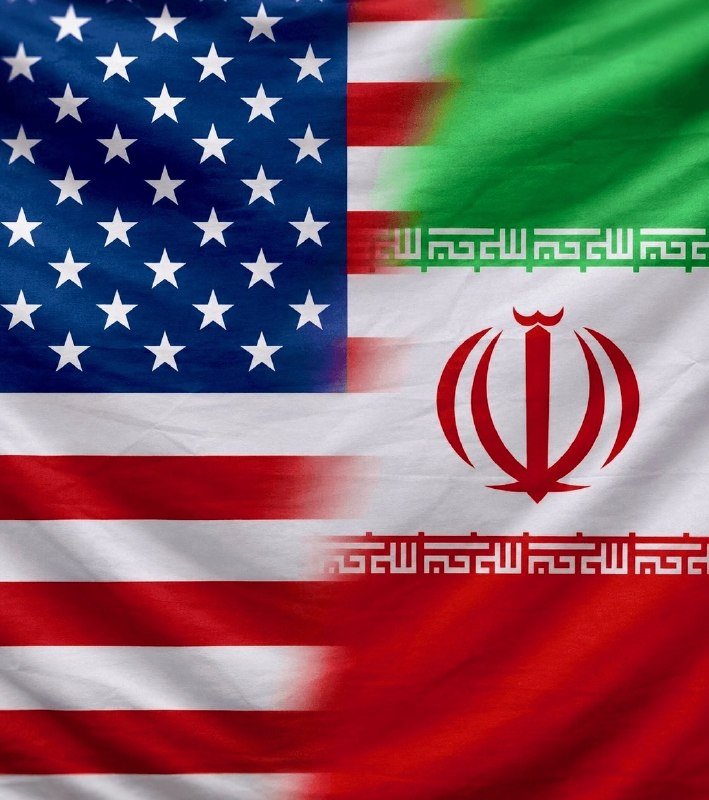
At 17:16 UTC on 26 July 2026, NPR reported that the United States had paused attacks on Iran for a second consecutive day, and that Tehran had said it had paused attacks too. NPR frames the pauses as sitting inside a continuing effort to bring the two governments back to negotiations on an interim ceasefire, without specifying terms, venues, or which delegation is travelling where.
The thread also contains two related OSINTdefender Telegram posts timestamped 16:14 UTC and 16:12 UTC on the same day: one restating Iran's readiness to return to talks on its nuclear programme and uranium enrichment, and one restating Oman's standing as a mediator with strategic access to both capitals. These are anonymous-channel posts, not first-party statements; they are useful as a trail of how the day's signal is being relayed, not as confirmation that any negotiation has actually convened. The picture that follows is therefore assembled strictly from those two inputs, and is read by this publication as analysis rather than as settled fact.
What NPR says, and what it does not
The wire report is narrow. Two governments have stopped shooting at each other for forty-eight hours, and each has publicly claimed the pause is mutual. NPR's framing ties that to a still-active effort to drag both sides back to the table around an interim ceasefire. NPR does not state whether the two governments are in direct contact, whether a third party is carrying messages, what the agenda would be, or whether the silence is procedural restraint or the first beat of a structured negotiation. The available sources do not specify any of those details.
The Iranian signal of readiness to talk about its nuclear programme and uranium enrichment, as relayed by the OSINTdefender post timestamped 16:12 UTC, is the only other substantive claim in the day's packet. The post does not attribute the readiness to a named Iranian official or institution; it presents the readiness as a general posture. Whether Tehran has communicated that posture directly to Washington, through Muscat, or only through intermediaries in its own diplomatic ecosystem is not specified in the source items this article is built on.
Oman, as the OSINT channel describes it
The OSINTdefender post timestamped 16:14 UTC on 26 July 2026 describes Oman as having "maintained a unique position as a mediator and ally to both the United States and Iran, largely due to its strategic location and diplomatic efforts." That is the only description of Oman's role in the available evidence. The source items do not name an Omani official, cite an Omani statement, or describe a specific exchange conducted through Muscat in the present round. The character of Oman's mediation in this episode is therefore not established by the thread evidence; only the standing claim that Oman occupies that role is.
Monexus analysis: in a regional contest where neither Washington nor Tehran currently names another Gulf capital as a viable middle, the diplomatic channel most consistently associated with prior US-Iran episodes is the one OSINTdefender flags here. The structural reading is that small-state mediation of this kind tends to function as a courier, not as a guarantor, and the thread evidence is consistent with that. Whether Muscat is in fact carrying messages in the present pause is a question the available source items do not answer.
Where the dominant framing overreaches
The dominant Western wire framing treats the pause as a de-escalation driven by US pressure, with Iran returning to the table under duress. The available evidence supports only the narrower claim that each side has stopped shooting for a second day and that one channel is reporting Iran's readiness to talk about its nuclear file. It does not establish which side compelled the pause, which concessions, if any, are on the table, or whether either capital considers itself to have won or lost anything by being silent on 25 and 26 July.
A second overreach is the treatment of a procedural pause as if it were a negotiating framework. NPR's own language is careful on this point: the pauses are tied to "efforts" to bring the two sides to "negotiations on an interim ceasefire." The wire is describing an attempt, not an outcome. Any further characterisation of a ceasefire architecture, an enrichment ringfence, or a verified arrangement is analysis layered on top of a thin evidence base, and is labelled as such.
What remains uncertain
Several pieces of the picture the day's news cycle normally produces are not in the source items this article is built on. The available posts do not specify whether Iranian and US delegations are travelling to Muscat, or whether the channel is being used for written communications, verbal understandings, or simply managed de-confliction. The posts do not specify which technical issues, beyond uranium enrichment, are inside any current negotiating envelope. The posts do not specify whether a third party such as the IAEA, Qatar, Russia, or China has been drawn in alongside Oman, or whether the mediation is bilateral through Muscat alone. Each of those is a concrete question the next forty-eight hours of reporting would be expected to answer.
Monexus analysis: the most cautious read of the evidence is that two governments have chosen, for the second consecutive day, not to attack each other, that one OSINT channel is reporting Iran's stated readiness to talk about its nuclear programme, and that the same channel is restating Oman's standing as a broker. Anything beyond that is interpretation built on a thin base, and is treated here as such.
Desk note: the wire led with the operational fact of a second consecutive day of mutual restraint; Monexus reads that fact alongside the limits of what the day's anonymous-channel posts can actually confirm, and labels the structural interpretation as analysis rather than as established fact.
Wire provenance
This editorial synthesis draws on the following public wire/social posts:
- https://www.npr.org/2026/07/26/g-s1-135593/us-pauses-attacks-iran-second-day-tehran
- https://t.me/OSINTdefender/19605
- https://t.me/osintdefender/19605
- https://t.me/OSINTdefender/19604
- https://t.me/osintdefender/19604