Tehran offers a freeze, Netanyahu names the end-state
An Iranian offer relayed on 26 July 2026 ties any halt in operations to a US pause on airstrikes; a separate Netanyahu statement ties the war's end to regime change or nuclear abandonment, putting two different end-states in play at once.
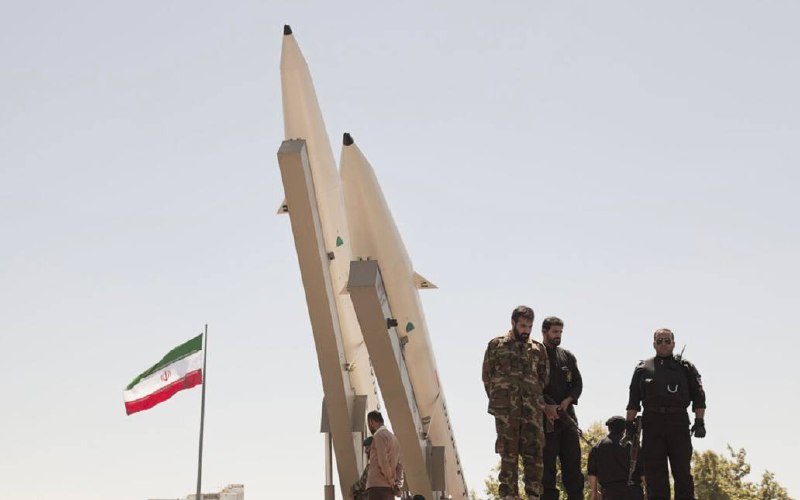
At 15:17 UTC on 26 July 2026, the Telegram channel BRICS News carried an Iranian statement that military operations would be suspended for as long as the United States holds back its air strikes. Twenty-three minutes later, the same channel projected the two sides were moving toward another ceasefire. Roughly fifty minutes before the Iranian message, at 14:25 UTC, Israeli Prime Minister Benjamin Netanyahu had publicly set a different end-state, telling viewers the war would end only when Iran's regime collapsed or abandoned its nuclear programme.
Three messages, posted in sequence on encrypted channels and social feeds, capture the shape of the current Middle East crisis. Tehran and Washington are bargaining, via relays, over the pace of de-escalation. Jerusalem is bargaining, on camera, over the destination. Both negotiations are happening in public, with no joint statement, no third-party guarantor named in the posts, and no common definition of what a pause actually covers.
What the Iranian post says, in the Iranian post's words
The Iranian message, relayed by BRICS News at 15:17 UTC and restated in near-identical language by Disclose TV at 15:15 UTC, is conditional and reciprocal. Tehran will halt attacks if the United States maintains its pause on air strikes. The Disclose TV post frames the surrounding context as follows: a US pause on airstrikes has been in effect since late Friday evening, and follows thirteen consecutive nights of US strikes.
Two epistemic caveats sit on top of that framing. First, the US pause and the thirteen-night campaign are content of a relayed report, not independently verified events in this thread; this article treats them as the relay reports them. Second, the Iranian condition is a freeze-for-freeze: de-escalation now, with the political questions parked. BRICS News, twenty-three minutes later, described the trajectory as a projected ceasefire, with the verb carrying the same uncertainty as the underlying talks. A projected ceasefire is not a signed one. It is a direction of travel disclosed through relays.
What the Netanyahu post says, in the Netanyahu post's words
At 14:25 UTC, more than fifty minutes before Tehran's conditional offer was relayed, Netanyahu set the Israeli end-state. The war ends when Iran's regime collapses or abandons its nuclear programme. The position, as quoted in the BRICS News post, is maximalist on its face: either the political order in Tehran changes, or the country's nuclear infrastructure changes. A pause in operations addresses neither.
Israeli security concerns sit underneath that formulation, even where they are not articulated in the post. A freeze-for-freeze arrangement leaves intact the missile inventories, proxy networks and uranium stockpiles that Israeli planners have spent years identifying as the principal threats. From Jerusalem's vantage, a ceasefire that does not constrain Iran's nuclear file is not a settlement at all; it is a window for reconstitution. The post does not specify what Israeli military action, if any, is contemplated during a US-Iran pause, nor does it address whether Israel considers itself bound by any arrangement Washington reaches with Tehran.
The asymmetry between the two tracks
The Washington-Tehran track and the Jerusalem-Tehran track are not negotiating the same object. The first is bargaining over the pace and intensity of military action, with the underlying dispute parked. The second is bargaining over the political and technical end-state of the Iranian state, with the underlying dispute reframed as the war's purpose. The Iranian conditional offer optimises the first; the Netanyahu formulation forecloses the second.
That asymmetry explains why the BRICS News projection of a ceasefire was confined to the US-Iran bilateral. None of the five posts in this cluster names Israel as a party to the prospective arrangement, and the Netanyahu post predates the Iranian offer. If a US-Iran pause materialises, it will by construction leave Israel and Iran in a separate, unresolved confrontation, with Jerusalem free to define its own escalation ladder inside any bilateral window Washington opens. The available source items do not specify whether the United States has consulted, or intends to consult, Israel on the terms of the pause. Monexus analysis: that silence matters, because prior reporting in 2026 has documented Israeli unhappiness with the terms of US-Iran arrangements; this article does not have a first-party source within the thread to confirm or update that line.
What to watch over the next seventy-two hours
Three concrete markers will determine whether the projected ceasefire becomes a written one or dissolves into a more dangerous cycle. First, a public US statement confirming or denying the bilateral pause, with explicit language on whether the freeze extends to munitions, basing and intelligence support, or only to piloted strike packages. Second, a Netanyahu statement clarifying whether Israel considers itself bound by any US-Iran arrangement. Third, a verifiable reduction in strike tempo, since the prior thirteen-night US campaign, as relayed in this thread, gives both sides a public baseline to measure against.
The Iranian offer is structurally fragile because it ties Tehran's behaviour to Washington's restraint without specifying who monitors the second half. The Netanyahu end-state is structurally fragile because it commits Israel to a conflict that does not end on the timetable either Washington or Tehran is now discussing. A pause that satisfies the first and ignores the second is not a settlement; it is a partition of the crisis into two unlinked files, one of which is being closed and one of which is being kept open. The cluster of posts on 26 July 2026 suggests the second file is the one more likely to determine whether the first one holds.
This article tracks a fast-moving situation. Monexus has relied on relayed wire and channel posts in the absence of a joint statement from the named parties; readers should treat the projection of a ceasefire as direction-of-travel, not as confirmed agreement. The US pause, the thirteen-night campaign and the Iranian conditional offer are all content of relays in this thread; their underlying facts have not been independently verified within this article. The available source items do not specify casualty totals, strike locations, or the precise scope of either the US pause or the Iranian offer.
Desk note: Monexus framed the wire by holding the two negotiating tracks visibly apart, rather than collapsing US-Iran and Israel-Iran into a single conflict line. The dominant English-language coverage has tended to treat any pause as progress on the underlying dispute; this publication finds the structural separation more accurate to what the posts actually say, while flagging that the pause itself is a relayed claim and not a confirmed fact within this thread.
Wire provenance
This editorial synthesis draws on the following public wire/social posts:
- https://t.me/bricsnews/17274
- https://t.me/bricsnews/17273
- https://t.me/disclosetv/21590
- https://x.com/disclosetv/status/2081396915376169247
- https://t.me/bricsnews/17271