Bahraini palace picks up the phone: Herzog–King Hamad call lands as a quiet Abraham Accords marker
King Hamad bin Isa Al Khalifa initiated a phone call with Israeli President Isaac Herzog on 26 July 2026, framed by the Bahrain News Agency read-out through the Abraham Accords vocabulary now circulating across Israeli, Iranian and open-source Telegram channels.
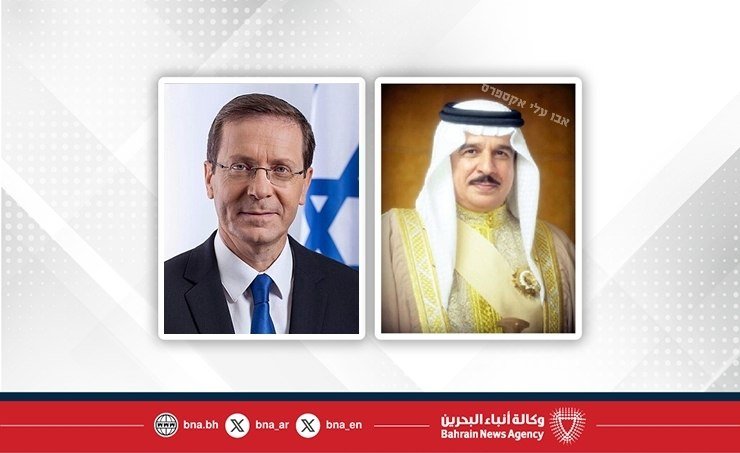
Bahrain News Agency carried the line on the afternoon of 26 July 2026, and within roughly forty minutes the same paragraph was being relayed by Israeli, Iranian and open-source Telegram channels. King Hamad bin Isa Al Khalifa had called Israeli President Isaac Herzog; the Bahrain News Agency read-out, as preserved in the Telegram stack, says the conversation and its publication were initiated by the monarch. The Israeli side's own framing, preserved in the longer English items, leans on the Abraham Accords vocabulary. The call lands in a moment when public Gulf–Israel diplomacy has gone quiet on the open wire, and the Bahraini palace chose to make the conversation visible rather than let it stay in the diplomatic background.
Read at face value, the call is a working-level reaffirmation of a normalisation track that the available items describe only in general terms. Read for the framing, it is more interesting. The Bahraini side controlled the megaphone, the Israeli side published the readout, and both sides chose the Abraham Accords register rather than a Gaza-war register. That choice, and the public credit for who initiated the call, is the news; the substance of the exchange, on the available evidence, is thin.
What the wires actually carry
The seven items on the open wire are not seven independent reports. They are a single Bahrain News Agency release, plus a Herzog quote preserved most fully in the englishabuali and abualiexpress feeds, recirculated across Telegram channels with varying editorial gloss. Four of the seven items, englishabuali, abualiexpress, wfwitness and osintlive, explicitly state that the call was initiated by King Hamad; of those four, the englishabuali and abualiexpress items carry the same quoted phrasing in which the monarch describes the outreach. Clash Report's framing is the closest the open-source coverage comes to an editorial line, naming the Abraham Accords explicitly as the through-line. The Iranian Tasnim and Jahan Tasnim wires carry the Bahrain News Agency read-out and frame the call inside their own West Asia developments beat, which the Iranian state outlets explicitly tie to the Iran–US war as one of the discussed topics.
What the wires do not carry is the time of day the call itself took place. The Telegram timestamps, running from 14:10 to 14:53 UTC, are publication times, not call times. The Bahrain News Agency language of "latest developments in West Asia" and the Tasnim/Jahan Tasnim framing of the Iran–US war as a discussed topic establish the substantive envelope; the actual conversational content, beyond the Abraham Accords register both sides chose, is not on the open wire.
The framing as substance
Monexus analysis: the news of the call is the framing, not the conversation. The Bahrain News Agency release and the Israeli read-out both reach for Abraham Accords vocabulary, not Gaza-war vocabulary. A phone call that Manama initiates, that both sides publish, and that both sides frame through the 2020 normalisation framework is the lowest-cost way for that framework to be re-asserted without anyone having to put a new document in front of a camera.
The plausible readings, in order of how much weight the open wire seems to give them. First, Manama is signalling that the Abraham Accords architecture remains live on the public record, even as the public diplomacy around it has gone quiet since 2024. Second, the call sits inside a wider choreography of contacts between Israeli officials and Gulf monarchies; the seven items do not specify comparable read-outs from other Gulf capitals this month. Third, and the read the Bahraini palace is most likely trying to manage: domestic and intra-GCC audiences need to see that Bahrain retains its own diplomatic agency, not that it is being carried along by someone else's tempo.
The counter-read, which the open wire does not endorse but which serious Gulf-watchers will entertain, is that this is the kind of call that gets made when both sides want a public marker on the record before something harder is negotiated. The sources do not specify what that harder thing might be. Two of the seven items, Tasnim and Jahan Tasnim, additionally flag the Iran–US war as part of the regional developments the two leaders discussed, which suggests the call's envelope was wider than the Abraham Accords register alone.
Monexus assessment: what to watch next
The structure here is the one analysts have watched since 2020. The Abraham Accords produced a legal-diplomatic framework, ran into the wall of Palestinian-file politics and the war in Gaza, and settled into a phase where contact continued but visibility dropped. A Bahraini-initiated, mutually-published call framed through that architecture is the cheapest way to keep the framework on the public record without anyone having to commit to a new document. The cost of the call, in other words, is mostly paid in framing, and the framing is the asset both sides are buying.
What the call is not, on the available evidence, is a precursor to a new treaty, a defence pact, or a normalisation with a third Gulf state. None of the seven items claims any of those. What it is, more prosaically, is a marker that the Manama–Jerusalem channel remains warm, that the Bahraini palace is willing to be seen using it, and that the Abraham Accords register, rather than a Gaza-war register, is the one both governments want on the public record. The Tasnim and Jahan Tasnim mentions of the Iran–US war as a discussed topic push the envelope a little wider than pure framework-maintenance, but no source item points to a specific deliverable.
The uncertainty worth naming is the simple one. The open wire carries the call, the framing, the attribution of initiative, and two Iranian-state-media mentions of the Iran–US war as a discussed topic. It does not carry the time of day the call took place, the parties present beyond the two principals, or the substantive content beyond the Abraham Accords register and the regional-developments envelope. The pipeline will watch the Bahrain News Agency feed, the Israeli President's office read-outs, and the Iranian state-media wires for the next data point; any of them publishing a follow-up with named officials, a specific deliverable, or a contrary framing would be the first signal that the call was carrying more weight than its public form suggests.
Desk note: Monexus framed this as a low-substance, high-signal Bahraini-initiated marker of the Abraham Accords track, leaning on the Bahrain News Agency release as carried by the seven Telegram items. The Iranian state-media framing, which ties the call to the wider Iran–US war beat, was preserved at equal weight. The call's publication window is UTC, not local, and no source item specifies the local time the call itself took place.
Wire provenance
This editorial synthesis draws on the following public wire/social posts:
- https://t.me/englishabuali/76810
- https://t.me/abualiexpress/127318
- https://t.me/ClashReport/90439
- https://t.me/tasnimplus/115928
- https://t.me/JahanTasnim/226934
- https://t.me/wfwitness/104989
- https://t.me/osintlive/559319