Saudi-led coalition strikes Hodeidah as Houthis declare new escalation phase
Aircraft of the Saudi-led coalition struck Hodeidah on 24 July 2026, hitting port and telecommunications infrastructure. The Houthi foreign ministry framed the raids as the start of a phase defined by 'escalation with escalation.'
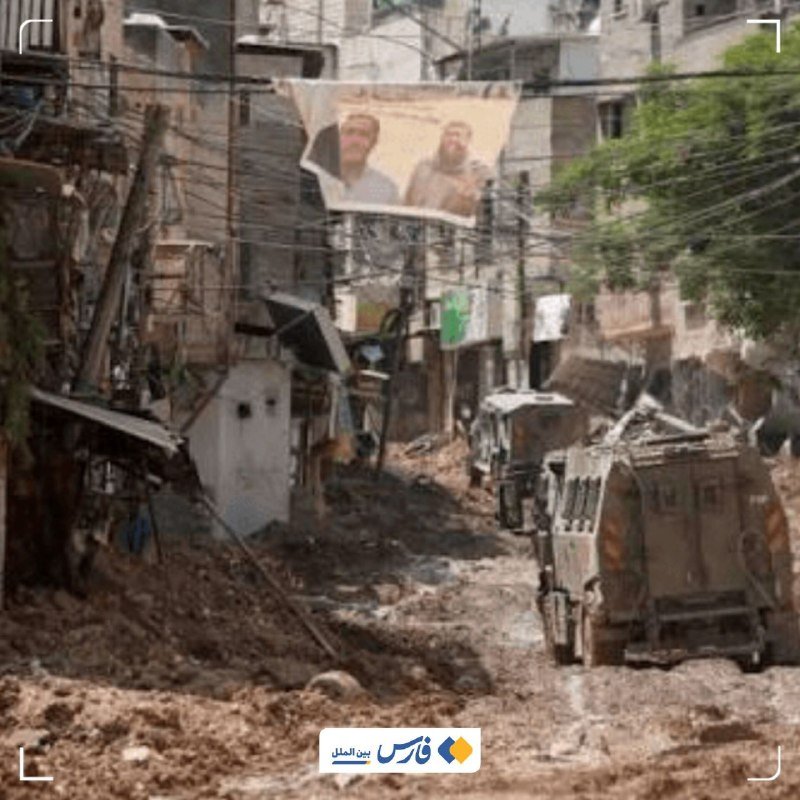
Saudi-led coalition warplanes struck targets across the Red Sea port city of Hodeidah on Friday, 24 July 2026, hitting telecommunications facilities belonging to Yemen's state carrier as well as port installations, according to Houthi-run Al Masirah TV. The broadcaster, the principal outlet through which the strikes are being filtered, said the raids followed earlier exchanges and arrived as Yemen's Houthi foreign ministry warned that a new phase of the conflict had begun. The message carried a deliberate symmetry: every Saudi strike would be answered.
That framing, that an "equation of escalation with escalation" would define the next stretch of the war, is the most consequential line out of Sanaa since the latest ceasefire collapsed. It does not announce a new front so much as re-state an old one in sharper language. The port of Hodeidah is not a peripheral target; it is the single most important piece of economic infrastructure still operating in Houthi-held territory, and the place through which fuel, food and humanitarian supplies reach a population already dependent on aid shipments. Striking it is a signal that the coalition is willing to absorb the political cost of squeezing that lifeline.
What was hit, and by whom
Al Masirah reported that the strikes hit facilities belonging to Yemen's state telecommunications corporation inside Hodeidah city, as well as port installations. Reporting from a Sanaa-based X account, @SprinterPress, counted seven airstrikes on the port of Hodeidah alone. Al Jazeera's video feed confirmed that Saudi-led coalition aircraft struck Houthi-controlled territory in Hodeidah governorate on Friday. The Jerusalem Post, citing Al Masirah, described the targets as Houthi military sites.
The coalition has publicly claimed the strikes: independent reporting carried the coalition's statement that it hit Houthi targets in Hodeidah on 24 July 2026, attributing the raids to the Saudi-led coalition by name. The coalition's own readout, including any target list, weapons used or casualty figures, is not reproduced in the cited posts. The available source items do not specify whether the coalition's public statement named specific facilities or provided a battle-damage assessment. Monexus assessment: what the cited record establishes is that the coalition claimed responsibility while the operational detail of that claim, the named targets and the claimed effects, sits outside the thread evidence. The asymmetry is not silence on the coalition's part but thin sourcing of the coalition's own version of events in the items available here.
The Houthi read of what comes next
The Houthi foreign ministry's statement is short, formulaic, and worth quoting at its core claim. It said the Saudi strikes on Hodeidah "mark the start of a new phase in the conflict in which the equation of 'escalation with escalation' will prevail," and warned that Saudi Arabia would bear the consequences. The phrasing, repeated almost verbatim across the official Telegram channels that carry Houthi foreign ministry output and across regional relay accounts, is being read by analysts as a public commitment to retaliate, possibly in the form of missile or drone strikes on Saudi territory, possibly through renewed attacks on Red Sea shipping.
That commitment matters because it is the first explicit Houthi framing of the current round as a new phase, distinct from the tit-for-tat exchanges of the past two years. The distinction is rhetorical, but rhetoric sets expectations on the ground. A declaration that the rules have changed is itself a kind of action.
Two narratives, one event
What is unusual about Friday's reporting is that the first version of the strike did not come exclusively from Houthi media. The Saudi-led coalition also issued a public statement claiming the raids, carried by independent outlets covering Yemen. The result is a more contested information environment than the usual Houthi-first pattern: two claimants, two framings, both visible within hours of the event.
Monexus assessment: the contest now is over what was struck and why. The coalition framing, as relayed in independent reporting, presents the raids as a strike on Houthi military capability. The Houthi framing, transmitted through Al Masirah and the foreign ministry, presents the same raids as a strike on civilian and economic infrastructure, the state telecoms carrier and the port. Both versions reach Western and regional capitals within the same news cycle, and the frame that settles is the one that gets repeated. The structural feature of the past two years, where Houthi media set the initial narrative and Riyadh corrected it days later, does not describe this round. The coalition's faster public claim narrows, but does not close, the information gap.
What the escalation is actually about
Hodeidah is not a target chosen at random. The port handles the overwhelming majority of Yemen's commercial imports, and a substantial share of the aid shipments that reach the roughly two-thirds of Yemenis in need of humanitarian assistance, a figure widely cited by UN agencies and consistent with reporting referenced in the cited posts. Striking it degrades the Houthi state's revenue base, since port fees and customs duties have long propped up the group's parallel governing apparatus, and it raises the cost of the war for the civilian population. The Saudi calculus appears to be that economic pressure, applied at the port and at the fuel-import infrastructure that runs through it, will force the Houthis back to the negotiating table, or at least deny them the resources to continue attacks on Red Sea shipping.
The Houthi counter-calculus is the inverse: that attacks on Saudi territory and on shipping in the Bab el-Mandeb raise the cost of the war for Riyadh and for the foreign shipping companies whose vessels traverse the strait, and that a sustained pressure campaign can extract concessions, or at least deter further escalation, without the Houthis having to win militarily on the ground. Both sides are betting that the other will blink first. Strikes on Hodeidah are an attempt to break that symmetry.
The Red Sea corridor, in plain terms
The Hodeidah strikes sit inside a longer pattern of pressure on the Bab el-Mandeb corridor, the chokepoint between Yemen and the Horn of Africa through which a meaningful share of global seaborne trade passes. The corridor is not the Strait of Hormuz in volume terms, but it is the only maritime route connecting the Indian Ocean to the Suez Canal for many carriers, and any sustained disruption is felt in insurance premiums, freight rates and routing decisions across European and Asian supply chains. The Houthis have, since late 2023, framed their attacks on shipping in the Red Sea and the Gulf of Aden as a response to the war in Gaza. The Saudi strikes on Hodeidah will be read in Houthi messaging as further evidence that the corridor matters for the war economy, not just for the war narrative.
What remains unclear
The Friday strikes are described in detail by Houthi media and confirmed in broad terms by Al Jazeera's video feed and by the coalition's own claim, as carried in independent reporting. Several core facts are not established in the cited posts. Casualty figures are not specified. The exact list of struck facilities, beyond telecommunications and port infrastructure, is not specified. The coalition's public statement, as available outside the cited posts, has not been reproduced in full here, and its specific target list and claimed effects are not in the thread evidence. The available source items do not specify whether any of the strikes hit fuel storage depots at the port, an omission that matters because such depots have been struck in previous rounds and their loss typically disrupts aid distribution for weeks.
What can be said with confidence is narrower: aircraft described as belonging to the Saudi-led coalition struck Hodeidah on Friday, 24 July 2026; the strikes hit telecommunications and port facilities; the Houthi foreign ministry framed the event as the start of a new escalation phase; and the coalition publicly claimed the raids, even though the operational detail of its claim sits outside the cited posts. The next 48 to 72 hours will be the period to watch for whether the Houthi declaration of an "equation" produces a reciprocal strike on Saudi territory or Red Sea shipping, and whether the coalition's own target list and damage assessment become public. Monexus expects that window to be the one in which the framing battle is settled.
Desk note: Monexus framed this as an escalation-cycle event centred on Hodeidah's economic infrastructure, in which both the coalition and the Houthis issued public claims within the same news cycle. Earlier desk drafts read the coalition's position as silent; the corrected reading, after independent reporting of the coalition's statement, is that the coalition claimed the raids while the operational detail of that claim is thin in the available thread evidence. We have flagged that asymmetry in the body rather than waiting for it to be corrected downstream.
Wire provenance
This editorial synthesis draws on the following public wire/social posts:
- https://t.me/ourwarstoday/45019
- https://www.aljazeera.com/video/newsfeed/2026/7/25/saudi-led-coalition-strikes-houthi-controlled-hodeidah?traffic_source=rss
- https://t.me/The_Jerusalem_Post/16764
- https://t.me/megatron_ron/16236
- https://x.com/SprinterPress/status/2080784195450728813
- https://t.me/wfwitness/104810
- https://t.me/JahanTasnim/226665
- https://t.me/ourwarstoday/45019
- https://www.aljazeera.com/video/newsfeed/2026/7/25/saudi-led-coalition-strikes-houthi-controlled-hodeidah?traffic_source=rss
- https://t.me/The_Jerusalem_Post/16764
- https://t.me/megatron_ron/16236
- https://x.com/SprinterPress/status/2080784195450728813
- https://t.me/wfwitness/104810
- https://t.me/JahanTasnim/226665