Vehicle strikes CSD Pride crowd in Berlin, one dead and at least fifteen injured
A driver plowed into a crowd at Berlin's Christopher Street Day parade shortly before 22:00 UTC on 25 July 2026, killing one and leaving at least fifteen injured; German emergency services declared a mass casualty event and the suspect was still being sought hours later.
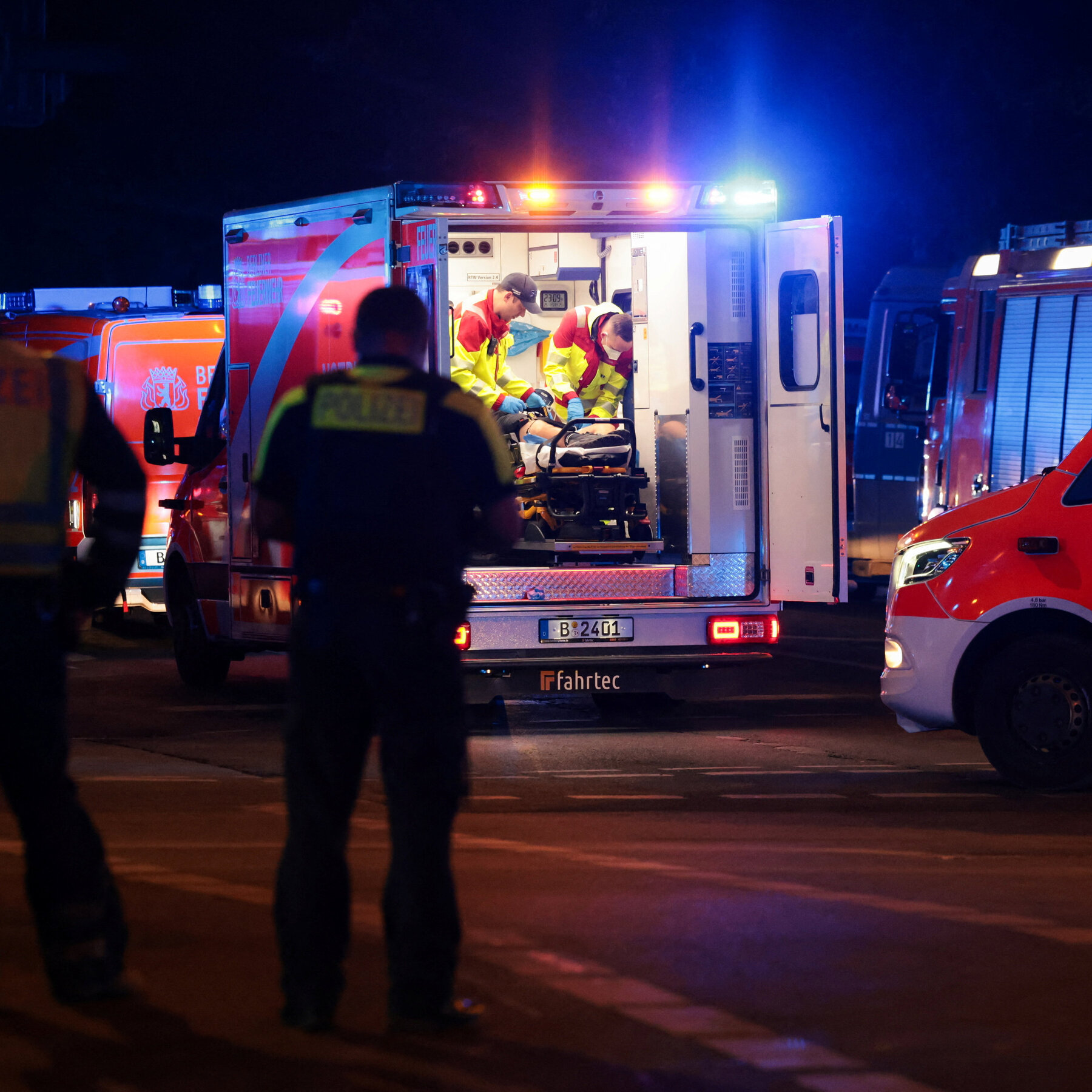
Shortly before 22:00 UTC on Saturday 25 July 2026, a driver slammed a vehicle into a crowd at Berlin's Christopher Street Day (CSD) Pride parade, killing one person and injuring at least fifteen others. German emergency services declared a mass casualty event within minutes of the strike, and the suspect remained at large in the late-evening hours. The incident occurred in the heart of a city that has treated its annual Pride march as both a civic ritual and a logistical drill, with Brandenburg Gate as the iconic backdrop. On Saturday it became the site of the worst such attack on a Pride event in the German capital in recent memory.
The collapse of the festive atmosphere into a casualty triage was almost instant. Posts from the @itspascalcogne account, aggregated by the open-source channel Open Source Intel, gave the first wire-style figures: one dead, fifteen injured. The discrepancy of minutes between the first alerts and the confirmation of fatalities captures how rapidly authorities had to scale up. The CSD parade is one of the largest LGBTQ+ events in Europe, drawing hundreds of thousands of attendees each summer, and the strike landed during one of the busy hours of the march.
What the wires first reported
The earliest corroborated frame came from Clash Report at 20:53 UTC, describing a vehicle driving into a crowd near Berlin's CSD event around 22:00 local time, with police not yet confirming cause or motive and emergency services declaring a mass casualty event. That phrasing, mass casualty event, is a specific German emergency-services designation indicating that the scale of injuries exceeds what ordinary first-response can absorb and triggers a coordinated surge of medical, fire and police resources. Within eleven minutes, Open Source Intel had already relayed a BILD-sourced line through the @itspascalcogne post, confirming that multiple people had been struck. By 22:57 UTC, the rnintel channel was reporting that one person had died and that the suspect was still on the loose. The ascending casualty count, from "multiple struck" to "one dead, fifteen injured," is the shape of a fast-moving incident: it is the order in which the information becomes available, not necessarily the order in which harm occurred. The updated figure was attributed by Open Source Intel to DTS News Agency. Much of the available reporting is a Telegram-and-X relay of a small number of primary wire lines; the desk has treated the relay as the provenance record and lowered the certainty of any secondary claim accordingly.
A pattern Monexus readers will recognise
Vehicle-ramming attacks on civilian gatherings are not new in Europe. The 2016 Nice Bastille Day attack, the 2017 Barcelona Las Ramblas strike, and a string of subsequent incidents in cities from Münster to Trier have pushed European security planners to harden the perimeters of public events with bollards, concrete barriers, and vehicle checkpoints. The Christopher Street Day parade in Berlin is no exception; large sections of the route around the Brandenburg Gate are typically closed to traffic and lined with police vehicles as improvised blocks. The fact that a vehicle nevertheless reached the crowd on Saturday represents a tactical failure at the perimeter, not a strategic surprise. The structural frame here is the familiar one: soft-target mass gatherings, where the attack surface is the festival itself, and the only meaningful defence is route design, vehicle sequencing, and rapid suspect interdiction when the perimeter is breached.
The available source items do not specify whether the route on Saturday had been fully closed to traffic, whether bollards were in place, or whether the suspect exploited an authorised vehicle entry. Open Source Intel's aggregated reporting explicitly notes that police have not yet confirmed the cause or motive. Monexus treats the motive as genuinely open at this stage and notes that earlier vehicle-ramming attacks in Europe have variously been claimed by extremist networks, conceived as personal vendettas, or prosecuted as acts without a clear ideological signature. Any of those readings is consistent with the public evidence as of 22:57 UTC on 25 July 2026.
What's happening now, and what to watch
Berlin police's priority task in the hours immediately after the strike is the apprehension of the suspect. The rnintel channel, citing preliminary reporting, indicated the suspect was still on the loose late on Saturday evening. Open Source Intel's aggregated reporting, as relayed through the @itspascalcogne X account, explicitly noted that police had not yet confirmed cause or motive as of the early-evening update. The German federal criminal police (BKA) typically joins the lead on vehicle-ramming cases once terrorism cannot be excluded; the available source items do not specify whether Saturday's incident will be formally treated under the German Criminal Code's terrorism provisions or as a homicide-and-attempted-homicide case. The CSD organising committee, the Berliner CSD e.V., will also face questions about route security and the decision to proceed with the march in the immediate aftermath.
The corollary questions for readers are practical. The Christopher Street Day parade is a multi-day event, with the main march on Saturday and associated cultural programming running through the weekend; whether the remainder of the programme will proceed is a near-term decision that will be made by the organisers in coordination with Berlin police. For Berlin's wider LGBTQ+ community, Saturday's strike lands on a population that has, in recent years, faced a documented rise in homophobic harassment and a small but persistent tail of violent incident; the cumulative effect of one more attack on a Pride gathering is heavier than the casualty count alone would suggest. For European security planners, the incident is the latest data point in a long-running cost-benefit calculation about how to keep public civic rituals open without surrendering them to fortified compounds. The trade-off is not academic; it is the difference between a city that celebrates visibly and a city that retreats indoors.
The news here, as the night ends, is both sharper and thinner than the headlines suggest. Sharper: one person is dead, more than a dozen are injured, and a Pride event that was meant to be a public affirmation has become a crime scene. Thinner: police have not, according to the cited posts, named a suspect or confirmed a motive, and the institutional response from Berlin's senate, the federal interior ministry, and the BKA is not addressed in the available source items. The next 24 hours will tell us whether the perimeter that failed on Saturday was a one-off breach or a structural vulnerability that will reshape how Berlin handles its next mass-gathering event.
Monexus reported this from the open-source channel trail, treating the Telegram-aggregated wire as the primary ledger while flagging the still-open questions of motive, suspect identification, and institutional response. Coverage will be updated as official statements from Berlin police and the federal interior ministry are published.
Wire provenance
This editorial synthesis draws on the following public wire/social posts:
- https://t.me/ClashReport/90392
- https://t.me/osintlive/559212
- https://t.me/osintlive/559214
- https://t.me/osintlive/559237
- https://t.me/rnintel/64922
- https://t.me/rnintel/64934