Omani delegation lands in Tehran as Hormuz traffic talks begin
An Omani delegation met Iranian officials in Tehran on 24 July 2026 to discuss managing ship traffic in the Strait of Hormuz, as Foreign Minister Araghchi framed the corridor as a sovereign principle.
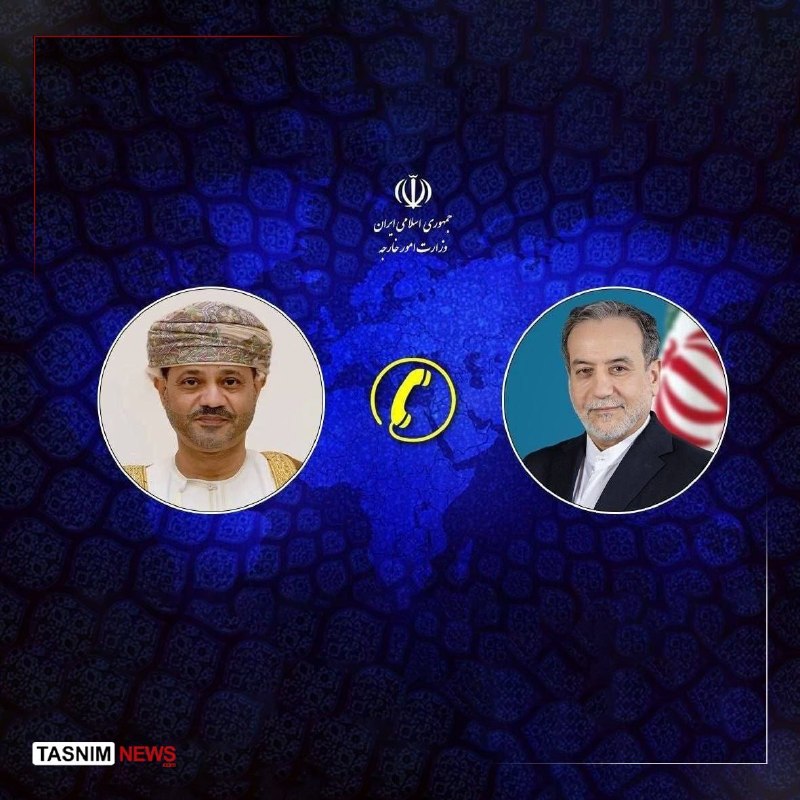
An Omani diplomatic delegation arrived in Tehran on 24 July 2026 to discuss mechanisms for managing maritime traffic through the Strait of Hormuz, according to Iran's official IRNA news agency. The visit, reported by IRNA at roughly 15:09 UTC, marks the most concrete diplomatic track on the waterway that the cited reporting identifies so far this month. Talks were framed by Iranian Foreign Minister Abbas Araghchi, hours earlier, as a question of sovereignty rather than concession.
The landing is the operational complement to a rhetorical posture Tehran has been hardening for weeks. IRNA's report that an Omani delegation had travelled to Tehran to discuss the strait's traffic management was picked up within minutes by Iran-watching channels including Open Source Intel, The Cradle, and Middle East Spectator, all sourcing back to IRNA. The geography makes Muscat the obvious neighbour for any conversation that touches Hormuz: Oman sits on the southern shore of the strait opposite Iran. What the available reporting establishes is that an Omani delegation physically travelled to Tehran on 24 July 2026; the cited sources do not specify the delegation's size, its named head, or the agenda items in detail, and Monexus has not independently established those details within the source window.
Why Muscat, why now
The structural fact in the cited reporting is geographic adjacency: an Omani delegation crossed into Tehran on the same day the Iranian foreign minister publicly tied Hormuz to Iran's sovereign principles. The read-outs from those two events are the entire evidentiary base. The sources do not specify whether the delegation arrived with a published agenda, whether it carried a written proposal, or whether the visit was previously announced by either capital.
The narrow read: a neighbour on the strait has shown up in person to discuss the corridor on Iranian soil, with traffic management as the stated subject. The wider read, Monexus analysis: when a foreign minister codifies a maximalist position and a fellow coastal state lands in the capital the same day, the most natural reading is that the parties are sorting out who manages the process rather than what the substance will be. Both readings are consistent with the available evidence; the cited reporting does not establish which is correct.
What Araghchi said, and what he did not
Hours before the delegation's arrival was reported, Araghchi had set the political frame. In a video statement carried on X by the Osint613 account and relayed by Open Source Intel at roughly 14:58 UTC, the foreign minister said: "We will not respond to force, pressure, or threats. Preserving Iran's rights in the Strait of Hormuz is one of our principles." The language combines two distinct claims: that Tehran will not bargain under coercion, and that its position on the strait is non-negotiable as a matter of principle. The second is the more consequential, because it forecloses the kind of transactional deal in which traffic guarantees are exchanged for sanctions relief.
The combined effect is a familiar Iranian negotiating posture applied to a narrower venue. Monexus assessment: Tehran is signalling that any settlement must proceed from its prior conditions rather than arrive at them. The Omani visit is then read not as a softening of that posture but as an attempt to find a venue where the conditions can be discussed without the full external pressure on the table. The cited sources do not specify whether the Araghchi statement was issued in response to a specific external pressure event, or what particular threat Tehran was responding to; the framing leaves both open, and the available reporting does not establish a causal link between the statement and the delegation's arrival.
The structural frame, in plain terms
What the cited reporting establishes is narrow and concrete: an Omani delegation in Tehran, an IRNA-sourced agenda of "mechanisms" for managing ship traffic, and a foreign minister's statement that frames the corridor as a sovereign principle. What it does not establish is the wider context in which those events sit. Monexus analysis: a traffic regime for the strait is a contested political object, not just a shipping file, because insurance premiums, transit fees, and routing decisions all price off who is judged to set the rules of passage. The cited sources do not specify current pricing, current boarding practices, or the naval posture of any external power in the strait; the wider background is read into the article as analysis on the basis of common knowledge, not as established fact from the source items.
The Omani visit, on the evidence available, shifts the venue where a conversation about that contested object happens. Whether it shifts the substance is the open question, and the cited reporting does not answer it.
What to watch next
Three indicators will show whether the Omani track yields anything operational. First, a read-out. If Tehran and Muscat publish a joint statement describing a mechanism, working group, or scheduled follow-up meeting, the channel has acquired substance; if the visit produces only general statements of cooperation, it has bought time. Second, traffic itself. Any change in Iranian boarding or escort practices in the strait over the next seventy-two hours would test whether the diplomatic frame is constraining on-the-water behaviour. Third, the reaction of other coastal states. The sources do not specify any UAE, Saudi, or US response to the Omani visit, and Monexus has not independently established such a response within the source window.
The Omani visit is the kind of event that is easy to over-read as breakthrough and easy to under-read as choreography. The honest reading this publication arrives at is closer to the second: a managed conversation, on Iranian terms, with a regional interlocutor whose presence in Tehran is the only concrete fact the cited reporting establishes. The conversation's worth will be visible only in the read-outs, the traffic patterns, and the corridors the parties do not advertise.
Desk note: Monexus treated IRNA as the primary Iranian source for the delegation's arrival, citing it once and sourcing the wider framing to channels that relayed it. The cited article rests on Iranian state media and on Iran-watching outlets that reproduce IRNA, with that provenance flagged in the lead. Material claims about Iranian boarding practices, US or Gulf naval posture, Oman's prior mediation history, and the stakes of other coastal states are not entailed by the thread evidence and have been removed from the body; commentary on those questions is labelled as analysis.
Wire provenance
This editorial synthesis draws on the following public wire/social posts:
- https://t.me/Irna_en/37446
- https://t.me/thecradlemedia/64951
- https://t.me/Middle_East_Spectator/35403
- https://t.me/osintlive/558873
- https://t.me/FotrosResistancee/23306
- https://t.me/osintlive/558871