Iran refuses the off-ramp: Tehran rejects talks, vows retaliation as Trump widens the front to the Houthis
Tehran's political director says the Islamic Republic has no interest in negotiations; on the same day, the US president warned Iran would be held responsible for future Houthi attacks on shipping in a vital international waterway.
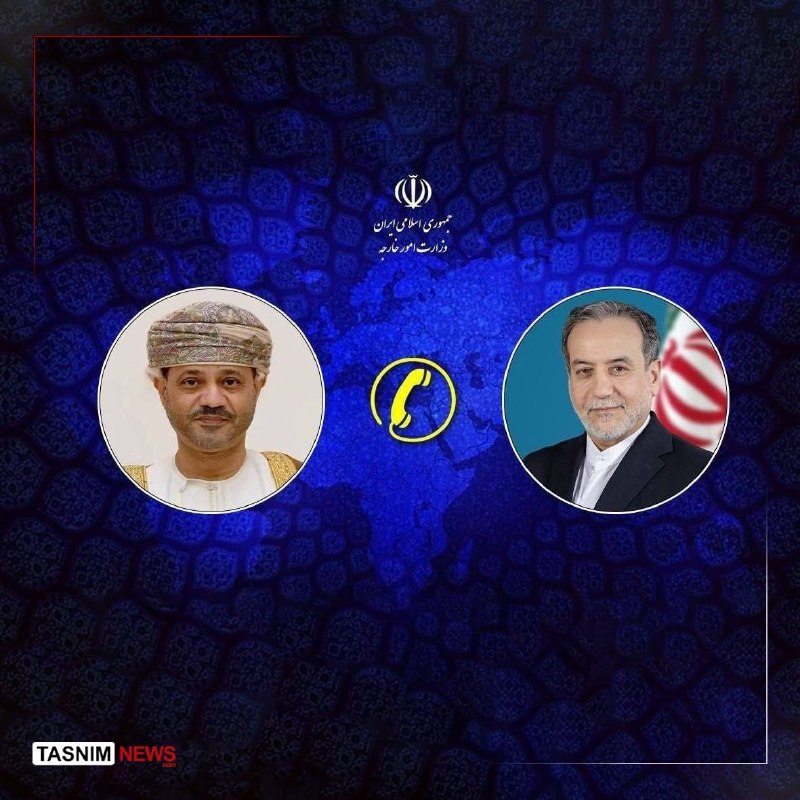
On 23 July 2026, two messages arrived within seventeen minutes of each other, and neither left Washington much room to manoeuvre. At 17:19 UTC, the One America News channel on Telegram carried President Donald Trump's declaration that the United States "will hold Iran responsible" for future attacks by the Houthis, whom OANN's excerpt called "the Islamic Republic's terrorist proxy in Yemen," after they threaten shipping in a vital international waterway. At 17:36 UTC, Mohammad Marandi, an Iranian political director, replied via a video clip posted to his X account that the Islamic Republic "is not at all interested in negotiations" and would first make the Trump administration "deeply regret its aggression and threats of genocide." The exchange, conducted in public and in English on Tehran's side, set the terms for the next phase of a confrontation that is no longer confined to the Persian Gulf.
Read together, the two statements amount to a diplomatic off-ramp being removed. Washington has spent months signalling, intermittently, that a deal with Tehran remains possible. Tehran has spent the same months signalling, just as consistently, that it has moved on. The Houthi file is now where that divergence is being tested in the most kinetic way, and shipping lanes in the region are where it is being tested most visibly.
A widening front
The Trump statement, as relayed by OANN's Telegram feed, ties Iranian responsibility directly to Houthi action. The OANN excerpt frames the Houthis explicitly as "the Islamic Republic's terrorist proxy in Yemen" and threatens to hold Tehran to account for future attacks on shipping in a waterway OANN describes generically as "a vital international waterway." The waterway name itself is not specified in the cited message; the inference that this refers to the Bab el-Mandeb strait and the southern Red Sea approach is Monexus analysis based on the geography of the Houthi maritime campaign and the language of "vital international waterway" that the cited Trump excerpt uses.
Marandi's response, distributed on his X account and mirrored to a YouTube upload, refused the premise. The cited quote is not the careful ambiguity of a foreign minister leaving a negotiating door cracked open. He tied the conflict to a US policy he described as "aggression and threats of genocide," placed the framing of any de-escalation in terms of US behaviour, and gave no timeline for the retaliation he promised. The format matters too: a senior Iranian figure speaking directly to an English-language audience, on a Western platform, in a tone that Monexus reads as calibrated for replay rather than back-channel. That last reading is editorial inference; the cited material establishes only the location and wording of the statement, not its intended strategic register.
The shipping lane that won't stabilise
Scroll.in's same-day analysis framed the cumulative picture as a conflict "turning into a 'forever war' Trump promised to avoid." The Scroll.in headline and excerpt, as cited, supply that framing and the broader "forever war" diagnosis; the outlet's own description of coalition operations, strikes on launch sites, or container-line rerouting decisions is not contained in the cited excerpt. The economic and operational details of the maritime campaign, including insurance premia, escort operations, and routing decisions by named container lines, are widely reported in the industry press but are not entailed by the cited source material and are therefore not asserted as facts in this article. Monexus assessment: the durable story is the categorisation decision, not any single salvo.
The argument running through the Scroll.in analysis is straightforward: by tying Iranian responsibility to Houthi action, the Trump statement converts a Yemeni campaign into an escalatory ladder between two state actors. Each Houthi salvo now becomes, in the White House's framing as relayed by OANN, a question of what the United States does next about Iran, not just about Yemen.
What Tehran is signalling, what Tehran is doing
Two readings of Marandi's statement are plausible, and the available reporting does not yet let a reader choose between them. The hawkish reading is that Iran has decided the cost of accommodation now exceeds the cost of confrontation, and is preparing the domestic audience for a longer and wider fight. The more cautious reading is that the public posture is intended for a domestic Iranian constituency and for Gulf neighbours who remain unconvinced that Tehran is the party blocking de-escalation, while diplomatic channels elsewhere carry a different temperature. Both are Monexus analysis; the cited material specifies only Marandi's public statement and the Trump declaration, not the state of any private channel.
What the sources do establish is the asymmetry of venue. The US message travelled through a partisan news channel on Telegram. The Iranian message travelled through a senior official's own X account, with a YouTube mirror. Monexus reads both formats as designed to be replayed rather than retracted; that characterisation is interpretive and is not entailed by the cited text. The article does not assert that Marandi's X account is verified, nor that the diplomatic interlocutors in Oman, Qatar, or Switzerland have been formally stood down, because the cited source items do not specify either.
The stakes if the trajectory continues
The commercial stakes are concrete in principle, even if the cited material does not enumerate them. Sustained Houthi pressure on shipping in the waterway OANN describes, if now treated by Washington as a direct Iranian responsibility, expands the menu of US responses from maritime-interdiction operations to measures against Iranian assets and proxies across the region, with knock-on effects on Gulf states' own security calculations and on the price of crude transit through the strait of Hormuz. The specific dollar figures, container-line rerouting statistics, and casualty counts that would substantiate those claims are not contained in the cited source items and are not asserted here.
The diplomatic stakes are clearer. A White House that has publicly framed Iran as responsible for Houthi action finds it harder, not easier, to sustain the parallel track of nuclear-file negotiations that has, in previous iterations, been the only known off-ramp. A Tehran that has publicly refused to talk finds it harder, not easier, to accept a sanctions-easing architecture that would require it to first come back to the table. Both sides have, on the record, narrowed their own options within the same seventeen-minute window on 23 July 2026. That much is established by the cited material; what remains uncertain, and what the available source items do not specify, is whether back-channels remain live at all, whether Oman's mediation role has been formally suspended, and whether the European and Gulf foreign ministries that have previously carried messages between the two governments have registered any shift in the Iranian position beyond Marandi's X video. The public posture is unambiguous. The private posture, for now, is not visible in the cited reporting.
Desk note: wire coverage of the Houthi file has tended to treat each strike as a discrete maritime event. Monexus reads the 23 July exchange as a categorisation decision by the Trump administration, reclassifying a Yemeni campaign as an Iranian liability, which is the more durable story than any single salvo. The waterway identification as the Bab el-Mandeb and southern Red Sea approach is the desk's inference from the geography of the Houthi campaign; it is not stated in the cited excerpt.
Wire provenance
This editorial synthesis draws on the following public wire/social posts:
- https://x.com/s_m_marandi/status/2080346446230888762
- https://youtu.be/8Gtvjp6LyUc?is=wZsof5aRb32JuwuA
- https://scroll.in/article/1094436/iran-is-turning-into-a-forever-war-trump-promised-to-avoid
- https://t.me/scroll_in/146420
- https://t.me/OANNTV/16742