US–Iran exchange escalates across the Gulf as missile salvos and strikes enter a third week
US naval and air strikes on Iran's southern provinces and islands continued overnight into 21 July 2026, with Iranian missile launches reported toward Jordan and Bahrain. The exchange marks an open widening of the war's geography across the Gulf.
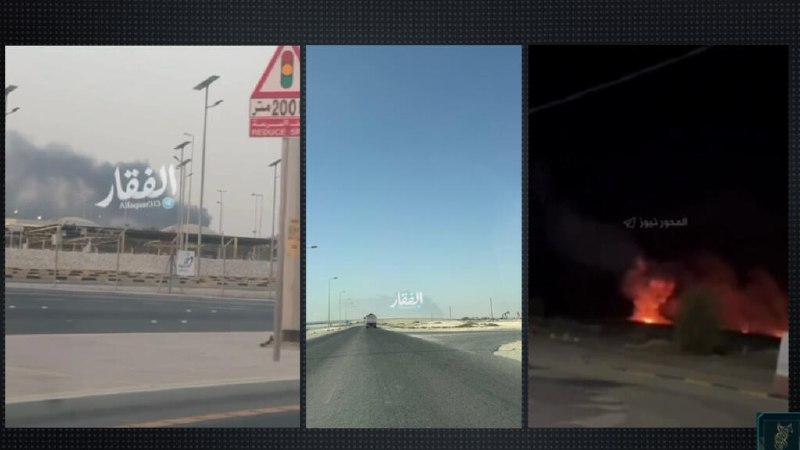
At roughly 09:39 UTC on 21 July 2026, an open-source intelligence channel reported that US naval and air forces had continued overnight a sustained series of strikes on Iran's southern provinces, coastal zones, and islands, while Iran carried out combined missile launches in response. Within minutes of that dispatch, two further channels placed Iran's own salvos across the Gulf: one reported fresh launches toward Jordan, then toward Bahrain, at approximately 09:36 UTC; another, at 09:31 UTC, framed the exchange as a campaign of "crushing responses" against US bases in Bahrain, Kuwait, and Jordan, claiming US troop casualties. The picture across the three is consistent on geography and direction, and divergent on attribution and scale.
What is no longer in dispute is the shape of the war. US power is striking Iranian territory from the sea and the air. Iranian missiles are flying out of Iranian territory toward US-allied bases on the Arab side of the Gulf. The geography that was treated, for nearly three weeks of escalation, as a buffer has become the front line.
A widened geography
The overnight strikes named in the OSINT channel's 09:39 UTC dispatch cover "Iran's southern provinces, coastal areas, and islands." That phrasing is consistent with reports that have circulated since the early phase of the exchange: targets along the Hormuz coast, in Bushehr and Hormozgan provinces, and on islands in the Strait. The sources do not specify which platforms, carrier-launched air, submarine-launched cruise, or shore-based aviation, are delivering the strikes, or which targets within those provinces are being hit. They are also silent on damage assessment.
On the Iranian side, the geometry is simpler to read. Missiles have flown toward at least two new targets in the last 24 hours: Jordan and Bahrain, in addition to the previously reported volleys toward Kuwait and the broader Gulf coast. The channel posting at 09:36 UTC lists the launches in that order, suggesting an outbound sequence rather than a coordinated salvo.
That is the war as it now presents itself: nightly US fire onto Iranian soil; daytime and night-time Iranian fire onto Arab hosts of US forces. The Arab states in between are no longer auxiliaries. They are co-belligerents by geography if not by declaration.
The Iranian framing, in its own words
The 09:31 UTC post from a channel identifying itself as covering Iranian military affairs is unambiguous in its framing. It describes "crushing responses" and the "destruction of US bases in Bahrain, Kuwait, and Jordan," claims the deaths and injuries of a "large number of American forces," and presents the renewed US action as a response to those losses rather than as the initiator of the exchange. Several things are worth noting about this account.
First, the claim that US bases in Bahrain, Kuwait, and Jordan have been "destroyed" is unsupported by the other two sources in the cluster. The 09:36 UTC post describes fresh launches, not aftermath. The 09:39 UTC post describes continued US strikes, which is incompatible with a reading in which the US has been militarily neutralised. The structural reading is straightforward: state-adjacent messaging is doing the work that battlefield reporting cannot yet confirm.
Second, the framing inverts the causal sequence. The same channel treats the renewed US strikes as a consequence of Iranian counter-strikes, not as the continuation of a US air campaign that began before the first Iranian salvos of this phase. That inversion has a long lineage in Iranian state-aligned media. It does not have to be either true or false to be useful as messaging: it positions Iran as responder, not initiator, in front of audiences across the region.
Third, the casualty language, "a large number", is precise enough to imply a specific figure and vague enough to deny one. Independent verification of US troop losses inside any of the named bases has not been presented in this cluster of sources.
These caveats are not dispensable. The unverified claim of base destruction sits at the centre of the Iranian-aligned framing. Strip it out and the remaining factual content, that missiles have flown toward Jordan, Bahrain, and Kuwait, does not by itself establish an Iranian battlefield success. It establishes a missile campaign.
A counter-reading of the same facts
Read against the three sources together, a different picture emerges. The 09:39 UTC post describes continued US strikes on Iranian territory, suggesting that US command-and-control, sortie generation, and target intelligence are functioning at least well enough to sustain operations into a third week. The 09:36 UTC post describes new Iranian launches, not the exhaustion of an Iranian magazine; that, too, is consistent with a sustained campaign on both sides rather than a decisive Iranian blow.
The reading that holds up best against the cluster is that the exchange is now attritional, geographically extended, and politically uncontrolled. Each side is firing; each side claims to be winning; neither side has, in the materials available, demonstrated the operational supremacy the other side's messaging would require.
There is a third reading worth naming. The Iranian framing, repeated, formulaic, and confidently delivered through Telegram-aligned channels, is being repeated for an audience larger than the immediate combatants. Regional audiences, parliamentary factions in Baghdad and Amman, and the diaspora press are all reading these posts. Whether the base-destruction claim is true, partly true, or aspirational, it has already been load-bearing inside that discourse. The diplomatic cost of the claim landing as false, if it is false, will be paid later. The political benefit of having asserted it has been collected now.
What the sources do not settle
Three points remain genuinely unresolved on the record available here. None of the three items identifies the specific targets struck inside Iran's southern provinces; the phrase "coastal areas, and islands" carries operational weight that the cluster does not unpack. None of them cites an official US or Iranian statement, by name or institution, that corroborates or denies the casualty and base-destruction claims in the Iranian-aligned post. And none of them addresses whether the widening of Iranian targets toward Jordan reflects an operational decision in Tehran, or a doctrinal line that was crossed earlier and is only now being reported openly.
Those gaps matter. They are the difference between a war that can be paused through signalling and one that can only be paused through exhaustion. The signalling channel depends on parties who can deliver verifiable concessions and accept verifiable ones in return. The exhaustion channel depends on stockpiles, will, and third-party restraint. Three weeks in, the visible record still does not show which channel is open.
Monexus filed this dispatch against three open-source intelligence channels reporting in real time. Where Iranian-aligned messaging diverges from neutral-channel reporting, we have named the divergence rather than smoothing it. Wire confirmation from Reuters, AP, or AFP on the specific strike packages and casualty claims is not yet available in the inputs read for this piece; we have not substituted our own language for that confirmation.
Wire provenance
This editorial synthesis draws on the following public wire/social posts:
- https://t.me/s/osintlive
- https://t.me/s/englishabuali
- https://t.me/s/IRIran_Military