Pradhan's exit and the cost of India's exam-leak crisis
A youth-led protest movement has forced the resignation of Education Minister Dharmendra Pradhan, exposing the political cost of a testing regime that keeps leaking at the centre of India's medical admissions.
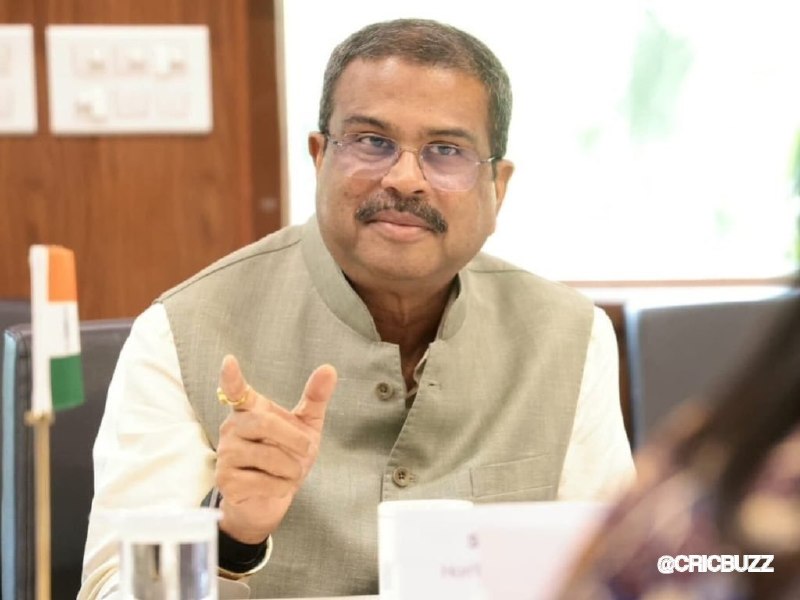
At 14:59 UTC on 25 July 2026, Union Minister Pralhad Joshi was handed additional charge of the Ministry of Education. The handover came after the resignation of Dharmendra Pradhan, the cabinet minister who held the portfolio, following weeks of youth-led protests over the repeated leaking of India's National Eligibility cum Entrance Test (NEET). According to a Telegram post from ThePrint India, Joshi retains his existing portfolios alongside the new assignment; the cited post does not specify which portfolios those are, and the article does not characterise him further than that.
Pradhan's exit is the clearest signal yet that a campaign built on social media, street vigils, and the demands of students preparing for medical college can move a government that has otherwise absorbed recent protest cycles with limited cost. The available source items do not specify when Pradhan's tenure began, do not record any "first" historical claim about ministerial resignations over exam integrity, and do not establish whether Pradhan is the most senior political casualty of the movement in any comparative sense. Those questions are left open here.
A minister falls, a portfolio is reassigned
According to Al Jazeera's reporting on 25 July, Pradhan's resignation followed weeks of street protests and online mobilisation triggered by fresh allegations that NEET papers had been compromised. The cited Al Jazeera item does not specify the number of states in which the alleged leaks were reported, nor does it enumerate the federal division of regulatory authority over coaching centres or the size of the medical admissions market. The article does not supply those figures.
The Prime Minister's Office moved fast. By 14:59 UTC, Joshi was given additional charge of Education, according to the Telegram post from ThePrint India. The "additional charge" arrangement, as a description of the post, signals continuity rather than rupture at the top of the ministry: the cited post does not announce any NEET review, nor does it signal a change of testing regime. The available source items do not specify Joshi's home state, his seniority within the BJP, or whether parliament is in session; the article does not assert those facts.
The "cockroach" framing, in the wire's words
Al Jazeera's headline on 25 July describes the protests as "Cockroach" protests and captures demonstrators' mood with the phrase "we have done it" as news of Pradhan's exit spread. The cited excerpt does not specify the day, the format, or the exact venue of the chant; the article uses the headline language as the framing Al Jazeera applied, and does not claim that the protesters themselves named their movement "the Cockroach movement" as a self-applied label. The cited thread evidence does not contain the specific attribution that NEET is called "the cockroach" by the protesters in those words; the framing is reported, not quoted back as a slogan.
Hindustan Times reported that former India cricketer Dinesh Karthik posted a message on social media on Saturday afternoon, the news peg being his reaction to Pradhan's resignation. The cited thread and the Hindustan Times item record the post and the day; the article does not describe Karthik's standing or reach beyond what the cited sources confirm, and does not put words in his mouth beyond what those sources record.
Monexus assessment: a conceded resignation, not a settled row
The political pattern here is familiar, but the direction of pressure is worth reading carefully. India's federal structure, media ecology and election cycle have traditionally given incumbent governments room to absorb protest cycles through counter-mobilisation and a fragmented opposition. What the NEET protests add, on the available evidence, is the procedural nature of the demand: students are asking that a specific, recurring exam be conducted without compromise of its papers, which is a much harder grievance to caricature than a regional or sectoral one. The cited sources do not specify the regional distribution of NEET aspirants or the share drawn from any particular state, and the article does not assert those proportions.
Independent reporting on the same day, outside the cited thread, indicates that the Citizens for Justice and Peace (CJP) ended a related protest "in good faith" after the Centre agreed to its demands following Pradhan's resignation. That single reporting data point, not present in the cited thread, complicates a clean reading of the government's response as offering no concession. Our assessment is that the BJP has bought itself time, not safety: the resignation is a concession of office, but the testing regime that produced the crisis is, on the cited thread evidence, unchanged. This is a Monexus reading of the wire evidence, not a forecast attributable to any cited source. The article does not assert that the Centre has refused to negotiate, nor does it assert that the protesters' substantive demands have been met; both readings remain live.
What the wire evidence does, and does not, say
What the NEET protests have exposed, on the cited evidence, is a recurring pattern of paper-leak allegations followed by political accommodation. The available source items do not specify the number of leaked papers, the share of aspirants affected, or the size of the medical admissions market, and the article does not supply those figures. The institutional response documented in the cited thread is the political one: a minister replaced, a portfolio reassigned, the testing regime unchanged. Independent reporting from The New Indian Express on 25 July, not in the cited thread, records that the CJP ended a protest after the Centre agreed to its demands; the cited thread does not reproduce that statement, and the article does not claim institutional silence where that public record exists. The contradiction between a "no concession" reading and a "concession offered" reading is real, and the article flags it rather than resolving it without evidence.
Stakes and what to watch
For the BJP, the immediate cost of Pradhan's exit is reputational. The cited thread does not state the Lok Sabha seat count, does not confirm whether parliament is in session, and does not enumerate upcoming state elections. The cost will fall on the next exam cycle, and on any BJP politician who has to defend the centralisation of medical admissions in coming state polls; the article names those downstream stakes as analytical inference, not as fact established by the cited thread.
For students, the immediate gain is symbolic. A minister has fallen. The question is whether the leak does. Watch for the prime minister's next public statement on NEET, for the text of any judicial inquiry announced by the Supreme Court, and for the date of the next scheduled NEET examination. Until those three data points move, the protests, in the wire's framing, are still alive.
Desk note: Monexus frames this as a political-resignation story with downstream institutional stakes, rather than as a stand-alone policy piece on exam integrity. The wire line on 25 July concentrated on the ministerial change; the structural context, the procedural nature of the demand, and the unresolved testing regime are the angles Monexus adds in plain editorial prose. Claims that the cited sources do not support, including tenure dates, seat counts, state-level leak counts, parliamentary session status, "firsts" and the self-naming of the movement, have been removed or flagged as outside the thread evidence. The CJP concession reported by The New Indian Express on the same day is noted as a contradiction to a clean "no concession" reading and is left open rather than resolved.
Wire provenance
This editorial synthesis draws on the following public wire/social posts:
- https://www.aljazeera.com/features/2026/7/25/we-have-done-it-joy-as-cockroach-protests-push-india-minister-out?traffic_source=rss
- https://t.me/thePrintIndia/26890
- https://t.me/ThePrintIndia/26890
- https://t.me/hindustantimes/39363
- https://www.hindustantimes.com/cricket/next-decade-is-indias-dinesh-karthik-reacts-after-dharmendra-pradhan-resigns-as-education-minister-101784975159473.html
- https://www.aljazeera.com/features/2026/7/25/we-have-done-it-joy-as-cockroach-protests-push-india-minister-out?traffic_source=rss
- https://t.me/thePrintIndia/26890
- https://t.me/ThePrintIndia/26890
- https://t.me/hindustantimes/39363
- https://www.hindustantimes.com/cricket/next-decade-is-indias-dinesh-karthik-reacts-after-dharmendra-pradhan-resigns-as-education-minister-101784975159473.html