Kuwait's grid takes a fourth straight day of Iranian strikes
Kuwait's electricity ministry says power and desalination plants have been hit for a fourth consecutive day, with multiple generators offline. The framing on whose war this is has become the story.
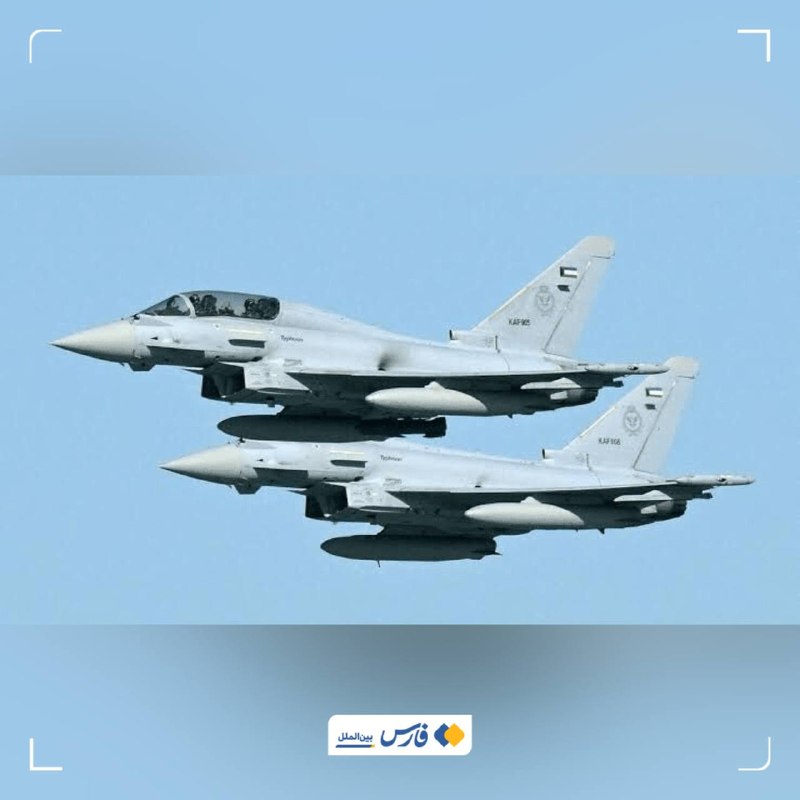
For the fourth consecutive day, Kuwait's Ministry of Electricity, Water and Renewable Energy says Iranian strikes have hit power generation and water desalination plants, with fires breaking out at multiple facilities and several generators now offline. The ministry's update, circulated through the Kuwaiti wires on 21 July 2026 and relayed by both the Liveuamap conflict tracker and The Cradle Media's Telegram channel, marks an escalation in tempo even if the targeting pattern has been consistent since the weekend.
The reporting is unanimous on the basic facts and bifurcated on the framing. Western and Gulf outlets read the strikes as retaliation inside an active conflict. Tehran-aligned channels frame the same attacks as legitimate counter-strikes against infrastructure used by US and Gulf basing. Both descriptions describe the same missiles; the political question is whose war this is.
A pattern, not a first strike
The Kuwaiti ministry's statement, posted on 21 July 2026, describes fires and generator outages at unspecified power and desalination sites following strikes "last night," a phrase consistent with overnight Iranian retaliation cycles that Gulf ministries have now logged across four consecutive days. The Liveuamap wire quoted the ministry directly; The Cradle Media's Telegram relay added context, describing the strikes as "Iranian retaliatory strikes" and identifying them as part of a continuing series.
The accumulation matters more than any single day's damage. Three days of sustained fire and outages at civilian energy infrastructure is the operational definition of a target set, not a single errant round. The Kuwaiti statement does not enumerate casualty figures or plant names, and the ministry has not, as of the wires at 11:06 UTC and 11:07 UTC on 21 July 2026, publicly identified which facilities are burning.
What the framing tells you
The two Telegram relays circulating the Kuwaiti statement within minutes of each other illustrate how the same press release travels through opposing pipelines. The Cradle Media, an outlet with documented editorial alignment toward the Iran-aligned "Axis of Resistance" framing, runs the item under a banner characterising the strikes as "Iranian retaliatory strikes." Liveuamap, a Western-leaning open-source conflict tracker, runs the same ministry text without that interpretive layer.
The substance is identical: multiple generators offline, fires at a number of facilities, four consecutive days of attacks. The choice of which verbs to attach ("retaliatory" versus "attacked") is the editorial seam. Western wires covering this story are likely to attribute the strikes to Iran without endorsing the "retaliation" frame, given that the proximate trigger and the original casus belli are contested and remain outside the four corners of the source material here. The structural point: in a conflict where every line item is disputed, infrastructure reporting has become one of the few places where claims still travel cleanly, because a power plant either produces power or it does not.
The Gulf under sustained pressure
A four-day tempo against a single Gulf state's civilian grid is, by historical standards, unusual. The 2019 Abqaiq–Khurais attack on Saudi Aramco facilities, widely attributed to Iran, was a single salvo. The sustained, multi-day character of the current campaign against Kuwait suggests either a deliberate signalling strategy from Tehran (graduated pressure designed to stay below the threshold that would trigger collective Gulf or US response) or a structural shift in what Iran considers in-bounds targeting.
It also raises a question the wires have not yet answered: what infrastructure, exactly, is being struck. Kuwait's ministry says "several power generation and water desalination plants." Desalination capacity in Kuwait is concentrated in a small number of large facilities on the coast; damage to even one of them at scale has immediate downstream effects on potable water supply. The ministry has not, in the available updates, named specific sites or quantified outages in megawatts or cubic metres per day. That information vacuum will be filled quickly if Western wire reporters gain ground access, or slowly if it does not.
What remains uncertain
The available reporting does not establish three things that matter. First, the specific facilities struck and the operational scale of the outages; the Kuwaiti ministry has described the pattern but not the inventory. Second, the Iranian official characterisation of these strikes: state-aligned Telegram channels have used "retaliatory" framing, but no Iranian state media statement (Tasnim, IRNA, PressTV) appears in the current source set. Third, the US and Gulf response posture: whether Washington and its Gulf allies treat this as a Kuwait-specific incident or as evidence of a wider escalation, and whether that framing triggers the activation of bilateral defence commitments under Article 51 of the UN Charter or the US–Kuwait 1991 bilateral defence agreement.
The honest read of the four-day arc is that a Gulf state's civilian energy infrastructure is being degraded at a tempo and a target-set granularity that implies intent, and that the diplomatic and intelligence response is still being calibrated in capitals where the lights, for now, are on.
Desk note: Monexus ran the same Kuwaiti ministry statement through both a Western-leaning OSINT relay and an Iran-aligned outlet to surface where the framing diverges. The factual spine (four days, generators offline, fires) is held in common; the interpretive verb ("retaliatory" versus "attacked") is not. Where wire reporting later attributes the strikes to Iran directly, that attribution will be added and the framing layer revisited.
Wire provenance
This editorial synthesis draws on the following public wire/social posts:
- https://t.me/wfwitness
- https://t.me/thecradlemedia
- https://t.me/TheCradleMedia
- https://t.me/Liveuamap