Tehran's interior minister lands in Islamabad as Pakistan-Iran security track tightens
A working visit to Shehbaz Sharif marks the second high-level Iranian delegation in weeks, sharpening focus on border policing, militant group activity, and energy corridor planning.
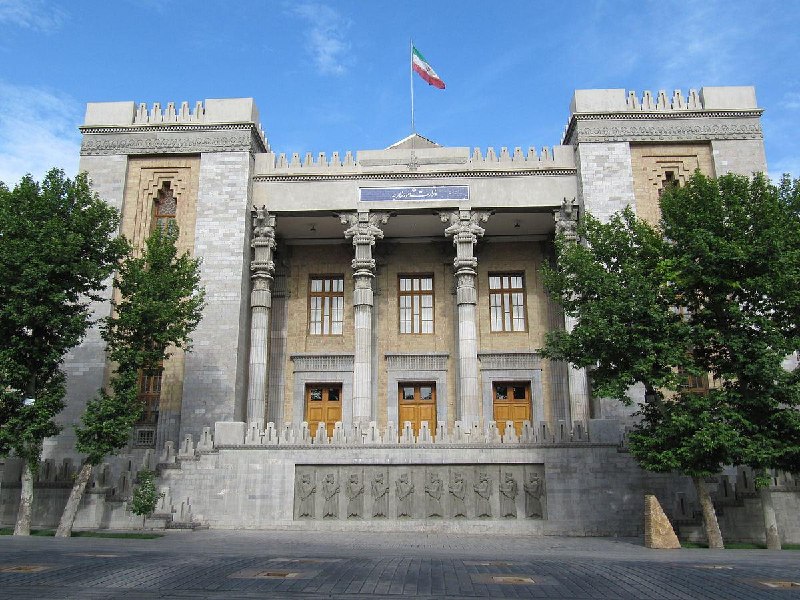
Iran's interior minister was in Islamabad on 21 July 2026 for a working meeting with Prime Minister Shehbaz Sharif, according to Iranian state outlets that confirmed the trip within the same news cycle. Both Tasnim News and Press TV reported the encounter in posts timestamped 11:34 UTC and 11:14 UTC respectively, framing it as part of a stepped-up bilateral security dialogue that has gathered pace over the past several months.
The visit lands at a moment when the Iran-Pakistan relationship is doing more diplomatic work than at any point in recent memory. Border policing, joint operations against militant groups operating along the Balochistan frontier, and the slow-moving but politically loaded question of an Iran-Pakistan-Türkiye energy corridor have all moved up the agenda in Islamabad and Tehran at the same time. A single working visit does not redraw that map. But the frequency of these exchanges, and the level of minister sent, signals that both sides want the channel warm.
What the meetings are actually about
The interior ministry portfolio in Tehran carries weight that outsiders sometimes underestimate. It is the ministry that runs the Law Enforcement Force, which has led operations along the eastern frontier, and it coordinates provincial governors in the border regions. Putting that minister on a plane to Islamabad, rather than a foreign ministry official, tells Pakistan, in the language of bureaucratic signalling, that Tehran is interested in operational, on-the-ground cooperation, not just rhetorical alignment.
The immediate agenda, based on the public framing from both Iranian state outlets, is the long-running conversation about militant group activity in Balochistan and Sistan-Baluchestan. Tehran has, in recent years, accused Islamabad of being slow to act against groups operating from Pakistani soil; Islamabad has returned the criticism, arguing that cross-border movement runs in both directions. The meeting falls inside that contested space, and the optics, Sharif receiving the minister, suggest that Pakistan wants the relationship visible, not buried in technical committees.
What the framing leaves out
Iranian state media tends to describe these visits in the language of brotherhood and shared borders. That framing is not wrong, but it is incomplete. Pakistan is also recalibrating its external relationships under acute economic pressure: an IMF programme, repeated Gulf financial assistance, and continued uncertainty over Chinese investment pipelines under the China-Pakistan Economic Corridor. In that context, a visit from Tehran is partly a signal to Riyadh and Washington that Islamabad has options.
There is also a counter-narrative worth weighing. Western security analysts, including those who track the Jaish al-Adl and other Sunni militant outfits that operate in the region, have argued that the Iran-Pakistan border is less stable than the official communiqués suggest. Joint operations have produced periodic prisoner swaps and occasional raids, but the underlying dispute over whether militant safe-havens exist on either side has not been resolved. A ministerial visit does not change that.
The structural frame, in plain terms
What is unfolding across this stretch of the region is the slow consolidation of a multipolar diplomatic geometry. Pakistan sits at the intersection of Chinese infrastructure investment, Gulf security concerns, and a long frontier with Afghanistan. Iran, under sustained Western sanctions and a constrained regional posture, has rebuilt ties with several neighbours through patient, low-spectacle diplomacy rather than headline summits. The interior minister's trip fits that pattern. So does the broader absence of any reference to the United States, the European Union, or international financial institutions in the readouts. The conversation is being conducted between two capitals that have learned to operate around the Western-centred diplomatic architecture rather than inside it.
This is not a rupture with the West, Pakistan's security relationship with the United States remains intact, and Iran retains the 2015 nuclear deal's residual architecture in technical cooperation with the IAEA. But it is a quiet repositioning. When two interior ministers meet, the subject is security; the subtext is autonomy.
What to watch next
Two near-term markers will indicate whether this visit produces substance or stays at the level of atmospherics. First, any joint statement on border operations that names a specific mechanism, a hotline, a joint patrol arrangement, an intelligence-sharing protocol, would be a real deliverable. Both Iranian state outlets have so far reported only the meeting itself, not any agreement. Second, the timing of any reciprocal Pakistani ministerial visit to Tehran. Reciprocity at the interior-ministry level would lock in the operational track that the 21 July meeting opened. Neither is yet confirmed, and the public record from Tehran's side does not specify outcomes.
The sources do not record the agenda items in detail, do not name Iranian or Pakistani delegations beyond the principals, and do not specify what was agreed. The visit is established; its content is not. That gap is the story to watch through the rest of July.
This article framed the meeting through the bilateral security lens dominant in Pakistani and Iranian state readouts, then set it against the wider economic and geopolitical pressures on both governments, which the readouts themselves do not address.
Wire provenance
This editorial synthesis draws on the following public wire/social posts:
- https://t.me/tasnimnews_en
- https://t.me/presstv