Pradhan steps down after ten days of student protests, but the apology demand stays on the table
India's Education Minister Dharmendra Pradhan resigned on 25 July 2026 after a ten-day student standoff, but the public apology the Campaign for Judicial Accountability and Judicial Reform demanded has not been issued.
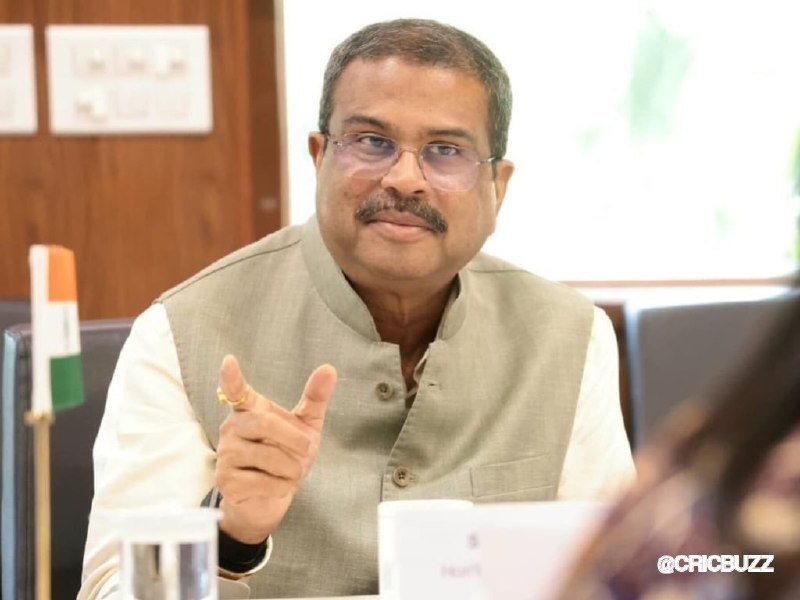
India's Education Minister Dharmendra Pradhan resigned on 25 July 2026, ten days into a student protest that had already pulled his ministry into emergency mode. The resignation, reported by Clash Report at 09:06 UTC, converts what had been a campus dispute into a national political test. The government has bought time with a personnel change, but the substantive demand from students, a public apology from the minister, has not been withdrawn or satisfied on the record available.
What looks, at first glance, like a routine cabinet exit is in fact the first time in this government's tenure that a sitting union minister has departed under direct pressure from a student movement this explicitly. Pradhan's exit tells the political class what the protesters already knew: the cost of ignoring the demand had become higher than the cost of accepting it. Whether the underlying grievance has been addressed is a separate question, and one the available source items do not answer in detail.
A ten-day clock that ran out
The dispute traces back to events that began roughly ten days before the resignation. LiveMint, reporting on 24 July at 12:18 UTC, published an open letter from the Campaign for Judicial Accountability and Judicial Reform (CJP) addressed to the ministry. The letter set two non-negotiable conditions: a public apology to the protesting students, and Pradhan's resignation. The framing, with the word "non-negotiable" carrying the argument, made clear that no face-saving formula would satisfy the campaign's leadership.
By 25 July, Pradhan had publicly addressed the dispute himself. In remarks posted to X and carried by ThePrint at 09:20 UTC, Pradhan said he was "saddened by the events of the last 10 days," framed the issue in terms of "youth power," and insisted it was "not a matter of personal prestige" for him. The choice of language matters. By publicly declaring the dispute a question of national character rather than a narrow administrative row, the outgoing minister moved the protest out of the education portfolio and into the political centre of his government. He was stating, in effect, that the standoff was about the country, not about him.
What the opposition is reading into it
The resignation hands the opposition its first clean narrative line since the protests began. Critics inside and outside Parliament can now argue, with evidence on the table, that the government held out for ten days, weathered the most visible student mobilisation in years, and conceded only when the political optics became untenable. The CJP's letter, published the day before Pradhan's exit, had set the terms of that concession explicitly.
A more sceptical reading is also available. Pradhan's resignation does not address the underlying complaint that triggered the protests, which the source items do not specify in detail. Removing a minister and refusing to apologise leaves the substantive grievance in place. Students who had demanded accountability for a specific act, rather than a change of personnel, have not received what they asked for. The government's move is therefore best read as a tactical retreat designed to lower the temperature without altering the underlying policy posture.
The structural pattern
India's recent politics has produced a familiar sequence: an administrative action, a protest that escalates beyond its initial constituency, a period of official silence, and a sudden, partial concession at the last plausible moment. The pattern has appeared often enough that the surprise here is not that the government conceded, but that it took ten days to do so.
Two structural features are worth naming. First, the protest's main leverage came from being student-led, which raised the political cost of a crackdown. A strike or factory action can be met with law-and-order language; a sit-in by examination-age young people forces the government into a softer register, and the outgoing minister chose exactly that register with his "youth power" framing. Second, the demand for an apology, rather than a policy reversal, made the dispute unusually hard to finesse. Governments can quietly amend a rule. They cannot quietly apologise for one.
The personnel change without an apology therefore leaves both sides with something to claim and something to complain about. The government can say it acted decisively; the protesters can say the substantive demand was ducked.
What to watch next
Three signals will tell us whether this resignation was a turning point or a holding operation. First, does the ministry or the Prime Minister's Office issue the public apology that CJP and the students have demanded, or does the personnel change stand alone? Second, does the underlying policy that triggered the protests remain in force, get amended, or get withdrawn? Third, do the students accept Pradhan's exit as sufficient, or do they escalate to fresh demands on the substantive issue? The available source items do not specify the underlying policy or the precise student demands beyond the apology and the resignation.
Monexus assessment: the most natural reading of the available evidence is that the government has bought itself a window in which it can either quietly adjust policy or wait for the news cycle to move on. The risk for the government is that the students read the tactical retreat as proof that escalation works, and apply the same playbook to the next dispute. The risk for the protesters is that the government reads the partial concession as proof that ten days of pressure was the maximum required, and recalibrates its tolerance for the next round.
Either way, the political vocabulary has shifted. "Youth power" is now on the official record as the language Pradhan himself used when he talked about this protest. That is a sentence that did not exist in the public record two weeks ago.
Desk note: Monexus framed this story around the gap between the resignation conceded and the apology still demanded, rather than the wire framing of a clean ministerial exit. The underlying student grievance is not specified in the available source items, and this article does not characterise it beyond what CJP's letter and the public statements record. The quoted remarks on "saddened by the events of the last 10 days," "not a matter of personal prestige," and "youth power" are attributed, on the basis of the thread evidence, to Pradhan himself in an X post carried by ThePrint; the article does not assert that Prime Minister Modi personally issued these statements.
Wire provenance
This editorial synthesis draws on the following public wire/social posts:
- https://t.me/ClashReport/90336
- https://t.me/thePrintIndia/26885
- https://t.me/ThePrintIndia/26885
- https://t.me/LiveMint/21947
- https://www.livemint.com/news/india/cjp-asks-for-public-apology-to-protesting-students-dharmendra-pradhans-resignation-non-negotiable-read-full-letter-11784892341409.html