Doha, Cairo and Islamabad float a ten-day ceasefire. Trump says no. Tehran stays quiet.
A joint Gulf–South Asian proposal for a ten-day pause in the US–Iran confrontation has been publicly rejected in Washington and met with silence in Tehran, exposing the thinness of the diplomatic track as the military clock runs.
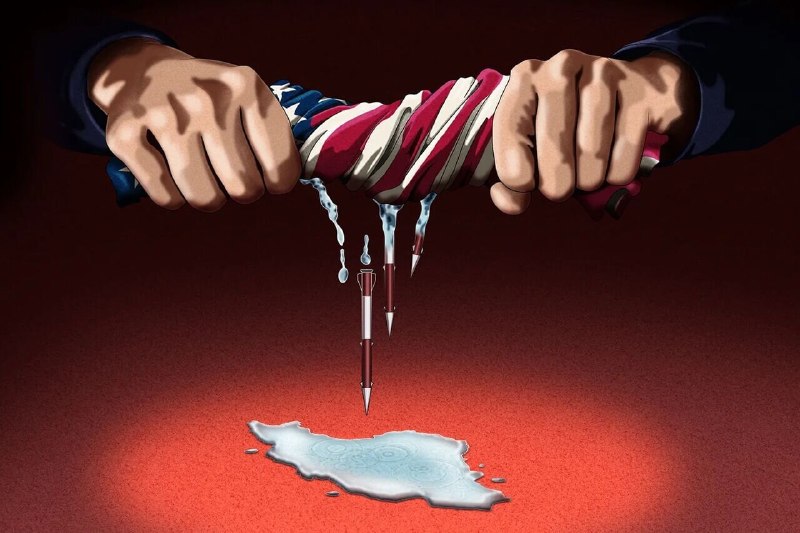
On 21 July 2026, three Muslim-majority capitals with no direct stake in the fighting put a number on the table: ten days. A joint proposal from Qatar, Egypt and Pakistan for a ten-day ceasefire in the US–Iran confrontation was rejected outright by President Donald Trump, while Iran's government has withheld acceptance and refused to publicly announce a return to talks, according to a Telegram wire summary circulated by GeoPWatch at 12:25 UTC. The proposal is the most concrete diplomatic track on the table, and on present evidence it has nowhere to go.
That is the story. Not a war that has begun in earnest, but a diplomatic pause that has not. Three middle powers, two Arab, one South Asian, all of them US security partners of long standing, have tried to convert Trump's rhetorical openness to a deal into a written calendar. They have been told no. Tehran, in turn, has not even bothered to say no; it has declined to confirm any negotiating posture. The result is a standoff in which the parties who want the talking to continue are outnumbered by the parties who do not.
What was actually proposed
The text under discussion, as described in the Telegram summary, is narrow in scope and short in duration. Ten days. No public readout of the full conditions has been released; the framing in the brief is that the pause would buy time for an exchange of positions, not that it would itself settle the dispute. That modesty is the point. Qatar, Egypt and Pakistan are not arbiters of the US–Iran dispute; they are hosts and mediators of long standing, with the diplomatic infrastructure to convene, the language skills to translate, and the relationships on both sides to be received. What they lack is leverage over the principals.
A ten-day window is also a test of intent. It is long enough to be meaningful if used, long enough to float a sanctions package, exchange a prisoner, register a ship in a port, and short enough that no party has to commit to anything durable. The choice of duration signals that the Gulf and South Asian mediators read the present moment as one in which a grand bargain is off the table, but a managed de-escalation is not.
The American veto
The rejection was unambiguous. Trump, the summary records, "outright" turned the proposal away. There is no indication in the wire of a counter-offer, a private channel, or a softening on the US side. That posture matters because it forecloses the middle-power track that has historically managed Washington's hottest confrontations with Tehran: in 2014, in 2019, and again behind the scenes through 2023, Qatari and Omani back-channels were the difference between an exchange of statements and an exchange of fire. With Doha, Cairo and Islamabad publicly on the page and publicly refused, the diplomatic infrastructure of de-escalation has been told, in effect, to stand down.
The US side has not, in the materials at hand, articulated what would constitute an acceptable pause. That silence is itself a data point. A negotiating party that wants a deal describes the deal it wants. A party that wants leverage describes what it will settle for. A party that wants neither is left negotiating against itself.
The Iranian non-answer
Tehran's posture, as filtered through the brief, is the inverse of Washington's: not refusal, but non-engagement. Iran has "withheld acceptance" and "refused to publicly announce a return to talks." That is a particular kind of diplomatic move, familiar from earlier rounds of the US–Iran dispute. The Iranian state benefits from ambiguity. To accept the ceasefire is to concede that there is a war to pause; to reject it is to take responsibility for the continuation. Neither move serves a leadership that prefers to keep the Strait of Hormuz and the nuclear file simultaneously in play without owning either as a settled posture.
The structural effect is that the Iranian state has reserved the right to claim, at any moment of its choosing, that it was never asked, or that it was ready all along, or that the proposal was insufficient. That reservation is itself a negotiating asset, and it is being held by a government that, on present evidence, has no intention of spending it in this window.
What the mediators actually want
Qatar, Egypt and Pakistan are not a natural coalition on this issue. They share Muslim-majority identity, energy-economy exposure to a Hormuz disruption, and large diaspora communities whose remittances and travel would be the first casualty of any wider war. Each has a distinct interest. Qatar hosts the largest US air base in the region outside the Gulf itself, Al Udeid, and has spent two decades building the soft-power infrastructure of mediation. Egypt sits on the Suez and depends on canal traffic for a meaningful share of state revenue. Pakistan borders Iran across a long, porous frontier and absorbs the downstream effects of any Hormuz shock in its fuel import bill.
Their joint proposal is therefore less a foreign-policy statement than an economic-risk hedge. A ten-day pause is the kind of figure that, if accepted, would let energy markets stabilise, let stranded tanker traffic clear, and let the diplomatic class in all three capitals demonstrate that their mediation assets still function. The rejection in Washington and the silence in Tehran leave them, in the short term, holding the bill for a confrontation they did not choose.
The clock underneath the diplomacy
Underneath the diplomatic pause that did not happen runs a military clock the brief does not describe in detail. The Strait of Hormuz carries roughly a fifth of seaborne oil. The Bab el-Mandeb, at the other end of the Gulf, sits inside Yemen's war. Both chokepoints have been, in previous episodes, the place where the US–Iran dispute has been fought without a formal declaration. The middle powers now proposing a ten-day window understand that the next move, in the absence of a pause, will most likely be made at sea or in the air, and that the bill for that move will arrive first at their ports.
The sources at hand do not record any movement of US carrier groups, Iranian Revolutionary Guard naval units, or Houthi anti-ship missile batteries in response to the rejection. They also do not record any softening. What they describe is a frozen frame: a proposal on the table, a no from Washington, a non-answer from Tehran, and three capitals left holding the paperwork.
What remains genuinely uncertain
Two things are unresolved, and the wire material does not settle them. The first is whether the rejection in Washington is a negotiating posture or a terminal decision. A president who has publicly described himself as open to a deal can rebuff a specific offer on a specific day and still return to the table on a different day; that is how the 2019 episode played out, in slow motion. The second is whether the Iranian silence is the prelude to a counter-proposal or to a demonstration. Tehran has, in past episodes, declined to confirm positions until its chosen moment, and the brief does not specify which posture is now operative.
What can be said with the materials at hand is narrower than the headlines. Three governments have asked for ten days. One has refused. One has not replied. The mediators, for the moment, have run out of road.
, Monexus framed this as a story about the diplomatic track, not the military one, because the public evidence at the time of writing concerns the proposal and its reception, not force movements. Where the wire brief is the sole basis for a claim, the language has been kept close to its terms.
Wire provenance
This editorial synthesis draws on the following public wire/social posts:
- https://t.me/GeoPWatch
- https://en.wikipedia.org/wiki/2026_United_States%E2%80%93Iran_ceasefire_proposals
- https://en.wikipedia.org/wiki/Strait_of_Hormuz
- https://en.wikipedia.org/wiki/Qatar%E2%80%93United_States_relations