Delhi seals its border and detains farmer leaders on the eve of a trade-deal protest
On 21 July 2026 Indian police sealed the Shambhu border crossing into Punjab and detained several farmer leaders hours before a Delhi march against the country's US trade deal, while opposition MPs prepared their own protest at Rashtrapati Bhavan.
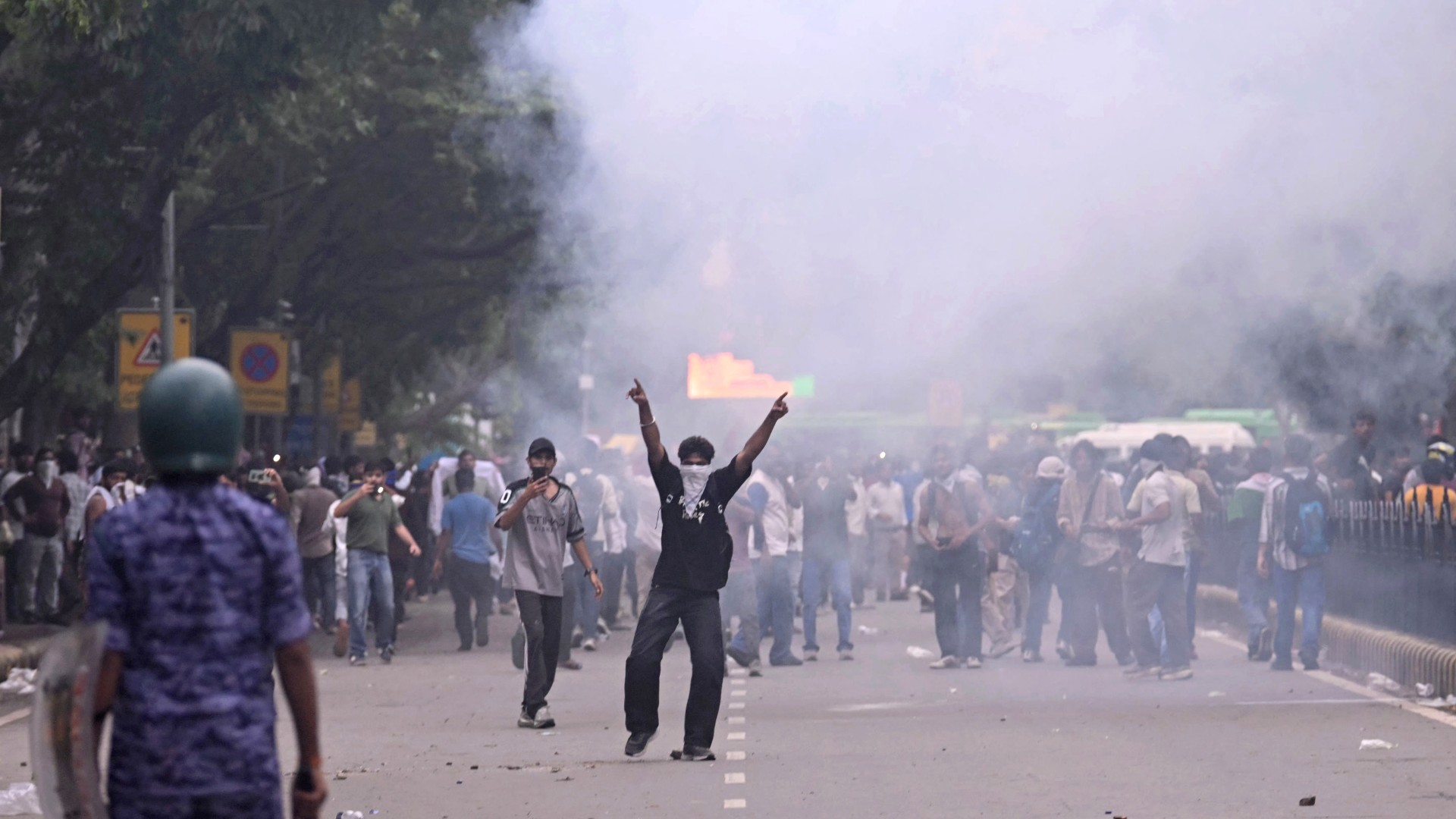
On the morning of 21 July 2026, Indian police sealed the Shambhu border crossing between Punjab and Haryana and took several farmer leaders into preventive custody, hours before a Delhi-bound protest march against New Delhi's trade deal with Washington was due to begin. The Indian Express reported the sealing and the detentions in a 07:52 UTC dispatch, the same hour that a separate wire item announced that opposition members of parliament would march to Rashtrapati Bhavan to denounce the wider crackdown. The coordination reads less like crowd control than a stage-managed demonstration that the government intends to deny a stage to.
Three policy threads now collide inside one street-level confrontation. The trade pact that brought Punjab's farmers to the road, the leaked examination papers that brought students to central Delhi days earlier, and a prime minister using his coalition's closed-door meeting to defend both files against critics inside and outside his bloc. The Indian Express reported at 06:52 UTC that Prime Minister Narendra Modi, addressing the National Democratic Alliance, defended his government's response to NEET examination leaks after large Delhi protests. Taken together, the three items describe a single pattern: an executive that is simultaneously negotiating the terms of India's economic opening to the United States and managing two large domestic constituencies that read that opening as an attack on their livelihoods.
What Shambhu is for, and why it was sealed
Shambhu is one of two principal road crossings between Punjab and Haryana on the Grand Trunk corridor, and it has been the conventional departure point for farmer convoys headed to Delhi since the 2020-21 farm-law agitation. Sealing it on the morning of a planned march is not an improvised measure. It is the predictable administrative move when the state has decided that the march will not reach the capital in numbers large enough to set the television pictures. Detaining named farm leaders before they can reach the highway serves the same purpose. The Indian Express dispatch frames the protest as directed specifically against the US trade deal, which signals that the trigger this time is external trade policy rather than domestic agriculture legislation. The earlier 2020-21 movement was framed around three farm bills; the 2026 movement, on this evidence, is framed around what those bills were a prologue to: the terms under which Indian produce, dairy and seed markets will meet American exporters.
The parliamentary counter-mobilisation
If the street is being closed, the chamber is being opened. The same Indian Express wire carried a parallel item at 07:52 UTC announcing that opposition MPs would march to Rashtrapati Bhavan, the official residence of the President of India, over the Delhi crackdown. Rashtrapati Bhavan is the constitutional address for any grievance that the government of the day is judged to have over-reached. A march there converts a policing matter into a constitutional complaint. The choice of destination signals that the opposition's framing is not merely about trade-deal substance; it is about the manner in which the executive has chosen to manage dissent on the eve of the deal's political rollout. The two wires, read together, describe an administration that is fencing the road and litigating the resulting case in parliament at the same time.
Modi defends the NEET file inside the NDA
The third thread sits a rung higher on the political ladder. The Indian Express reported at 06:52 UTC that, at an NDA meet, the Prime Minister defended his government's action on NEET examination leaks following the massive Delhi protests. NEET is the National Eligibility cum Entrance Test, the single examination that gates entry to undergraduate medical and dental courses across India; a leak does not merely compromise an exam, it compromises the meritocratic contract that justifies the exam's existence in the first place. By choosing the NDA platform rather than a press conference to make his defence, the Prime Minister is doing two things at once. He is reassuring his own coalition partners that the political cost of the leak is contained. And he is pre-positioning the line that the opposition's framing at Rashtrapati Bhavan will have to argue against: that the government moved, and moved visibly, against those responsible. The Indian Express wire does not specify what action was taken; the framing suggests firings or arrests within the examination agency rather than a wider reset of the testing system.
What the three threads together describe
Read across the three dispatches, the shape of the day becomes legible. The executive is negotiating an external economic settlement with Washington. Two domestic constituencies, farmers in Punjab and students preparing for medical entrance, read the trajectory of that settlement and its associated governance failures as against their interests. The state has chosen to deny the farmers their road and to defend its handling of the examination leak to its own coalition. The opposition has chosen to convert the policing of the road into a constitutional question by marching on the President's house.
The pattern sits inside a familiar Indian political cycle: a reform package that binds the country more tightly into global supply chains, contested by precisely the rural and lower-middle-class constituencies whose labour the integration depends on. The 2020-21 farm-laws agitation was the textbook case. The difference in 2026 is the trigger. Where the earlier movement rallied against domestic legislation, the present one is rallying against the terms of an external deal. Whether that shift in target expands or contracts the coalition on the road is the open question the next 48 hours will answer.
Desk note: this article is built from three same-day Indian Express wire items distributed between 06:52 and 07:52 UTC on 21 July 2026. The wire framing reads as factual and chronological; Monexus has foregrounded the trade-deal angle, which the wire only states, and read the three items together as a single political pattern rather than as three disconnected news beats. The sources do not specify casualty figures, the exact identity of detained farmer leaders, or the substantive clauses of the US trade deal; those gaps are left visible rather than filled.
Wire provenance
This editorial synthesis draws on the following public wire/social posts:
- https://en.wikipedia.org/wiki/2020%E2%80%932021_Indian_farmers%27_protest