Front pages in lockstep: how Indian newspapers framed the Delhi police crackdown
A Scroll review of next-day coverage shows India's English and Hindi press converged on a vocabulary of 'chaos' and 'lathicharge' that critics say obscures who ordered the operation and how many were detained.
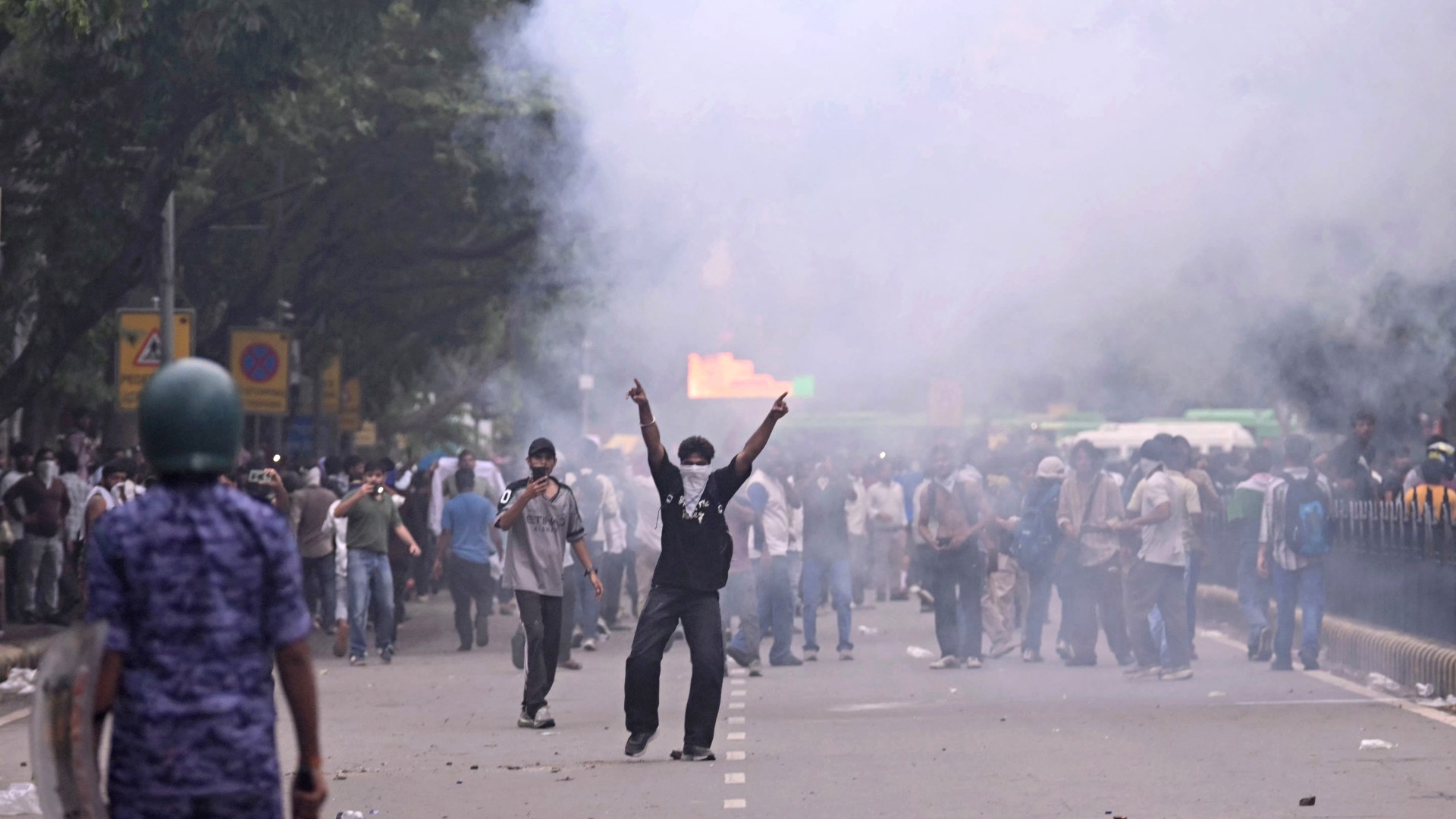
By the time the first editions hit the pavements on Monday morning, the front pages were already telling a single story. Scroll's review of how Indian newspapers covered a police crackdown on demonstrators in central Delhi found a striking convergence: across English and Hindi mastheads, the language was almost identical, the photographs almost interchangeable, and the editorial verdict almost uniformly aligned with the police version of events.
The pattern matters because it tells a quieter story about Indian press freedom than the familiar one about state censorship. No editor was ordered to print anything. No page was spiked. What Scroll's survey identifies instead is a shared grammar: 'chaos on streets', 'lathicharge', 'detained', 'security tightened'. The words describe the aftermath. They rarely explain who gave the order, what statute authorised the baton-charge, or how many of those taken into custody were still being held when the papers went to bed.
A vocabulary chosen, not imposed
Scroll's tally covers the broadsheet spectrum, from the Hindu and the Indian Express to Hindi dailies that circulate in the capital's working-class wards. The common thread is not conspiracy but convention. Indian newsrooms have a stock template for urban protest coverage: a lead quoting the police spokesperson, a sidebar listing the sections of the Indian Penal Code invoked, a photograph of overturned barricades, and a closing line about 'appeals for peace' from politicians whose offices are never named.
What the template omits is as instructive as what it includes. The number of detenus, the location of the holding facility, the identity of the magistrate who denied or granted bail, the injuries sustained by journalists covering the action, these details surface only when a wire service pushes them out, and even then they migrate to inside pages. Front-page real estate is reserved for the spectacle of disruption, not the machinery of state response.
The official line travels fastest
Coverage routinely defers to the language of official spokespeople. The Delhi Police briefing, issued within hours of the action, supplied the framework almost verbatim: protesters had 'attempted to breach barricades', officers had acted with 'restraint', and the situation was 'under control'. By the morning editions this formulation had migrated, largely unchallenged, into both headlines and standfirsts.
Counter-accounts did exist. Opposition party statements, eyewitness videos circulated on social media, and accounts from press-freedom groups describing lathicharge against camera operators all sat on the public record before the first copies were printed. None of them made the front page of the major dailies. The reasons are partly mechanical, morning editions close before independent verification can be completed, and partly cultural. The official version is treated as the default, and defaults do not need to be earned.
What 'chaos' leaves out
The word 'chaos' does particular work in this framing. It recasts an ordered state operation as a meteorological event, something that befell the city rather than something the city was subjected to. A protester hit by a baton, a journalist whose camera was smashed, a bystander dragged into a police van: each becomes a casualty of 'chaos' rather than an instance of police conduct.
That semantic sleight of hand is not unique to this incident. It is the standard English-language Indian framing for any street-level confrontation involving security forces. The structural effect is to depoliticise the state's choices. Questions of whether the deployment was proportionate, whether Section 144 of the Code of Criminal Procedure was properly invoked, whether the magistrate on duty was informed in time, these are policy questions that belong to inside pages, op-eds, eventually a parliamentary reply. The front page has already moved on.
The stakes, drawn narrowly
The cost of this convergence is borne first by readers. A citizen who reads only the front page comes away believing the police acted under duress, that the violence was mutual, and that order has been restored. They do not learn how many people are in custody, what charges they face, or whether any officer has been identified for disciplinary review. The deeper cost is to the press itself: when official framing becomes indistinguishable from editorial framing, the newspaper's claim to independent verification erodes in ways no censor could replicate.
What remains uncertain is whether the pattern will hold as the political weather changes. Indian newsrooms have occasionally broken with the official line on protest coverage, during the 2019-2020 demonstrations against the Citizenship Amendment Act, several outlets carried prominently sourced accounts of police conduct that diverged sharply from the home ministry's version. The Delhi crackdown Scroll documents sits inside a different, more restrictive information environment, with social-media content regularly removed under IT Rules and journalists' accreditation threatened for critical reporting. Whether those constraints harden or loosen over the coming weeks will determine whether next month's front pages read the way this month's did.
The Indian state does not need to dictate the news to shape it. It only needs to ensure that its account of events travels first, furthest, and with the fewest friction. By that standard, the operation in Delhi succeeded well beyond its immediate objective.
Desk note: Monexus has kept this piece tightly anchored to Scroll's reading of the press coverage, rather than re-litigating the underlying protest, where independent verification remains partial. The argument is about framing, not adjudication.
Wire provenance
This editorial synthesis draws on the following public wire/social posts:
- https://en.wikipedia.org/wiki/Freedom_of_the_press_in_India
- https://en.wikipedia.org/wiki/Indian_Penal_Code
- https://en.wikipedia.org/wiki/Delhi_Police