A Lodhi Colony fire and a Ramlila Maidan refusal: two Delhi stories, one political fault line
A mother and two children died in a Lodhi Colony residence on 21 July 2026 while, hours later, the J&K chief minister rejected a Delhi police offer of Ramlila Maidan for a statehood protest. Both stories sit on the same fault line between the Union government and the Union Territory.
A woman and her two minor children died in a fire at a Lodhi Colony residence in central Delhi on Tuesday morning, The Indian Express reported, citing fire services. The blaze, first reported on 21 July 2026, brought emergency crews to the neighbourhood that sits inside Lutyens' Delhi, the same ring of official residences and diplomatic missions that frames India Gate to the south and India Habitat Centre to the west. The victims have not yet been publicly identified in the wire copy, and the cause of the fire remains under investigation. Lodhi Colony itself is best known for the Indo-Delhi Public Work Department housing built in the 1940s and, more recently, for a public-art district that draws foot traffic from the surrounding diplomatic enclave.
The two deaths of children are the kind of detail a wire service will revisit within hours; the cause, the floor count, the smoke-detector question, will follow within days. The point worth holding now is that Lodhi Colony is not a peripheral neighbourhood. It is central. A residential fire that kills a mother and two minors in the heart of Delhi, on the same morning as a political standoff in the city, fixes the day's news in two registers at once: a domestic tragedy and a constitutional argument, both unfolding under the Union government's gaze.
A Ramlila Maidan refused
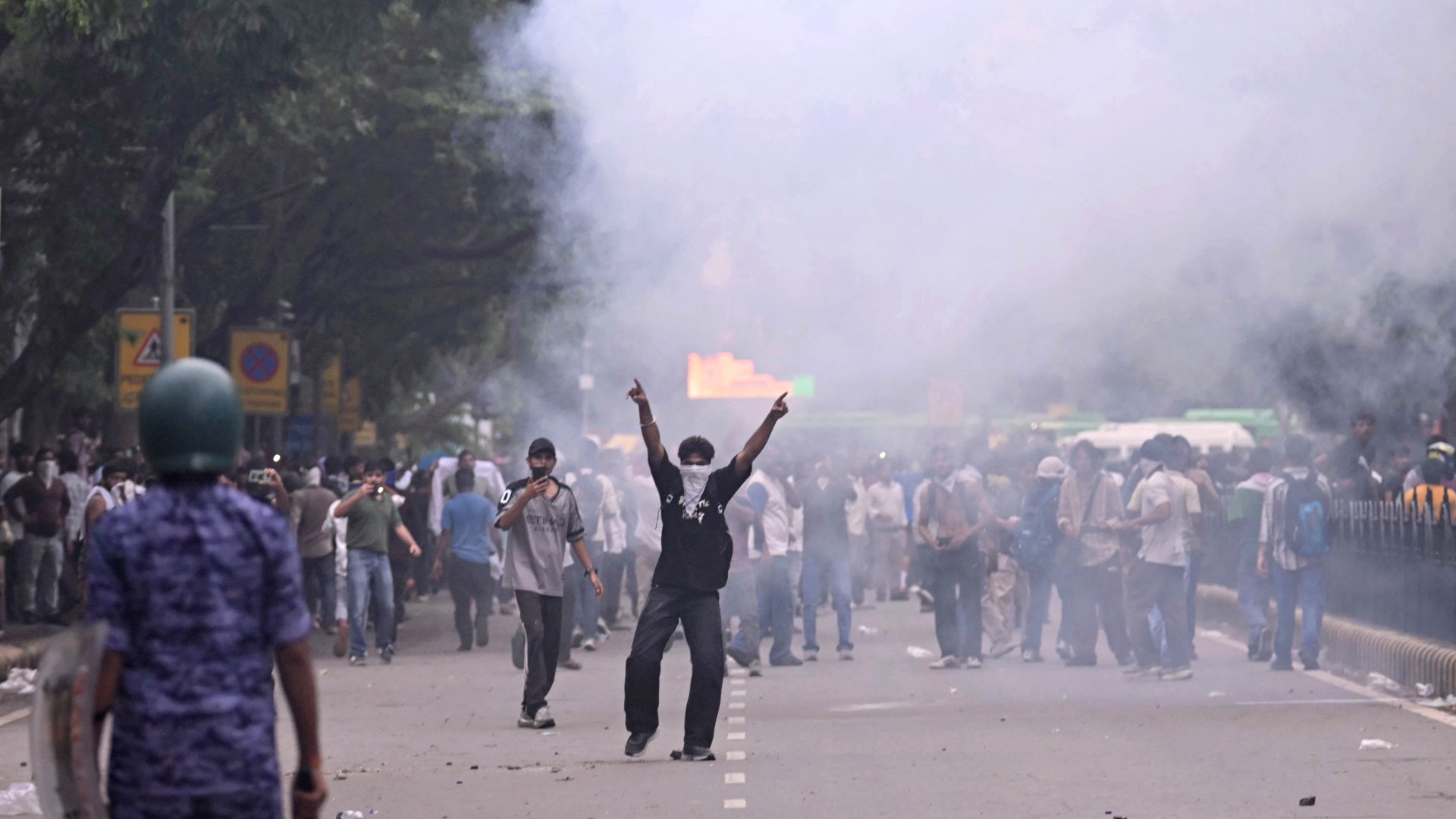
Hours after the fire report moved across wires, Jammu and Kashmir Chief Minister Omar Abdullah said publicly that Delhi Police had offered his party the use of Ramlila Maidan for a statehood protest, and that the offer had been rejected. The Indian Express carried his statement on the evening of 21 July 2026. Ramlila Maidan, the open ground in central Delhi that has hosted Anna Hazare's 2011 anti-corruption fast, the December 2012 gang-rape protests, and farmers' union tractor-rallies in 2020 and 2021, is the conventional site for demonstrations the central government would prefer to contain inside a known geometry.
Abdullah's framing matters more than the venue. The chief minister of a Union Territory is publicly narrating a sequence in which Delhi Police offered a protest site and his side turned it down. That sequence implies the protest will happen somewhere else, somewhere the offer did not cover. It also implies, by the act of naming the offer, that the choice of ground was not neutral. The structure of the confrontation is a familiar one in Indian federal relations: a regional leader needs to be visible in the capital; the capital's police, who report to the Union Home Ministry, decide which streets are politically available.
What the two stories share
Read on their own, the Lodhi Colony fire and the Ramlila Maidan dispute look like two separate bulletins from a long Indian Express file. Read against each other, they expose a single geometry. In one story, the state is the actor that failed to prevent harm to a family inside its own backyard. In the other, the state is the actor that decides which patches of its own backyard a regional leader is permitted to occupy. Both run through the Union Home Ministry, through Lutyens' policing, through the question of who gets to use central Delhi and on what terms.
That is the editorial reading worth making explicit. New Delhi's bureaucratic core is the same address for fire services under the Delhi government's control and for the police force that reports to the Union. A tragedy and a political impasse inside that ring, on the same morning, are not a coincidence of news cycles. They are the same news cycle, told from two desks.
The statehood question the Union has not closed
Omar Abdullah's statehood push is not new. The Jammu and Kashmir Reorganisation Act of August 2019 stripped the state of its special constitutional status and downgraded it to a Union Territory, with the explicit promise of a return to statehood once elections returned a government. The government that returned in late 2024 is led by Abdullah; the promise is unfulfilled. Ramlila Maidan, in this reading, is not a venue. It is a stage on which the gap between a 2019 promise and a 2026 reality would be made legible to the national press.
The Indian Express wire does not specify what protest route or date Abdullah's party has now settled on in place of Ramlila Maidan. The Delhi Police, for their part, have not publicly commented in the wires this publication has read on why Ramlila Maidan was offered and on what terms. The unanswered question is whether the offer came with conditions on numbers, banners, slogans, or duration that made it unacceptable, or whether the offer was a routine administrative courtesy the chief minister used as a public marker of what was and was not on the table. Without a police statement, that distinction is open.
Stakes, and what remains unseen
The Lodhi Colony fire has the shorter news half-life; it will resolve into a cause, a building code, and, if a smoke detector failed, a set of charges. The Ramlila Maidan refusal has the longer one. A Union Territory chief minister publicly rejecting the capital police's offer of a protest site is a deliberate escalation in a negotiation the Union government has chosen to keep quiet. The next data point to watch is where the protest actually happens, and whether Delhi Police files an order on a venue that was never offered. The internal logic of the dispute suggests it will, because the alternative is to admit that any open ground in central Delhi is now politically fungible.
Neither story, on its own, would carry a desk piece. The pairing does, because both pull on the same thread of who controls central Delhi's space: the space where families sleep, and the space where political claims are allowed to be voiced.
Desk note: Monexus framed these two Indian Express bulletins as a single editorial file because both run through the same Union-government-controlled geography on the same morning. The fire is treated as a public-safety story; the protest dispute as a federalism story; both are reported with primary attribution to The Indian Express.