Delhi High Court pulls back from policing protest allegations, leaving CJP case in limbo
A bench headed by Justice Gaurang Kanth has refused to convert into a PIL a plea alleging police brutality at a CJP demonstration, citing judicial restraint. The order leaves the underlying complaint at the centre of a contested narrative about protest policing in the capital.
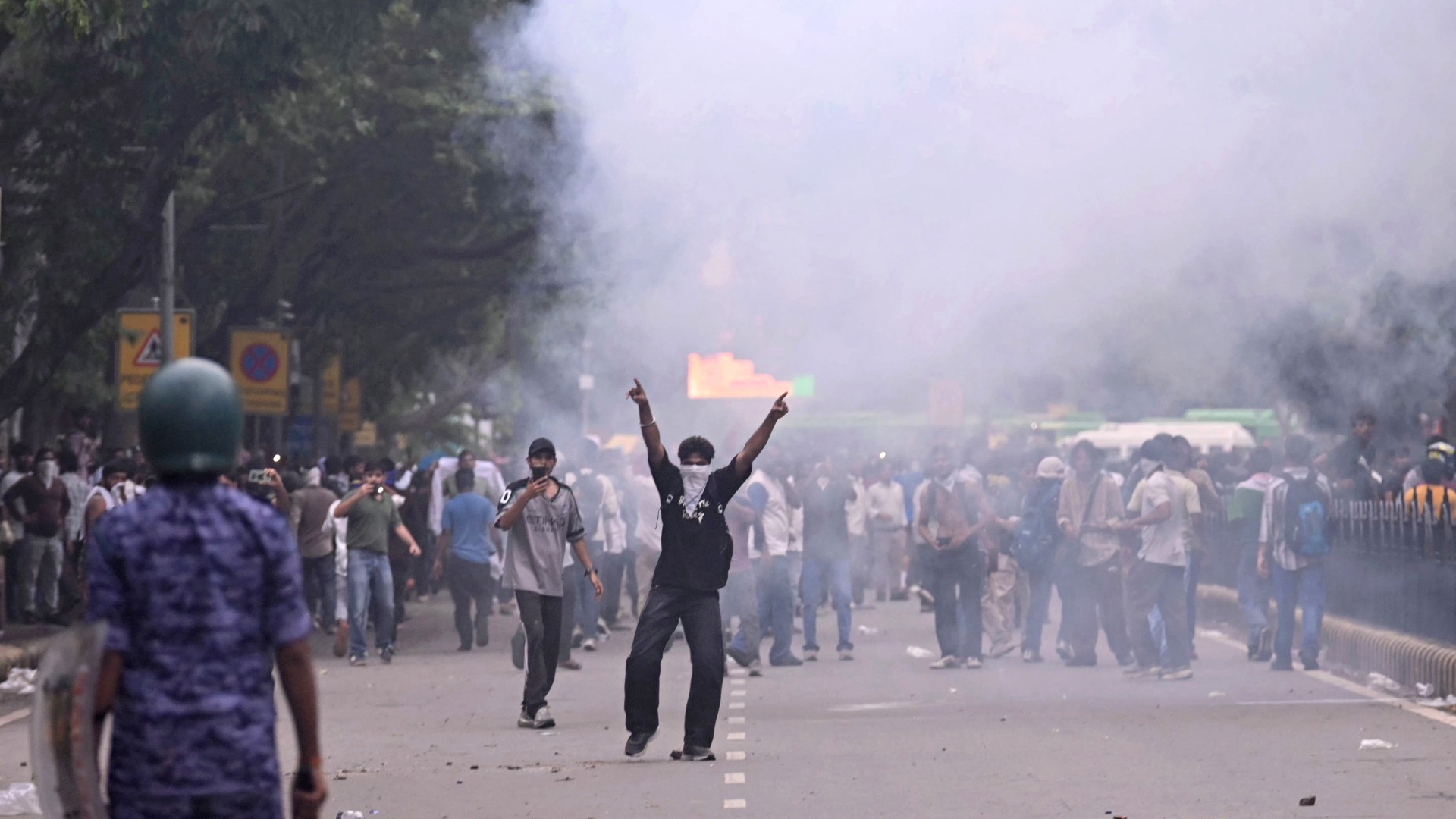
On 21 July 2026, the Delhi High Court declined to take up a plea alleging excessive force by city police during a recent demonstration organised by Citizens for Justice and Peace (CJP), telling petitioners not to "drag the court into this". The bench, headed by Justice Gaurang Kanth with Justice Manoj Jain sitting alongside, was hearing a petition that sought to convert a private complaint into a public interest litigation (PIL) and to direct an independent inquiry into the conduct of officers at the protest site, according to a 21 July report from Scroll.in. The bench's reluctance is the latest move in a chain of court interactions in which a private dispute has repeatedly sought to upgrade itself into systemic oversight of policing.
The case sits inside a larger question that Indian civil-society platforms keep returning to in 2026: who investigates the police, and on whose motion? Each time a civil-liberties group alleges use of force against its own volunteers or organisers, the answer quickly runs into the architecture of Section 156(3) of the Criminal Procedure Code, the powers of the Station House Officer, and the High Court's own supervisory jurisdiction. The Delhi High Court's refusal does not adjudicate the underlying allegation. It narrows what the court is willing to look at, and in doing so it tells the wider protest-policing debate where its centre of gravity lies.
What the bench actually said
The petitioners wanted the High Court to treat the complaint as a PIL and to transfer investigation away from the local police to an independent agency. Justice Kanth pushed back on both fronts. The first refusal was jurisdictional: the petitioners were seeking a writ, the bench noted, on the basis of a private dispute that did not, as filed, disclose the kind of public-interest ingredient that would justify PIL status. The court also signalled discomfort with being used as a venue to challenge the conduct of a specific probe while that probe is ongoing, according to Scroll.in's reporting from the 21 July hearing.
The bench's reluctance echoes a settled judicial posture in Delhi. PILs alleging police misconduct during protests are routinely screened for the public-interest threshold and for alternative remedies under Section 156(3) CrPC. The court does not foreclose the underlying complaint. It tells the petitioners to walk a different procedural path: a private complaint, a magistrate's reference, or a Section 200 statement, depending on the relief sought. Each of those routes is slower, narrower and harder to publicise than a high-court writ.
CJP's pattern and the underlying allegation
Citizens for Justice and Peace is a civil-rights organisation that has repeatedly aligned itself with minority-community causes, and it has used Delhi's higher judiciary as a staging ground for several of its larger campaigns. The current plea alleges that officers at the protest used disproportionate force against demonstrators. Scroll.in's account of the hearing records that the bench did not accept counsel's framing of the dispute at face value and pushed the matter back to the parties.
Two distinct facts are in play. First, there is the substantive allegation: that officers at a specific demonstration used force beyond what the situation required. The petition claims facts about that demonstration. Second, there is the procedural question of who investigates those facts once alleged. The Delhi High Court's response addresses only the second question, and only in part. The first remains live and unresolved.
What is missing in the record
The sources available for this hearing do not specify the date or location of the underlying demonstration; they do not name the investigating officer or the station under whose jurisdiction the alleged incidents fall; and they do not quote any CJP statement on the allegations beyond what counsel told the bench. The framing, in other words, is the hearing, not the protest. That gap matters: it is the protest, not the hearing, where the substantive allegations live, and any analysis that treats the court order as confirmation either way is over-reading the available material.
Stakes
For CJP and for groups using similar strategies, the bench's framing of the matter limits the High Court's role as a platform for police-accountability campaigns. The effect is procedural, not substantive: the underlying complaint continues to exist and may yet find a forum that can take it up on its merits. But the political signalling of a refusal is significant. PILs have been the mechanism through which civil-society actors have, over decades, sought to convert individual grievances into structural scrutiny of policing. A bench willing to police the PIL threshold changes the calculus for the next petition.
The case also points to a structural question on which the bench did not opine: whether the Delhi Police, which reports to the Union Home Ministry, can credibly investigate complaints arising from its own conduct at political demonstrations. That question recurs across jurisdictions and across decades. The bench's order does not resolve it, but it also does not foreclose a future bench taking it up in a different posture.
This article draws exclusively from Scroll.in's 21 July 2026 hearing report and from the procedural posture of PIL jurisdiction in Delhi; no other outlet has been cited here as the underlying source material was not available.
Wire provenance
This editorial synthesis draws on the following public wire/social posts:
- https://en.wikipedia.org/wiki/Public_interest_litigation_in_India
- https://en.wikipedia.org/wiki/Delhi_High_Court
- https://en.wikipedia.org/wiki/Section_156_of_the_Code_of_Criminal_Procedure