Beijing holds the line on reserves as Trump threatens Iran, and the dollar question hangs over both
Beijing's refusal to spend down its war chest to absorb an Iran-driven oil shock is a quiet test of how much global energy disruption the dollar system can still absorb, and what Beijing wants in return for its restraint.
On 20 July 2026, as US President Donald Trump publicly vowed retaliation against Iran following a deadly weekend for American troops, a quieter line was being drawn several thousand miles east. A South China Morning Post opinion column made the position explicit: China would not spend down its foreign-exchange reserves to cushion the global oil price impact of a widening Iran war. The refusal arrived without fanfare, embedded in a longer argument about Beijing's strategic patience, but the timing landed exactly where it mattered most. Oil markets were repricing on the back of a US-Iran escalation, and the world's largest energy importer was signalling, in effect, that the era of Beijing passively absorbing shocks to the global order was over.
The position is the cleanest version yet of a doctrine China has been developing for at least two decades: accumulate reserves when the system rewards it, deploy them only when Beijing's own interests are directly engaged, and refuse to play the role of global shock-absorber that Washington spent decades expecting from its principal creditors. Read against the simultaneous US-China friction over birthright citizenship, the Chinese framing of global AI governance at the World Artificial Intelligence Conference in Shanghai, and Trump's vow of retaliation against Tehran, the picture sharpens. The Iran war is not just a Middle East story. It is a stress test of the dollar system, and Beijing is choosing where, and on what terms, it will help.
The reserves that don't move
China sits on the world's largest stock of foreign-exchange reserves, accumulated over two decades of trade surpluses and managed currency policy. The instinct, in any earlier oil shock, would have been to release a portion of those reserves through state-owned banks and trading houses to smooth import costs, much as Beijing did during the 2014-2015 oil price collapse. The SCMP opinion column rules that instinct out. The argument is structural, not tactical: reserves built up over a generation are not to be spent propping up a global energy market in which China is the largest single buyer but exercises the least pricing power. Spending them now, the column contends, would amount to underwriting a system whose terms Beijing did not write and cannot unilaterally rewrite.
The Chinese position has a real policy history. Beijing has spent the past several years diversifying its reserve composition away from pure dollar exposure, expanding gold holdings, building yuan-settled oil contracts through the Shanghai International Energy Exchange, and signing bilateral currency swap lines that allow trading partners to settle energy transactions outside the SWIFT corridor. None of this is new. What is new is the explicit refusal to treat reserves as a global public good. The SCMP framing is that they are a national strategic asset, and the conditions under which they will be drawn down will be set by Beijing, not by the rhythm of Washington's foreign policy.
The other fronts Beijing is fighting on
The same 24-hour news cycle that carried the reserves argument produced two further Chinese pushbacks against the US-led order. On 20 July, SCMP reported that Trump was turning to China in a renewed effort to restrict birthright citizenship, a politically charged domestic US measure with diplomatic implications for Beijing. On the same day, Chinese state media outlet CGTN framed the WAIC 2026 conference in Shanghai as offering "new coordinates for global AI governance," positioning China as a rule-shaper rather than a rule-taker on emerging technology standards.
The clustering is not coincidental. Beijing is signalling across three distinct files, energy, immigration and technology, that it intends to negotiate the terms of US-China engagement rather than absorb them. The AI governance frame is particularly pointed: it casts China as a normative counterweight to US-led export controls on advanced semiconductors, offering an alternative venue where the rules of frontier technology can be debated and, ideally, codified. Whether the framing produces substance is a separate question, but the diplomatic intent is clear.
What Washington is buying with the Iran escalation
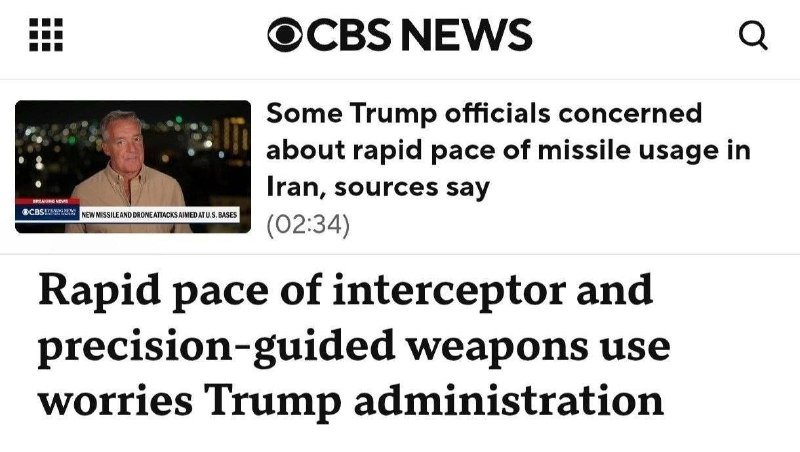
The Iran escalation itself raises the stakes. Trump on 20 July publicly vowed retaliation against Iran after a deadly weekend for US troops, the Reuters wire reporting in a single line that framed the commitment as a presidential promise rather than a defined military operation. The strategic question is what Washington expects to gain. A successful strike campaign against Iranian oil infrastructure could crater Tehran's revenue and reshape regional alignment, but it would also drive Brent crude sharply higher and force China, India and other major importers to absorb the cost. Beijing's signal that it will not subsidise that cost in reserves terms puts the bill squarely on Washington.
The implicit US bet is that China cannot afford to let oil prices run hot indefinitely because of domestic inflation pressure and manufacturing input costs. That bet has historical precedent: the 2008 and 2014 oil shocks both squeezed Chinese industrial margins sharply. But the bet also assumes that Beijing has no alternative suppliers, no strategic reserves of its own, and no ability to reroute trade through non-dollar channels. None of those assumptions hold in 2026 the way they did in 2008. Russian crude, sanctioned but discounted, is being absorbed by Chinese refiners at scale. Iranian crude, also under US sanctions, continues to find Chinese buyers through opaque but durable channels. The marginal-barrel calculus has shifted.
The dollar question under the surface
Beneath the energy argument sits a larger one about the terms of the international monetary system. Every time the US uses dollar-clearing as a foreign-policy tool, against Iran, against Russia, periodically against Chinese technology firms, it reminds the rest of the world that reserve-currency status carries costs as well as benefits. Beijing's accumulated response has been methodical: build alternative payment rails, expand the yuan-settled oil contract, accumulate gold, deepen bilateral swap lines. The SCMP reserves argument is the latest data point in that sequence, and it suggests that Beijing is now prepared to let the dollar system feel the cost of its own weaponisation.
The structural risk for Washington is not a sudden Chinese move to dump Treasuries. It is the slow withdrawal of Chinese cooperation with the dollar system that has, for decades, kept US fiscal imbalances affordable. If China refuses to underwrite oil shocks, refuses to recycle surpluses at the pace the US Treasury has come to expect, and refuses to lend diplomatic legitimacy to dollar-based sanctions, the cost of US foreign policy rises at the margin. Each individual move is small. The cumulative effect, over years, is not.
The forward question is whether the Trump administration's Iran policy was calibrated with that cumulative effect in mind. The Reuters line on Trump's vow of retaliation contained no operational detail, no coalition language, no dollar-cost framing. That absence is itself informative. The decision to escalate appears to have been made without a clear answer to the question of who pays for the resulting oil shock, and Beijing has now publicly told Washington that the answer is not going to be Beijing.
The contested ground
There is a plausible alternative reading. China may not be signalling restraint at all. It may simply be calculating that an Iran-driven oil spike benefits Beijing by driving up the value of the discounted Russian and Iranian barrels it is already buying, while simultaneously pressuring US allies in Europe and Asia who lack Beijing's non-dollar supplier relationships. The SCMP framing, published as opinion rather than official policy, may reflect one influential view inside the Chinese policy ecosystem rather than a coordinated government position. The line between strategic patience and strategic opportunism is thin, and the Chinese state has not publicly clarified which side of it it intends to occupy.
The sources do not specify the size of any reserve drawdown under consideration, the precise terms of Chinese oil-supply diversification, or whether the WAIC governance framing has produced any binding commitments from third countries. What they do establish is that Beijing is choosing, across at least three policy files on the same day, to assert its own strategic tempo rather than align with Washington's. For an international system that has run on the assumption of Chinese alignment for a generation, that is a meaningful signal. The dollar system has weathered smaller challenges. It has not yet weathered a sustained, multi-front Chinese refusal to underwrite its costs.
How Monexus framed this: the wire reporting on 20 July treated the US-Iran escalation, the China birthright story and the WAIC governance framing as three separate beats. This piece reads them as one story: a coordinated Chinese signal about the terms under which Beijing will continue to support the dollar-based international order.
Wire provenance
This editorial synthesis draws on the following public wire/social posts:
- https://news.cgtn.com/news/2026-07-20/New-coordinates-for-global-AI-governance-and-China-s-contributions-1OW4UqtQrQc/p.html
- http://reut.rs/45dfdER