Aoun at the White House: Beirut puts a Hezbollah disarmament plan on Trump's desk
Lebanon's president lands in Washington with a concrete proposal to bring Hezbollah's weapons under state control. Trump promises help for the Lebanese army; the hard part comes after the photo op.
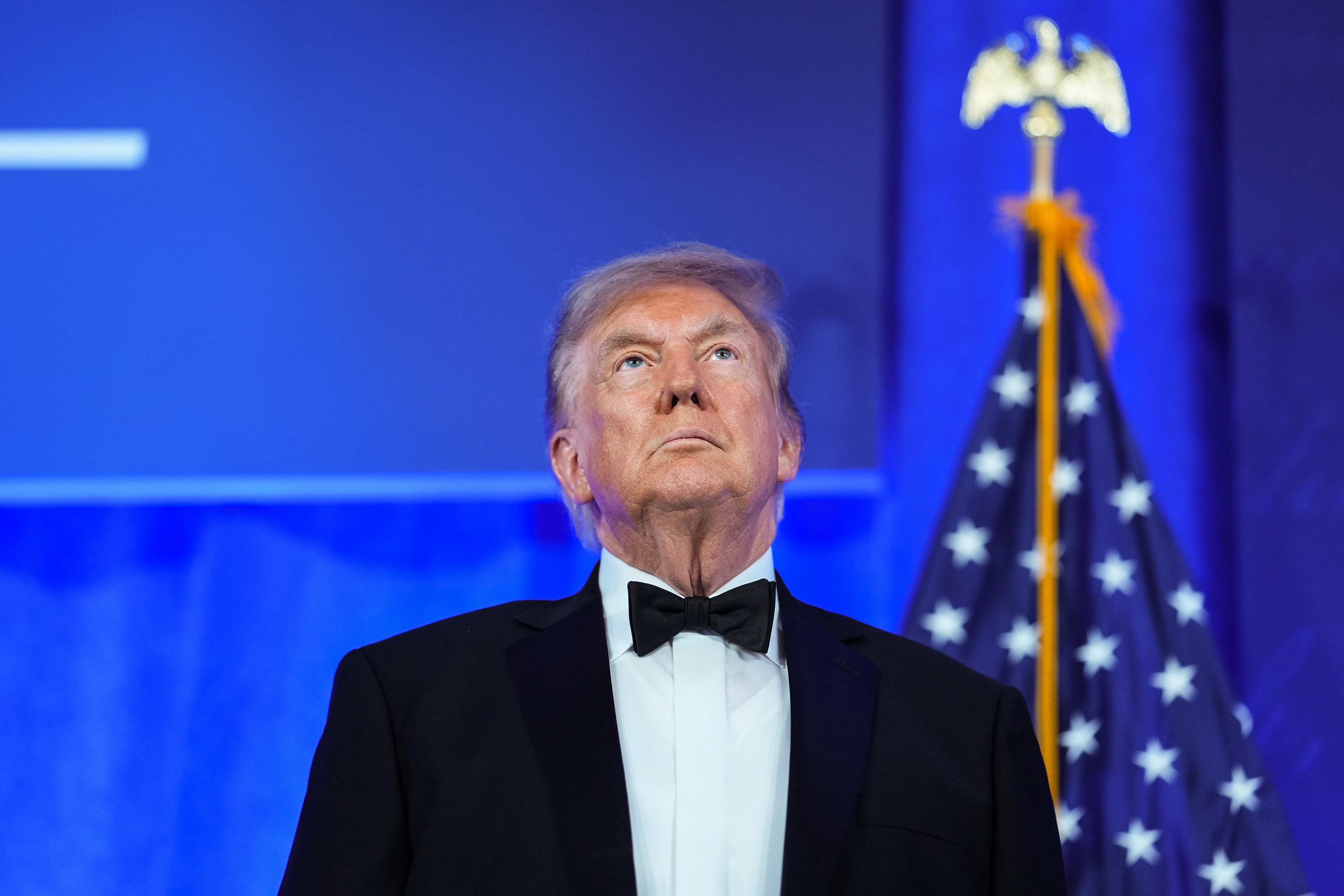
At 18:52 UTC on 21 July 2026, the Lebanese Presidency released the first official photographs of President Joseph Aoun's meeting with U.S. President Donald Trump at the White House, the visual punctuation on a visit that had been telegraphed for hours by the prediction market and confirmed on the record by the U.S. side just after midday. The pictures landed against a single, specific expectation: that Aoun had come to Washington carrying a plan to disarm Hezbollah, and that Trump had been ready to hear it.
What is now on the table is the hardest version of the Lebanese file in a generation: a Beirut government asking Washington to underwrite, materially and politically, an attempt to bring the Iran-aligned Shia movement's weapons back under the authority of the Lebanese state. The visit's outcome will be measured not by the joint statement's adjectives but by whether the Lebanese army, long under-resourced relative to the task, gets the kit, training and diplomatic cover to make such a plan operational before the politics in Beirut and the South catch up with it.
The ask, as far as the public record shows
The Polymarket tape moved on the meeting around 15:49 UTC, with a market notice flagging that Aoun was expected to present a Hezbollah disarmament plan in the Oval Office. By 18:40 UTC, Reuters was carrying on-the-record remarks from Trump that the United States "would help Beirut going forward" and that Washington had "some very concrete plans" for the Lebanese army. The Lebanese Presidency's own social account then published images of the meeting in the early evening, UTC.
The reading from those three data points is narrow but unambiguous: this was not a courtesy call. Aoun arrived with a proposal; Trump received it; the U.S. side pre-announced concrete support. What remains unspecified in the public reporting is the dollar envelope, the timetable, the legal status of any third-party assurances, and the sequencing of any Israeli–Lebanese negotiating track that might run in parallel.
Why the timing, and why this president
Aoun's election in January 2025 broke a two-year deadlock in which the presidency had been vacant while Hezbollah's recovered posture after the 2024 war with Israel gave the movement effective veto power over Lebanese politics. He took office as the candidate of a changed equilibrium: a U.S.-designated commander from the post-2017 military cohort, acceptable to Saudi Arabia and to a wide enough domestic coalition to win a parliamentary vote. His government has spent the intervening months on three parallel tracks: negotiating a ceasefire with Israel, opening a reconstruction conversation with Gulf lenders, and trying to recover a monopoly on arms in the south.
The Washington visit is the third of those tracks made visible. A government that wants the army to be the sole armed actor in southern Lebanon needs three things the Lebanese state alone cannot supply: heavy equipment, sustained intelligence support, and a U.S. diplomatic backstop that deters Israeli unilateral action while the process is live. The Reuters readout, with its reference to "concrete plans" for the army, points to at least the first two of those three.
The counter-narrative, and why it has weight
The dominant Lebanese and Hezbollah-adjacent framing of the visit is not that disarmament is being negotiated; it is that Lebanon is being asked to perform disarmament in exchange for Israeli and American concessions that have not been defined. The argument from that side is structural. Hezbollah's weapon inventory, in this telling, is the residual guarantee of the post-2006 deterrence arrangement and of the South's reconstruction from the 2024 war. Hand it over before the Israeli withdrawal, the border delineation, and a credible reconstruction package are locked in, and the Lebanese state is left with neither deterrent nor money while the threat that produced the war is unaddressed.
There is enough in the public record to take that objection seriously. The Reuters readout refers to U.S. help for Beirut but does not name an Israeli reciprocal. The Polymarket framing of "Hezbollah disarmament plan" presupposes an implementation pathway the Lebanese army does not currently have the force ratio to deliver on, particularly in the border belt south of the Litani. A disarmament process that outruns the army's capacity, or that runs without an Israeli reciprocal, is not disarmament; it is a one-sided concession whose failure will be charged to Beirut, not to Washington or Jerusalem.
What Ankara, Riyadh and Tehran are not saying, out loud
The visit's regional context is the silence around it. Saudi Arabia, the principal Gulf underwriter of the Lebanese state since the 2017 Hariri resignation, has not been named in the public readouts; its role is presumed rather than confirmed. Turkey, which has positioned itself as the Sunni-majority interlocutor of choice for Lebanon's Sunni political class, has similarly stayed off the visible record. Iran's foreign ministry has not, in the available reporting, commented on the meeting at all.
That silence is itself a tell. A successful Lebanese disarmament process reduces the operational value of Hezbollah to Iran at exactly the moment Tehran is rebuilding deterrence after its own 2024 exchange with Israel. It also closes the principal Iranian lever inside Lebanon. The shape of the regional reaction, when it comes, will be the real tell: whether Doha, Riyadh and Ankara read the Aoun visit as the opening of a managed transition, or as a Beirut pivot that they are being asked to absorb the bill for without being consulted.
The structural frame, in plain prose
What the visit is testing is a specific theory of how a small state with a non-state military monopoly recovers sovereignty. The theory, which runs through most of the post-2024 Western and Gulf planning on Lebanon, holds that sequenced American support to the Lebanese army can substitute for, and over time erode, the political case for a parallel armed actor. The competing theory, which is closer to the Hezbollah-and-part-of-the-Lebanese-left reading, is that the army's capacity is itself a function of a regional settlement that has not been agreed, and that weapons are downstream of a deterrence bargain rather than upstream of it. Aoun's plan, whatever its specific terms, is an attempt to make the first theory operational on a clock the second theory does not accept.
Stakes, and the next 90 days
If the Trump readout holds, the next concrete markers will be visible by late October 2026: a U.S. announcement of equipment and training flows to the Lebanese army with line-item amounts; an Israeli–Lebanese negotiating track at the border; and a first verifiable reduction in Hezbollah's heavy weapons footprint south of the Litani. If those markers slip, the Polymarket-implied expectation that animated Tuesday's visit becomes the kind of unmet commitment that compounds, and the Lebanese army is left with a more visible list of what it cannot do.
The harder question, the one the joint statement will not answer, is what the plan does if Hezbollah declines. The Reuters readout is silent on a coercive clause; the Polymarket framing assumes consent. A disarmament process that requires the consent of the actor being disarmed is a negotiation, not a disarmament, and negotiations of this kind have, in the modern Lebanese record, a higher failure rate than their public launches suggest.
What remains genuinely uncertain
The public reporting on the visit, as of 21 July 2026 UTC, is consistent on what the meeting was about and thin on the terms. The Reuters readout does not name a dollar figure, a delivery schedule, or a reciprocal Israeli commitment. The Lebanese Presidency's own posts are visual; the official communiqué, if released, has not been published in the window covered by these notes. Polymarket's prediction is an expectation, not an outcome.
Two facts can be carried forward from Tuesday: the U.S. side went on the record with concrete language for the Lebanese army before the cameras left the room, and Beirut arrived with a written plan rather than an exploratory position. Whether those two facts translate into the harder work of implementation is the question the next ninety days will answer.
This publication framed the Aoun visit as a Lebanese-initiated process under U.S. underwriting, rather than as a Washington-imposed condition, on the basis that Aoun brought a written plan to the meeting and that the Reuters readout places U.S. support downstream of that plan rather than upstream of it. The wire line on the day emphasised the disarmament expectation; Monexus keeps equal weight on the precondition problem.
Wire provenance
This editorial synthesis draws on the following public wire/social posts:
- https://t.me/wfwitness