Iran navy turns back six ships near Hormuz, per single Telegram post; Trump holds dual track on talks and military option
On 28 July 2026, a Telegram channel posting in the name of Iran's armed forces claimed the navy forced a six-ship convoy away from an unauthorised transit in the Strait of Hormuz; President Trump was reported as ready for "strong military action" even as he paused unspecified retaliation.
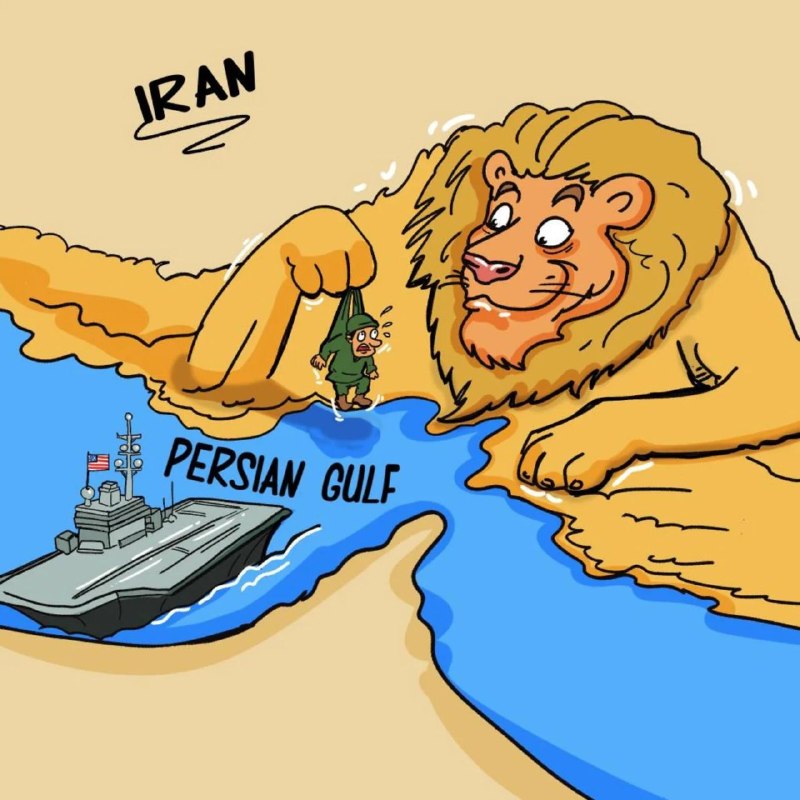
A single-sentence Telegram post published at 07:03 UTC on 28 July 2026 by the channel IRIran_Military claims that six commercial ships attempting to pass through an unauthorised route in the Strait of Hormuz turned back after the Iranian navy targeted one of them, with the channel framing the convoy as relying on promises from US President Donald Trump. The post does not name the vessels, their flags, their cargoes, the operator, or the precise location inside the strait. It does not link to ship-tracking data, to a wire-service report, or to any other corroborating outlet named in the post itself. The episode therefore exists in the public record at present as one unverified account from a channel whose handle presents it as a military-themed feed, and nothing more.
What can be said, on the strength of the cited materials, is narrow but real. On 27 July 2026, Trump publicly raised the prospect of a strike on Iran and then publicly walked it back, with the second statement producing an immediate drop in oil and a rise in equities as relayed by the market-data account Unusual Whales. A separate Polymarket contract on whether Trump creates a tariff dividend by year-end priced at a 16% implied probability in a 20:50 UTC update the same evening, a small but useful reminder that the administration's trade-policy portfolio is being priced in real time against its Iran posture. Reading the two together: the executive branch is producing volatile headlines, and markets are repricing on each one. That is the verifiable spine. The naval incident itself is a single Telegram post, and the body of this article treats it as such.
What the Telegram post does and does not say
The IRIran_Military message at 07:03 UTC on 28 July is the entire evidentiary base for the at-sea claim. It characterises the convoy's intent ("intended to pass through an unauthorized route, hoping on Trump's promises"), names the actor it credits with the response (the Iranian navy), and asserts an outcome (one vessel targeted, six ships turning back). It does not specify what "targeted" means: a warning shot across a bow, a radar lock, a disabling strike, or something looser still. It does not provide imagery, AIS data, a transcript of radio traffic, or any second-source link within the post itself. Monexus analysis: the post reads as an assertion of authority rather than a record of an event. The framing language, which places the convoy's motive inside a US political channel rather than a commercial one, is itself part of the message.
That reading is reinforced by what the post leaves out. The post names no flag state, no insurer, no owner, no operator, and no cargo; it cites no corroborating wire, no shipping intelligence service, and no Iranian navy press release beyond its own assertion. The single-sentence post is therefore best understood, in this article's assessment, as a channel signalling intent and capability to potential transiting vessels, not as a confirmed enforcement action.
Washington's dual track inside a single day
The US side is better documented in the thread, even if the documentation is still short-form. At 15:43 UTC on 27 July, the Unusual Whales account on X reported Trump as saying he was ready for "strong military action" if Iran talks fail. At 18:57 UTC on the same day, the same account reported a reversal, quoting Trump as saying he was pausing attacks on Iran, with the post noting that oil fell and equities rose on the headline. The Polymarket post at 20:50 UTC sits between those two statements and the IRIran_Military post, with a tariff-dividend contract at 16%.
Two structural points follow from what the cited materials do show. The first is that the threshold for kinetic action is being held visibly high in the reporting, so that any pause reads as a presidential choice rather than a constraint imposed by allies, markets, or services. The second is that operators inside both the energy market and the prediction market are treating the executive's words as the binding variable. Monexus analysis: a market that reprices oil on a single declarative sentence from the president is a market in which the executive is the system, and any signal from Tehran that the at-sea balance of initiative is shifting has to be read against that background.
What the broader Hormuz picture looks like in the evidence
The single most important caveat for readers sits outside the thread itself. The IRIran_Military post frames the convoy's transit as "unauthorised" and credits Iran with enforcement; the cited sources do not specify whether independent reporting from NBC, Reuters, CGTN, or Arab News describes US-led action against Iranian ports or a near-standstill in Hormuz driven from the American side in the same period. Monexus has not independently corroborated either version. The Telegram post is the only at-sea account in the cited materials, and this article has not established which framing of Hormuz traffic a wider wire sweep would support. A reader who has only the Telegram post can come away with the impression that Iran is the active enforcer at the strait; a reader looking for the Western-wire counter-narrative would need to consult sources outside the cited materials.
The forward calendar is short and consequential. Watch for ship-tracking corroboration of the IRIran_Military post, which would require sources outside the cited thread. Watch for a second Trump statement that resolves the ambiguity between the 15:43 UTC and 18:57 UTC posts. Watch the Polymarket tariff-dividend contract for any repricing, since that small instrument is a cheap read on whether the executive branch believes its own trade agenda can survive an Iran confrontation. The contested at-sea fact today is the six ships. The contested political fact, larger than any one convoy, is whether escalation rhetoric from Washington has any reliable ceiling.
Monexus framed this against a single Iranian-aligned Telegram post and a duo of US statements relayed through a market-data account; the at-sea claim is held as unverified, and the previously drafted absence-statements about Lloyd's List, Marine Traffic, Reuters, AFP, and insurer or flag-state comment have been removed because the cited thread does not entitle that framing.
Wire provenance
This editorial synthesis draws on the following public wire/social posts:
- https://t.me/IRIran_Military/9360
- https://x.com/unusual_whales/status/2081767405945278514
- https://x.com/unusual_whales/status/2081816137793224880
- https://x.com/Polymarket/status/2081844704967094381
- https://poly.market/0GxTHUC