US scrambles F-35s and F-16s from European bases as Washington edges back toward open war with Iran
Within hours of the New York Times reporting the launch of F-35 and F-16 sorties from Europe toward the Middle East, the Washington Post framed the redeployment as the threshold of a new full-scale war with Iran, a framing Tehran is already contesting in real time.
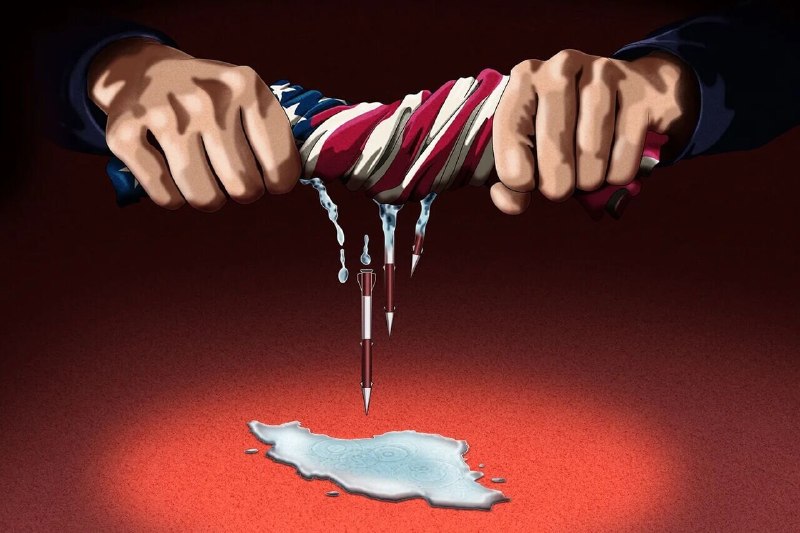
At 05:00 UTC on 20 July 2026, the New York Times reported that the United States has begun launching F-35 and F-16 fighter jets from European air bases toward the Middle East, a redeployment that the Washington Post, in a parallel dispatch, characterised as putting Washington "on the brink of returning to an all-out war with Iran." The two wires, both aggregated on the abualiexpress Telegram channel within the same hour, set the day's frame: a Pentagon logistics shift presented in one outlet as a routine force posture adjustment, and in the other as the opening drumbeat of a second major Middle Eastern war.
That divergence is the story. Airframes are moving; the political language around them is moving faster. The decision to push tactical aviation across the Atlantic does not, on its own, prove that diplomacy has collapsed. But it does signal that the US military is building the kind of options package that only makes sense if escalation, rather than de-escalation, is the working assumption in the Pentagon's operations centre.
Two papers, two thresholds
The New York Times dispatch, as relayed on the abualiexpress feed, leads on hardware: F-35 and F-16 sorties originating from European soil, transiting toward the US Central Command area of responsibility. The Washington Post dispatch, filed within the same window, leads on consequence: an American return to "all-out war" with the Islamic Republic. Neither piece, as carried on the channel, publishes a quoted Pentagon statement confirming intent, but together they constitute a press environment in which the default reading of any new deployment is kinetic.
The asymmetry is telling. Logistics reporting is verifiable on the ground: flight tracks, satellite imagery of European bases, tanker taskings. The escalation framing is a journalistic judgement about what those movements mean. That judgement is now travelling through the same channels as the verified reporting, blurring the line between a posture adjustment and a casus belli in the minds of readers and, crucially, of the Iranian decision-making apparatus in Tehran.
The Iranian counter-frame
Tehran is not waiting for the American debate to settle. At 02:31 UTC on the same date, the Tasnim news agency, an outlet aligned with the Islamic Revolutionary Guard Corps, carried a counter-narrative directly attributed to the White House: an interview in the New York Post in which President Trump, described in Tasnim's framing as "the head of the American terrorist state," justified anticipated American military fatalities by comparing them to a longer toll of Iranian-linked deaths. The Tasnim framing inverts the standard American war-justify rhetoric: instead of a president explaining sacrifice to a domestic audience, Tasnim presents a foreign leader explaining away his own soldiers' deaths to an American tabloid.
The Tasnim channel's choice of language is itself a piece of information. "Terrorist state" is the term of art used in Iranian official discourse for the United States and Israel, and Tasnim is closer to the Iranian security establishment than to the foreign ministry. The fact that the agency is amplifying an American source rather than an Iranian one signals a strategy: reframe the American war debate inside Iran by holding up the US president's own words, in his own newspaper, in front of an Iranian audience that is already primed to read those words as confession rather than justification.
The pattern beneath the headlines
Two structural facts sit under the day's news. First, the US military now operates in the Middle East from a posture of forward-staged rotation rather than permanent garrison: heavy combat air is based in Europe and the continental United States, with smaller packages kept under wraps at Gulf facilities. The reported redeployment fits that template, and it is consistent with a hedging strategy in which Washington keeps one foot in the diplomacy lane while keeping the other on the accelerator.
Second, the information environment around any Iran confrontation is now genuinely bipolar. The Western wire cluster, anchored by the New York Times and the Washington Post, frames movement as threshold; the Iranian-aligned cluster, anchored by Tasnim, frames American public statements as the real evidence, and reads those statements as evidence of an exhausted, casualty-tolerant leadership that has already accepted the costs of war. Each side feeds off the other. Every White House interview quoted by Tasnim is, in turn, the raw material for a Western analytical piece about Iranian propaganda; every Western escalation framing is, in turn, raw material for an Iranian piece about American warmongering. The feedback loop is the strategic environment.
What to watch before the next headline
Three indicators will tell whether 20 July 2026 is remembered as the eve of a war or as another peak in a long, managed crisis. The first is tanker activity over the eastern Mediterranean and the Red Sea: a sustained increase in KC-46 and KC-135 taskings out of European hubs would confirm a contested-air-severity package rather than a limited strike option. The second is Iranian diplomatic posture at the United Nations in New York and the IAEA in Vienna: a snap IAEA inspection request or an emergency Security Council consultative session would mark the diplomatic track as live. The third is the price and volume of Brent crude, which has historically moved on Iran headlines before the underlying military movements are confirmed.
There are still facts that the day's reporting does not settle. The New York Times and Washington Post dispatches, as carried on the abualiexpress channel, do not specify which European bases are launching the aircraft, how many airframes are involved, or whether the deployment is part of a pre-existing rotational schedule. The Washington Post's "brink" framing is an editorial judgement, not a stated US policy position. The Tasnim summary of the New York Post interview is paraphrased rather than quoted at length; the exact words of the US president are not in the thread context. The reader is left to weigh what has been said against what has merely been telegraphed.
What is beyond dispute is the direction of travel. Combat aircraft have moved. Two of the most widely read American papers have used the word "war" in their ledes in the same news cycle. And Tehran's state-aligned media has responded not with denials but with a counter-justification, the rhetorical posture of a capital that believes the worst-case scenario is no longer hypothetical.
The Monexus desk treats this story as a logistics story first and an escalation story second. The Western wire line reads posture as inevitability; the Iranian line reads American public rhetoric as confession. Both readings are partial. The verifiable core is aircraft movement; the unverifiable margin is what it means.
Wire provenance
This editorial synthesis draws on the following public wire/social posts:
- https://t.me/abualiexpress
- https://t.me/tasnimplus