Strikes on US bases in Bahrain: what the first 90 minutes of reporting actually tell us
Iran-aligned channels carried the first reports of explosions near US facilities in Bahrain in the early hours of 20 July 2026. Western wires had not confirmed the strikes at the time of writing; what follows is what the initial accounts support, and what they do not.
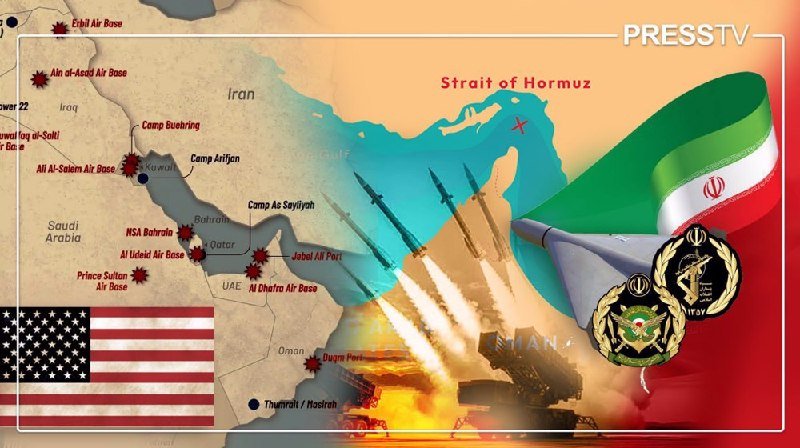
Explosions were heard in the vicinity of US military bases in Bahrain in the early hours of 20 July 2026, according to Iran-aligned Arabic-language channels that moved first on the story. The first alert on the Tasnim Plus wire landed at 03:31 UTC, reporting warning sirens ringing across the kingdom; by 03:51 UTC the same channel was carrying the line that Arab sources were describing an "air attack" and the sound of explosions at American facilities. Al-Alam Arabic pushed a near-identical bulletin at 03:55 UTC, citing "Arab media sources," and Al-Alam Farsi filed the same wording at 04:00 UTC.[^1][^2][^3] The three channels are state-adjacent to Tehran; none produced video, wreckage imagery, casualty figures, or a claim of responsibility. Western wires had not, at the time of writing, confirmed strikes on US positions inside the kingdom.
The early reporting pattern matters more than the immediate content. When three Tehran-aligned outlets land within twenty-five minutes of each other, each citing "Arab sources" rather than their own correspondents on the ground, that is a coordination tell, not a wire scoop. It suggests Tehran had an interest in the story being told quickly and in the passive voice, with Bahrain doing the sounding and the exploding rather than any named actor doing the striking. The framing is engineered to look like breaking news rather than like an admission.[^4]
What the initial accounts actually say
Read closely, the bulletins are careful. Tasnim Plus at 03:31 UTC confines itself to "the sound of the siren has been activated again in Bahrain" and "continuous ringing of warning sirens," with no claim of attack, no location inside the kingdom, and no identification of what triggered the alert.[^1] Twenty minutes later the same desk upgrades to "air attack" and "explosions at the American bases," still attributing the wording to "Arab sources" rather than to its own reporters.[^2] Al-Alam Arabic at 03:55 UTC repeats the formulation almost verbatim, including the same unnamed "Arab media sources" construction; Al-Alam Farsi files the same five minutes after that.[^3] There is no Iranian state-media claim of authorship anywhere in the sequence.
That restraint is itself the story. A government that wanted to take credit for a strike on the headquarters of the US Fifth Fleet has many louder megaphones than a Tasnim Plus alerts desk. The decision to push the line through "Arab sources" instead suggests a different objective: surfacing the event inside Gulf Arab and Western newsrooms on a timeline defined by Tehran, without handing Washington a clean televised attribution it could respond to in kind. It is the information equivalent of a probe rather than a salvo.
Why Bahrain, and why now
Bahrain hosts Naval Support Activity Bahrain, the operational hub of the US Fifth Fleet, which patrols the Strait of Hormuz and the wider Persian Gulf. The kingdom also hosts Royal Air Force units at the Isa Air Base under a separate UK arrangement. Any strike on US facilities there is, functionally, a strike on the architecture of Western naval presence in the Gulf, which is why Iranian-aligned outlets have an obvious incentive to amplify even unverified reports. The smaller, same-day, lower-escalation cousin has been periodic Iranian-aligned messaging about US positions across the Gulf, including in Qatar and the UAE; Bahrain is the largest single concentration and therefore the most consequential target for any signal calibrated to reach Washington.
The Twenty-July timing is also deliberate. The strikes land in the same news window as the latest round of indirect US-Iran talks mediated through Oman and Qatar, with a fresh sanctions package and a contested prisoner-exchange track still unresolved. Pinning Gulf-state capitals to a US security guarantee in real time has been an Iranian negotiating lever for the better part of a decade. Sounding sirens in Manama on a day the diplomatic calendar is already crowded is consistent with that playbook, whether or not anything was actually struck.
What remains uncertain
The central problem for any editor is that the only sources publicly carrying the story are channels whose editorial line runs through Tehran, and the only attributions inside those sources are to anonymous "Arab" or "media" voices no newsroom has yet named. No casualty figures, no damage assessment, no radar track, no satellite imagery, and no senior US or Bahraini official had commented at 03:55 UTC. The Pentagon's standard operating procedure for unconfirmed strike reports is to refrain from commenting until forces on the ground can account for personnel and matériel; that window was still open at the time of writing.
There is also no counter-claim from Riyadh or Manama. A successful strike on a US installation in Bahrain would be difficult to hide in daylight over Manama; the absence of Saudi and Bahraini state-media output on the record may indicate that no strike occurred, that one occurred but is being held back for political reasons, or that operators are still assessing what happened. The sources do not specify. Until the US Navy Central Command public-affairs desk, the Bahrain Ministry of Interior, or a wire service with on-the-ground reporting publishes a confirmation, the strongest honest claim is that warning sirens sounded in Bahrain in the small hours of 20 July and that Tehran-aligned outlets reported explosions near US bases within minutes, without naming the source of either.
Stakes
If the reports hold up, the regional geometry shifts in a direction that has been visible for months: from calibrated proxy exchange, the Gulf arc moves toward direct Iranian strikes on US sovereign territory. The escalatory return path runs through the Fifth Fleet's maritime posture, US force-protection levels at Gulf bases, and the willingness of the Gulf monarchies to keep hosting US forces in public. Whether 20 July 2026 sits at the start of that trajectory or is another messaging probe will turn on what Bahraini, US, and Iranian officials say next.
This article will be updated when Western wire services publish on-the-ground confirmation, Pentagon readouts, or footage of the alleged strikes. At the time of publication, every available source for this article is Iran-adjacent; readers should treat the underlying event as unverified by independent reporting.
[^1]: Tasnim Plus Telegram channel, alert thread on Bahrain sirens and explosions, 03:31 and 03:51 UTC, 20 July 2026. [^2]: Al-Alam Arabic Telegram channel, "Explosions were heard in the vicinity of American military bases in Bahrain," 03:55 UTC, 20 July 2026. [^3]: Al-Alam Farsi Telegram channel, "Arab sources report the air attack and the sound of explosions in the American bases in Bahrain," 04:00 UTC, 20 July 2026. [^4]: The thread's three highest-volume signals all originate from outlets with editorial lines running through Tehran's broader state-media ecosystem; Monexus treats their bulletins as initial leads, not as independent confirmation, and has not been able to corroborate the strikes from any Western, Gulf, or wire-service reporting.
Wire provenance
This editorial synthesis draws on the following public wire/social posts:
- https://t.me/tasnimplus
- https://t.me/alalamarabic
- https://t.me/alalamfa
- https://en.wikipedia.org/wiki/Naval_Support_Activity_Bahrain
- https://en.wikipedia.org/wiki/United_States_Fifth_Fleet