Starmer Resigns: Burnham Era Begins at No. 10
Keir Starmer has formally resigned as Prime Minister, with Greater Manchester mayor Andy Burnham set to take over at No. 10 after the Labour leader's farewell address outside Downing Street on 20 July 2026.
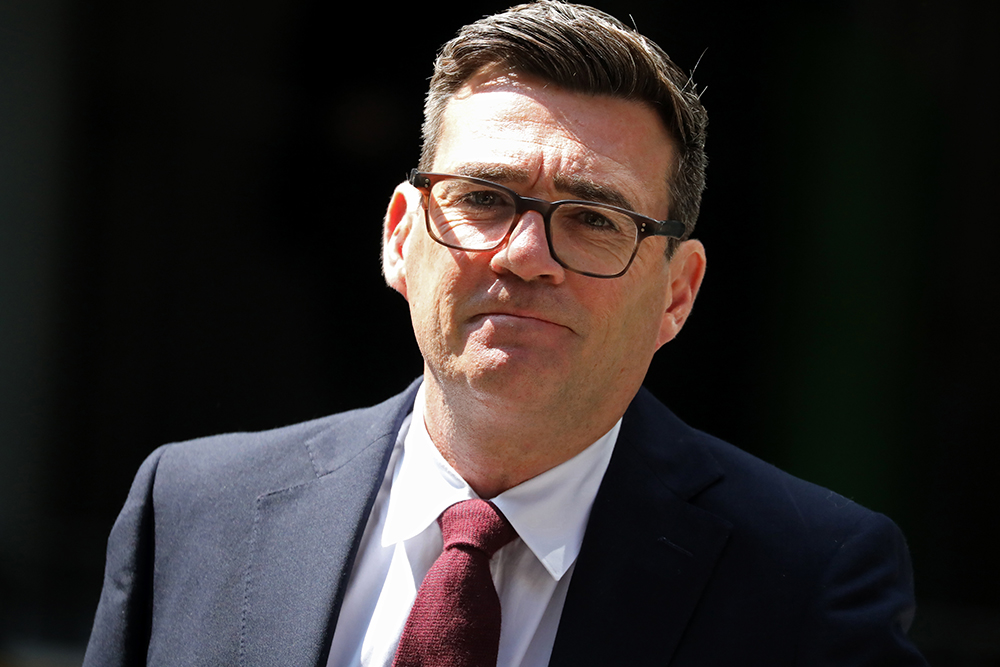
Keir Starmer stood at the lectern outside 10 Downing Street at 11:05 UTC on 20 July 2026 and declared that he was "about to visit His Majesty the King to offer my resignation and close the book on my time as Prime Minister." Minutes earlier, the same scene had been confirmed across wire channels: the Labour leader had formally resigned, ending a premiership that began with a landslide general election victory but ended under a cloud of accumulated political pressure. The farewell address was replayed in full by France 24 within the hour, and Starmer used the platform to wish his successor Andy Burnham "every success," pledging him "my full support."
That successor is the highest-profile political figure in the country outside the Cabinet: the directly elected Mayor of Greater Manchester, a former shadow home secretary turned regional heavyweight, and a man whose name has topped Labour MPs' private leadership ballots for the better part of a year. The handover will now move through the constitutional choreography the British system has rehearsed for two centuries: Starmer to Buckingham Palace, the King to ask the incoming prime minister to form a government, Burnham to Downing Street. The transition is the story. The transition was already going to be the story.
The day the headline wrote itself
The resignation sequence moved with the speed that Westminster's slowest institution, the monarchy, can manage. By 10:19 UTC, before Starmer had finished speaking, the @ClashReport wire had already logged the outgoing prime minister's public endorsement of Burnham. By 10:34, France 24 was broadcasting the farewell in replay. By 11:02, the @rnintel channel was carrying the resignation as a formal fact rather than an anticipated one. By 11:05, Starmer was on camera describing the end of his tenure in the past tense.
That compression matters because it tells the reader what kind of exit this was. A prime minister forced out by a cabinet revolt or a vote of no confidence leaves grudgingly, with words stripped from the doorstep speech. A prime minister who has decided the time has come walks to the microphones on his own schedule, takes the questions, and frames the story himself. Starmer did the latter. The remark "my work is done," reported by the @Megatron_ron channel in the same window, reads as a man choosing to define the moment before anyone else could.
A successor chosen by the party, not the country
The Burnham succession is, on paper, constitutionally ordinary and politically unusual in equal measure. The British public did not vote for him as prime minister. They voted, in the general election that brought Starmer to power, for a Labour government under Starmer's leadership. The person now about to occupy the same Number 10 lectern from which his predecessor announces his departure is a figure the country knows primarily as a mayor and as a Labour leadership contender who has, in effect, just been handed the top job rather than winning it.
There is a defensible counter-argument. Labour's membership and parliamentary party are sovereign on the question of who leads them, as they have been since the abolition of the electoral college system in the 2010s. The mayoralty of Greater Manchester is one of the most demanding executive jobs outside government, and Burnham won a third term with margins that read as a personal mandate rather than a party one. Both facts are true. They sit together uneasily.
The framing question for the next seventy-two hours is whether the British press treats the handover as a coronation or as an inheritance. The Twitter/Facebook/X wire channels that carried the story on the morning of 20 July treated it as a formality. The same cannot yet be said of the parliamentary Labour Party, several of whose figures will spend the next week deciding whether the new occupant of the building will be a long-term prime minister or a transitional one.
What the brief handover speeches reveal
Starmer's choice of words, both in the address and in the written endorsement of Burnham, was carefully calibrated. The phrase "close the book" is a deliberate piece of framing: it signals finality without bitterness and reserves pride of place to the writer. The endorsement of Burnham is similarly measured, naming no policy area, making no concession on contested ground, and signalling personal support without binding himself to a programme.
Burnham's register, by contrast, will be the diagnostic. His media appearances over the next week will need to do three things: introduce himself to a national audience that voted for him as mayor in 2024 but knows him imperfectly beyond that, draw a line of continuity with Labour's governing record so the markets and the civil service can read the change as an evolution rather than a rupture, and signal where the new administration will break cleanly from its predecessor. The lines of that triangle are visible in the early coverage; the points where Burnham lands on them are not yet.
Stakes, and the lines to watch
The internal dynamics of the Labour Party are the first line to watch over the coming weeks. Burnham arrives at Downing Street with an unusually broad personal mandate inside the party's activist base and a more sceptical view among some of its longest-serving parliamentary colleagues. Whether he chooses to lead from a reconstructed Cabinet or signals fresh intent through early personnel decisions will set the tone for the autumn legislative calendar.
The second line is the European file. The Starmer government had spent its closing months attempting to renegotiate aspects of the post-Brexit settlement with Brussels, and the question of whether Burnham continues, accelerates, or quietly downgrades that work is one of the first substantive tests of the new administration.
The third is fiscal. The markets have so far priced the change as continuity, on the working assumption that a Labour-led government remains Labour-led. That assumption is correct at the level of headline economics. It is less correct on questions of industrial strategy, devolution, and the internal balance of the Cabinet, where Burnham's mayoral record points in directions that diverge from Starmer's Westminster record. The first Budget of the new administration, whenever it lands, will be the moment those divergences have to be reconciled on the public record.
What remains genuinely uncertain, even after a morning of briefings and farewell speeches, is whether the transition proceeds as smoothly as the constitutional choreography demands. The formal procedure is mechanical. The political procedure, from Burnham's choice of Chancellor to the treatment of the older Blairite and Brownite wings of the party, is a separate question entirely. The next twenty-four hours will tell whether the change at the top is simply the close of one chapter or the opening of another.
This article relied on live wire reporting rather than the deep coverage that would normally sit behind a leadership change piece; future editions of the desk will ground the analysis in follow-up reporting from named British outlets as the Burnham government takes shape.
Wire provenance
This editorial synthesis draws on the following public wire/social posts:
- https://t.me/megatron_ron
- https://t.me/rnintel
- https://t.me/ClashReport