Starmer walks out of Downing Street: a premiership ends, a Labour question begins
Keir Starmer's final Downing Street address marks the formal end of a premiership defined by mandate, attrition, and an unsettled succession. The politics underneath the valedictory language now matter more than the speech itself.
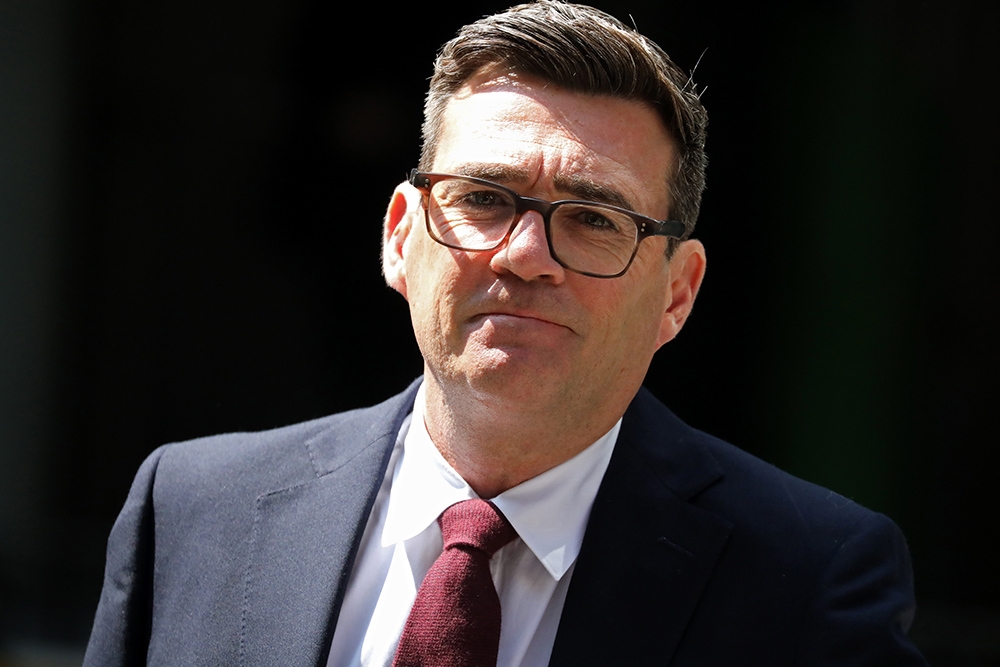
At 10:54 UTC on 20 July 2026, Keir Starmer stood on the threshold of 10 Downing Street and delivered his valedictory address. The clip, distributed by Disclose.tv, ran with the line that will define the moment: "I go with good grace, I go with a smile and I go proud of everything that we have achieved." Within minutes, the same footage had crossed from a press pool feed into the global information cycle, reposted by aggregators and clipped into shorter forms. A premiership ends not with a vote but with a doorway.
The speech itself was brief. Its length was not the point. The point is the transfer: a leader who entered Downing Street on a mandate to reset British politics after fourteen years of Conservative government is leaving it with that reset only partially delivered, and with the question of who carries Labour forward now formally open. What happens next is not a parliamentary event but a party-organisational one, and the difference matters.
The mandate, recapped
Starmer took office in July 2024 on the back of a campaign that asked voters for stability, competent delivery, and an end to the rolling crises of the previous administration. The early programme was heavy on planning reform, workers' rights legislation, and a careful fiscal envelope designed to reassure the gilt market. By the autumn of 2025, that envelope had been tested by gilt movements, by industrial action in sectors including rail, and by a budget that pushed several tax levers while protecting headline spending on the NHS and defence. None of those moves broke the government. None of them entrenched it either.
The pattern across the twenty-four months was one of incremental delivery rather than transformative legislation. The phrase "good grace" in the valedictory is, in that sense, accurate. Starmer leaves with a record that is defensible, not electrifying. The political economy of the United Kingdom in 2026 is not the political economy of 2024, but it is not obviously the one Labour's 2024 manifesto promised either.
What the doorway doesn't say
Final Downing Street speeches are a genre with a fixed shape. The outgoing occupant thanks staff, spouses, the public service, and the institution of the office itself. Starmer's text, judging from the aired excerpt, followed the template. The conspicuous absences from the excerpt are also data: no mention of a successor, no mention of the contest that will now formally open inside the Labour Party, no mention of the policy questions that the next holder of the office will inherit.
That restraint is itself the message. The handover is being choreographed as continuity, not rupture. The party machines that delivered the 2024 victory are still in place. The cabinet is intact enough that a smooth internal succession is the base case, not a contested convention.
The structural frame
British politics in 2026 is operating inside two pressures at once. The first is fiscal. The gilt market has been the silent voter on every major spending decision since 2022, and Labour's fiscal rules were drafted to be legible to that audience. The second is organisational. The Labour Party is a coalition of trade unions, local government associations, and the parliamentary party itself, and it is a coalition that has historically consumed leaders it considered too centrist, too cautious, or too far from its base.
Starmer's premiership navigated both pressures by design. The question now is whether the design survives him. A successor from the soft left of the party would inherit the same fiscal envelope with a different rhetorical posture. A successor from the right of the party would inherit it with less of the union machinery's goodwill. Either way, the constraints do not move.
What to watch
Three dates will matter more than the speech. First, the timeline for the leadership contest itself: how quickly the parliamentary party coalesces, and whether the contest goes to the membership or is settled by MPs alone. Second, the autumn budget and its test of the fiscal rules against a slowing growth backdrop. Third, the next set of local elections, which will be the first real read of the post-Starmer Labour project.
The doorway moment is the easy part. The harder question, and the one that will define whether "everything that we have achieved" is read as a foundation or a ceiling, is what gets built on it next.
Desk note: This publication treated Starmer's departure as a transfer event first and a personality story second. The wire footage provides the spine; the analysis sits on the institutional and fiscal record surrounding it. Counter-framings (a sharper left critique, a sharper right critique) are deliberately held for dedicated coverage once the succession picture clarifies.
Wire provenance
This editorial synthesis draws on the following public wire/social posts:
- https://t.me/disclosetv
- https://t.me/osintlive