Strikes and demolitions in south Lebanon test the November truce
Three reported detonations in Tiri and Al-Taybeh on 20 July 2026 mark the latest in a string of Israeli demolitions inside south Lebanon that critics say are quietly eroding the November 2024 ceasefire.
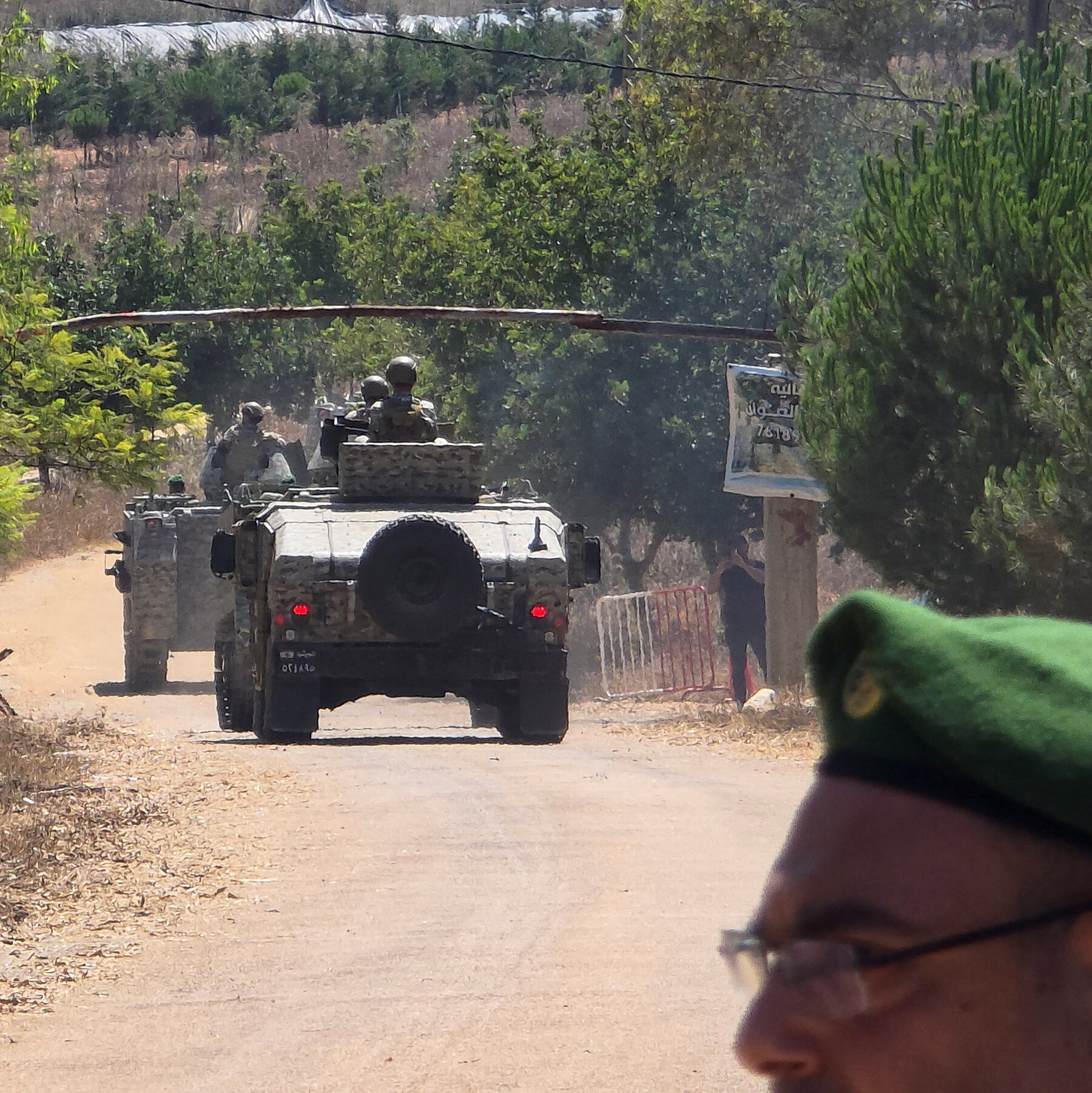
Three strikes landed inside south Lebanon in the hour before sunset on 20 July 2026. At 18:54 UTC, Iranian state-aligned PressTV reported that Israeli forces had detonated a building in Al-Taybeh, south Lebanon, characterising the action as part of a broader pattern of demolitions carried out "despite truce deal." Half an hour later, the war-monitoring account War Frontline Witness described an "Israeli detonation" targeting the town of Tiri, framed as falling "within the security zone of southern Lebanon." By 19:34 UTC, the Beirut-based satellite channel Al-Alam chimed in, citing Lebanese sources for an Israeli bombing of Tiri. None of the three Telegram channels named casualties. None identified a specific structure. None gave an Israeli military readout. What the three messages, all posted within a single 40-minute window, make plain is that the operational tempo along the ceasefire line is not zero, and that the term "truce" is doing more diplomatic work than ground-level work.
The November 2024 ceasefire between Israel and Hezbollah ended fourteen months of cross-border war that displaced roughly 60,000 Israelis and around one million Lebanese, and left a strip of southern Lebanese villages in ruins. Under its terms, Israeli forces were to withdraw behind the international border and Hezbollah was to dismantle remaining military infrastructure south of the Litani River, monitored by a UNIFIL-led ceasefire mechanism with US and French backing. Eighteen months on, the architecture holds in name only. Israel retains what it describes as a defensive "security zone" inside Lebanese territory. Hezbollah, despite a leadership decapitation campaign, continues to claim residual armed capability. And the demolitions catalogued in southern towns like Tiri and Al-Taybeh have become a low-grade but persistent feature of the post-truce order.
What the channels actually say
The three wire items are short and stylistically varied. Al-Alam, the Arabic-language outlet of Iranian state television, frames the Tiri strike as urgent ("🔴Urgent⭕️") and explicitly attributes it to "the Israeli enemy," a phrase Hezbollah-aligned media also use and that carries a normative weight distinct from a neutral "Israeli forces." War Frontline Witness is more restrained, describing a "detonation" inside the "security zone", language that accepts the Israeli framing of a buffer area but stops short of endorsing it. PressTV adds the most context, naming Al-Taybeh (not Tiri) and tying the demolition explicitly to a violation of the truce. Read together, the three messages suggest at least two distinct incidents in two different towns within an hour, which would be consistent with the multi-site pattern Lebanese outlets have been reporting for months but is not directly attributable from this thread alone.
The channels disagree on one thing worth flagging: Al-Alam and War Frontine Witness both place the action in or near Tiri, while PressTV names Al-Taybeh. Al-Taybeh is a known cluster of villages in the Bint Jbeil and Tyre districts of south Lebanon; Tiri (also spelled Taybeh in some renderings) lies near the border in the same general area. It is plausible, though not certain from these sources, that the three posts are describing a single operation and the journalists are transliterating the place name differently. Or there may genuinely have been two strikes. The ambiguity is itself a feature of the information environment: when three Telegram channels disagree on the toponym, independent wire reporting matters more, not less.
Why demolitions, why now
Israeli demolitions in south Lebanon since November 2024 have followed a consistent operational logic that has been reported but never publicly formalised. The Israeli military frames its presence in a "security zone" as a temporary holding measure pending full Hezbollah disarmament, and treats structures with suspected militant infrastructure, weapons caches, observation posts, hardened command nodes, as legitimate targets under the right of self-defence. Lebanese and Iranian-aligned outlets frame the same actions as collective punishment aimed at deterring villagers from returning to the frontier strip.
That dispute is genuine, but it is also incomplete. The November agreement never produced a binding timetable for either the Israeli withdrawal or the Hezbollah pullback. UN Security Council Resolution 1701, the older framework that the November truce was meant to revive, requires Hezbollah to operate north of the Litani and the IDF to operate south of the border in full, conditions neither side has satisfied. With the enforcement mechanism under-resourced and the US mediation track consumed by other theatres, the default condition on the ground has been slow-motion attrition: demolitions on the Israeli side, occasional rocket and drone detections on the Lebanese side, and a diplomatic vocabulary that has not caught up.
The structural picture
Strip the rhetoric away and what is happening in south Lebanon looks like a familiar pattern: a ceasefire that ended open war without resolving the underlying territorial or military balance, papered over by a monitoring regime that does not have the bandwidth to police day-to-day violations. The same pattern has played out in eastern Ukraine's so-called "grey zone," in the buffer strips along the Line of Control in Kashmir, and across the disengagement lines of the Western Sahara. Where the underlying dispute is unresolved, ceasefire agreements do not so much end violence as lower its tempo and shift its character from set-piece combat to demolition raids, drone incursions, and the quiet remaking of demographic and physical geography.
That is the harder truth underneath the PressTV framing. Israel may or may not be in technical breach of the November truce on any given afternoon. But the cumulative effect of repeated demolitions inside south Lebanon is to render the return of displaced villagers materially impossible in the short term, which functions as a slow-motion buffer zone regardless of whether that is the IDF's official intent. Meanwhile, Hezbollah's continued refusal to fully withdraw and disarm north of the Litani gives Israel the political pretext to retain its operational footprint. Both sides hold pieces of the failure, and neither side has much incentive to break the loop.
What to watch
Three near-term signals would tell observers that the November framework is genuinely collapsing rather than merely fraying. First, an Israeli ministerial statement formalising the "security zone" as a permanent rather than temporary holding measure, which would convert what is currently a disputed operational fact into an Israeli policy position. Second, a Hezbollah armed response that produces Israeli casualties inside the border strip, which would trigger the kind of escalation that the November deal was designed to suppress. Third, a UNIFIL or US-facilitated public accounting of truce violations, which would force both sides onto the diplomatic record.
None of those has happened in the reporting captured by these three Telegram messages. What has happened is three separate channels confirming that, on the evening of 20 July 2026, the Israeli military was still conducting demolition operations in at least one southern Lebanese town, and was doing so within a security zone that, on paper, the November ceasefire required Israel to vacate. Until the diplomacy catches up with the engineering, that gap is the story.
Desk note: Monexus has led with regional outlet reporting from Al-Alam and PressTV, cross-referenced against the war-monitoring channel War Frontline Witness. No independent casualty figures have been included; the three sources do not name wounded or killed. The November 2024 ceasefire and its operative terms are drawn from public reporting on the agreement and from UN Security Council Resolution 1701. Where the channels disagree on the specific town, Tiri versus Al-Taybeh, this article flags the ambiguity rather than picking a side.
Wire provenance
This editorial synthesis draws on the following public wire/social posts:
- https://t.me/alalamarabic
- https://t.me/wfwitness
- https://t.me/presstv
- https://en.wikipedia.org/wiki/Israel%E2%80%93Hezbollah_ceasefire_(November_2024)
- https://en.wikipedia.org/wiki/United_Nations_Security_Council_Resolution_1701