Sonam Wangchuk's Ladakh march hits Delhi as three demands meet a quiet state response
Climate activist Sonam Wangchuk's Leh-to-Delhi march ends at the capital with three demands, while New Delhi sends no senior interlocutor and the route's political implications deepen.
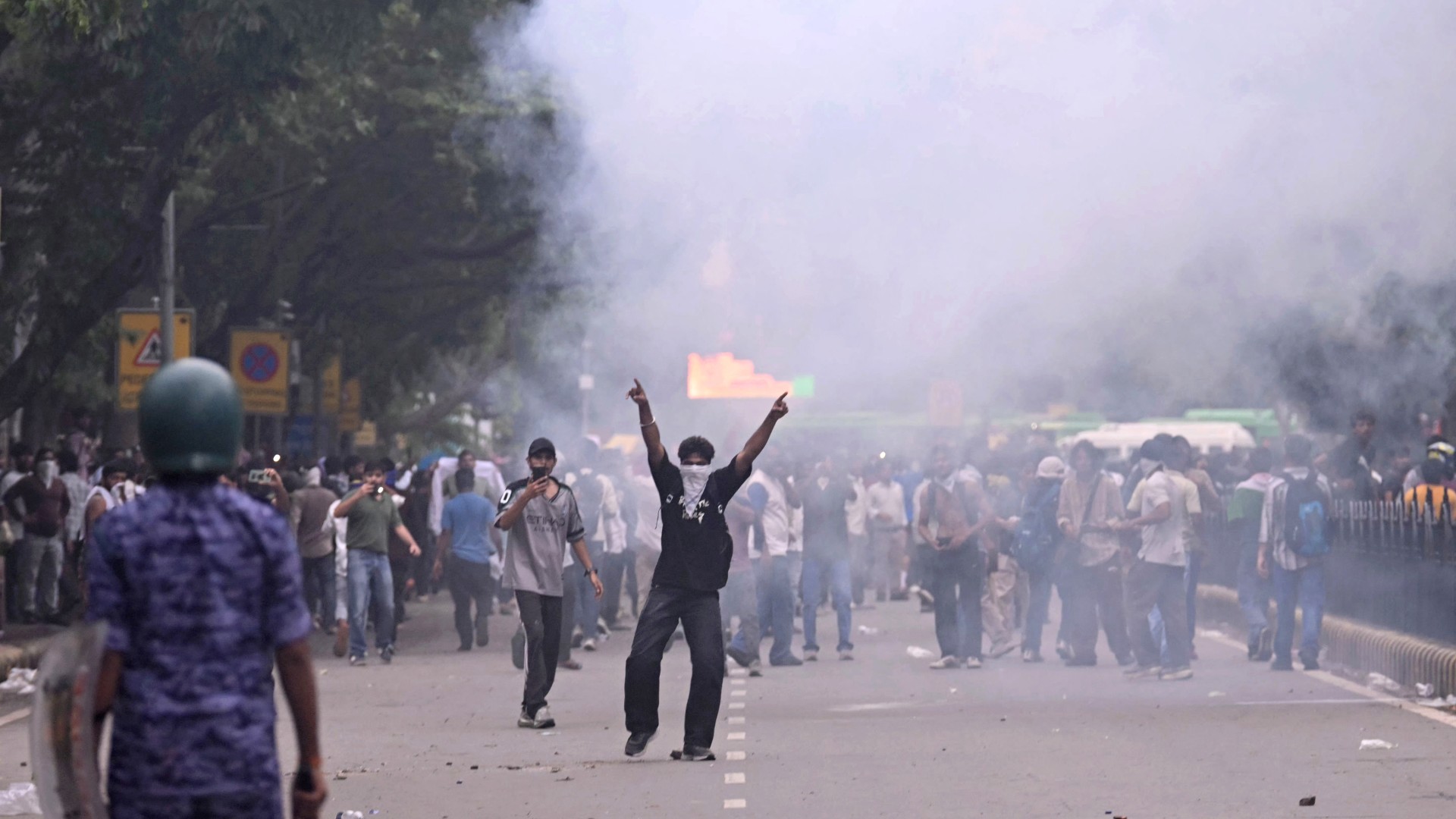
The climate and autonomy march that left Leh on foot and by vehicle reached Delhi on 20 July 2026, with activist Sonam Wangchuk's wife, Dr Gitanjali Angmo, telling reporters the campaign's three demands would be carried into the capital "peacefully" and without disruption to traffic. The arrival closes a multi-week journey across the Himalayas that has drawn sustained attention to the political status of the Union Territory of Ladakh, and to a quieter set of grievances that have built up since its 2019 separation from the erstwhile state of Jammu and Kashmir.
What is, on the surface, a single-issue climate protest organised by the engineer-inventor credited with passive-architecture work in the high Himalayas is, in practice, a vehicle for an unresolved constitutional argument. Wangchuk has framed the march around three demands: statehood for Ladakh, the inclusion of Ladakhis in the Sixth Schedule of the Constitution, and the protection of the region's fragile ecology from industrial exploitation. The Delhi phase of the march is where those three lines converge, and where the federal response, or the absence of one, will be read most closely.
Three demands, one constitutional question
Statehood is the headline ask. Ladakh was carved out as a Union Territory without a legislature in 2019, an administrative arrangement that Wangchuk and a wider Ladakhi civil-society coalition argue leaves the region's roughly 275,000 residents without adequate representation in New Delhi's decision-making on land, employment, and ecology. The second demand, Sixth Schedule coverage, would extend to Ladakh the constitutional framework that protects tribal councils in parts of northeastern India, granting locally rooted autonomy over land and cultural resources. The third, ecological protection, ties both to the China-India frontier: the line of actual control cuts through some of the highest-altitude ecosystems on earth, and any large-scale industrial activity is read locally as inseparable from questions of strategic vulnerability.
Dr Angmo's framing of the march, as carried in LiveMint's broadcast, leans on the first demand above all: that the march itself be conducted "peacefully." That word is doing work. Past mobilisations of this kind, including the Kargil convoy and a string of Leh-based sit-ins during 2024, have run into restrictions on assembly, and the campaign's organisers have invested significant effort in signalling non-disruption. The Delhi leg is, by design, a test of whether that framing translates into a state response that meets a senior interlocutor.
The state, so far, is reading the room
The Ministry of Home Affairs, which oversees the Union Territories, has not announced a formal meeting with the marchers. The silence is itself a signal. Ladakh's administrator, the Lieutenant Governor, functions as a nominated, not elected, head of government. A meeting between a sitting LG and the march leadership would in effect elevate the protest to a negotiation; a refusal, or no response at all, leaves the grievances on the street rather than at the table. New Delhi's instinct, on the available evidence, is the second option.
That posture mirrors the federal response to the earlier rounds of Ladakhi mobilisation, where promises of dialogue were paired with administrative delay. Critics of the arrangement, including a faction of the Leh Apex Body, the civil-society umbrella that has coordinated with Wangchuk, argue that the absence of an elected assembly has removed the institutional surface on which such negotiations would normally land. Supporters of the Union Territory status argue, with some justification, that direct central administration has accelerated development spending and connectivity in a region whose terrain makes service delivery unusually expensive.
Why this march sits inside a larger pattern
The Ladakh mobilisation is one of several post-2019 frontier-region movements built around a common complaint: that the reorganisation of Indian federal space, redrawn for reasons of security and administrative clarity, has outpaced the political consent of the people who live inside the new lines. The pattern shows up differently in Jammu and Kashmir, where the restoration of elected government has been contested on its own terms, and in parts of the northeast, where Sixth Schedule protections have become a recurring demand. What these movements share is a procedural gap. Constitutional reorganisation was carried out by statute. The assent of the affected populations, where it was sought at all, came through mechanisms, including delimitation exercises and nominated bodies, that the affected communities do not recognise as adequate.
For the centre, that gap is the price of administrative clarity. For Ladakh, it is the substance of the demand.
What to watch in the days ahead
Three markers will shape what comes next. First, whether a senior Union minister, or the Lieutenant Governor, meets the march leadership before the campaign winds down in Delhi; a meeting at the political level would mark an escalation of New Delhi's investment in resolving the dispute. Second, whether the march draws visible support from opposition parties, whose presence would broaden the demands into a federalist argument rather than a regional one. Third, whether Beijing or any other external actor uses the moment to draw attention to the frontier, a recurring pattern in moments of Indian domestic protest in border regions, or whether the issue remains, by mutual unspoken agreement, an internal matter.
The sources do not specify whether any of those markers will be met. What is on the public record, as of the 20 July arrival, is a march that has managed to keep its climate framing intact, and a state that has so far declined to engage with the political demands underneath it.
Desk note: Monexus frames this as an unresolved constitutional question rather than a purely ecological protest, and gives the federal administrative case its strongest form rather than treating it as a one-sided legitimacy dispute.
Wire provenance
This editorial synthesis draws on the following public wire/social posts:
- https://t.me/LiveMint/