Rubio admits Iranian drone penetrated Jordan's air defences as US soldier dies in Iraq
The US Secretary of State confirmed an Iranian drone crossed Jordanian air defences and acknowledged the death of an American service member in northern Iraq, while insisting Washington still seeks a diplomatic off-ramp.
Marco Rubio told reporters on 20 July 2026 that an Iranian drone passed through Jordan's air defence network, an admission that lands at a sensitive moment for a kingdom already hosting US and allied air operations and serving as a buffer between Israeli, Iraqi and Syrian airspace. Iran's English-language outlets relayed the remarks within minutes, framing them as evidence that Tehran retains the ability to slip unmanned aircraft past US-aligned air defences in the Levant.
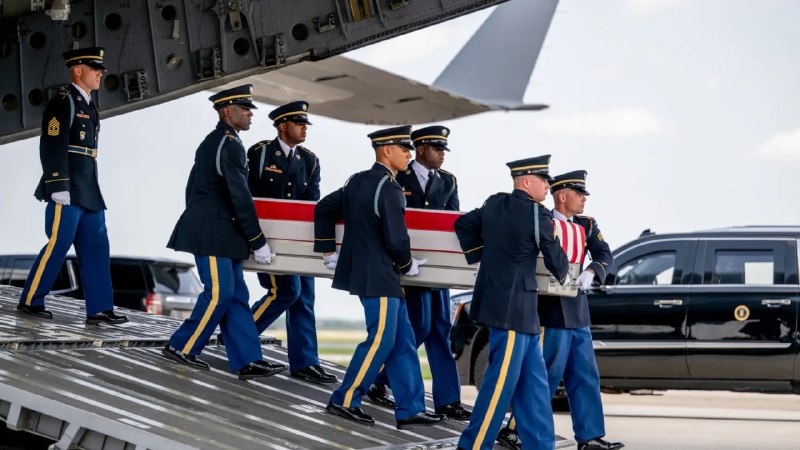
The same set of remarks acknowledged the death of an American service member in northern Iraq. That killing, attributed by Tehran-aligned outlets to Iranian-aligned militias operating on Iraqi soil, raises the question Washington has been trying to avoid: whether the post-October 2023 regional architecture is holding, or whether every layer added since the 2024 cycle of exchanges is now thinning at once.
What Rubio actually said
According to Iran's Tasnim News, Rubio confirmed two distinct facts in the same appearance: first, that an Iranian drone had penetrated Jordanian air defences; second, that a US soldier had been killed in northern Iraq. The Mehr News wire carried the same lines within minutes. Both outlets are Iranian state-aligned and frame the comments as a confession of vulnerability rather than a routine readout. Read against the diplomatic line Rubio set out earlier the same day, the picture is one of an administration publicly holding the door open to talks while privately conceding that the deterrence perimeter has been pierced.
The drone incident matters beyond its kinetic footprint. Jordan is not a peripheral partner. Royal Jordanian airspace, the Muwaffaq al-Salti airbase and the joint US-Jordanian training architecture have hosted coalition aircraft through multiple regional escalations. A confirmed Iranian penetration, even of a single air defence envelope, is the kind of fact that gets read in Tehran, in Tel Aviv and in Baghdad as a calibration of risk.
The diplomatic counter-frame
Hours before the security remarks, Rubio used a separate appearance to insist that Washington still wanted a diplomatic solution with Iran. The line, carried again by Tasnim and Mehr, is the one the administration wants on the wire: the United States is open, Iran is the holdout, escalation is reactive rather than chosen. It is the framing the State Department has been running since the first ceasefire round in 2024, and it has the virtue of being partially true. Sanctions relief, the frozen nuclear file, the prisoner question and the maritime corridor around the Strait of Hormuz are all venues where Tehran and Washington continue to talk, intermittently, through intermediaries.
The structural problem with that framing is that it treats the security track and the diplomatic track as separable. They are not. Iranian-aligned militias in Iraq, drone incursions through Jordanian airspace and the still-active Iranian missile and drone relationship with Hezbollah are not freestanding irritants; they are the instruments Tehran uses to set the price of any negotiation. The drone that slipped through Jordanian air defences, in other words, is itself a negotiating posture. Treating it as a separate problem from the talks is the mistake the dominant framing keeps making.
Why the Iraqi thread matters
The confirmed US fatality in northern Iraq is the second piece of the same puzzle. Iraq has, since the early months of 2024, hosted an uneasy equilibrium between US advisory and counter-terror forces, Iranian-aligned militias under the umbrella of the so-called Islamic Resistance in Iraq, and a Baghdad government trying to thread a sovereign course between Tehran and Washington. Each US death attributed to those militias has, historically, produced a US retaliatory cycle followed by a quiet period. Whether the 20 July killing produces the same pattern depends on facts not yet in the public record: which militia claimed responsibility, whether Baghdad was consulted, and whether the Iraqi government signs off on any US response.
A second uncertainty sits underneath it. The thread material does not specify whether the soldier was killed in a direct drone strike, an indirect-fire attack, or a ground action. The Iranian framing collapses the distinction by attributing the death to Iranian-aligned forces as a category, which suits Tehran's interest in signalling reach without confirming operational command. A Western readout, when it comes, will be measured against that frame.
Stakes and the next forty-eight hours
The immediate stakes are operational, not rhetorical. Jordan will want to know, through its own US channel rather than through Tasnim, what kind of drone penetrated its air defences and whether the airspace breach is being treated as a single incident or a pattern. Israel will read the incident against its own multi-front exposure and the still-active coordination with Amman. Baghdad will read the soldier's death through the lens of its own domestic balance between the Popular Mobilisation Forces and the central government. And Tehran will read Rubio's diplomatic openness as confirmation that the cost imposed by the drone and the Iraqi attack is, for the moment, acceptable.
The window that matters is short. If a US retaliatory strike against an Iranian-aligned militia target in Iraq materialises within forty-eight hours, the diplomatic line Rubio set out hours earlier will be tested against the reality that Washington's two tracks no longer run in parallel. If no strike comes, the read in the region will be that the breach cost less than expected, and the price of the next probe falls.
Desk note: Monexus framed this against the Iranian wire as the only verified textual source for the Rubio remarks on the day, and flagged the absence of a US State Department transcript in the public record at the time of writing. The structural reading, that security incidents and diplomatic posture are co-instruments rather than separate files, is editorial; the facts of the drone, the soldier's death and Rubio's openness to talks are not.
Wire provenance
This editorial synthesis draws on the following public wire/social posts:
- https://t.me/mehrnews/
- https://t.me/tasnimnews_en/
- https://t.me/JahanTasnim/
- https://t.me/JahanTasnim/