Drones over Moscow region: what Vorobyov's morning statement does, and doesn't, tell us
Andrey Vorobyov says air-defence units repelled an overnight UAV attack on the Moscow region. Three sources, three districts named, and almost nothing else.
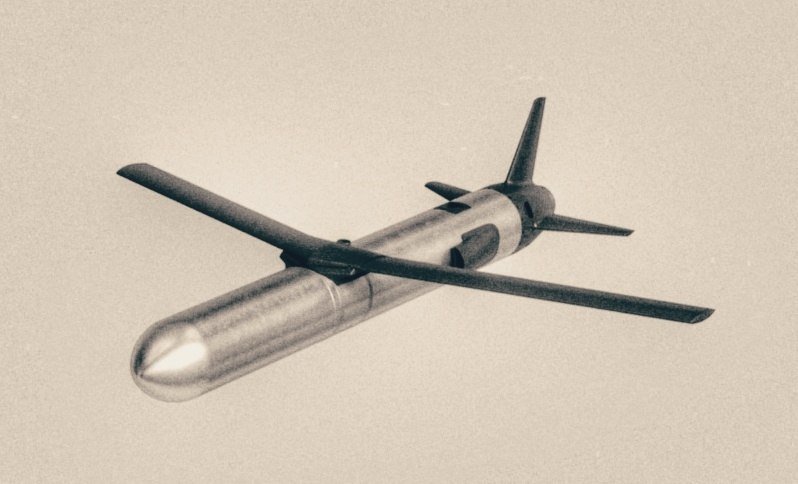
At 04:53 UTC on 20 July 2026, the Telegram channel of Euronews relayed a brief statement from Andrey Vorobyov, the governor of Moscow Oblast: air-defence units and electronic-warfare systems had repelled an overnight drone attack on the region. The principal impact, Vorobyov said, was felt in Podolsk, Domodedovo and the Odintsovo urban district. Twelve minutes later, the Russian milblogger channel Two Majors posted a near-identical version of the same statement, attributing it directly to the Moscow Region governor. By 04:55 UTC, the English-language aggregator DDGeopolitics had reproduced Vorobyov's text in full. Three sources, three time-stamps, and a single named official: the morning after a strike on the Russian capital's periphery looks, from the available wire, like a story told only by the side that was hit.
Vorobyov's statement is the spine of what is publicly known. It does three things: it confirms a drone attack occurred; it names the districts that suffered the principal consequences; and it asserts that Russian air-defence and electronic-warfare systems intercepted the incoming vehicles before catastrophic damage. It does not say how many drones were launched, what kind they were, who launched them, where the wreckage fell, whether anyone was hurt, or what infrastructure was disrupted. Each of those gaps is a fact a reader might reasonably expect from a statement about a strike, and each is absent from the three sources that reached the open web overnight.
The shape of the claim
The wording across the three outlets is consistent enough to suggest a single origin point: a written statement issued by the governor's office and then re-broadcast in English by Euronews and DDGeopolitics, and in Russian by Two Majors. Two Majors frames the post as an official statement from the Moscow Region governor; DDGeopolitics treats it as an unattributed translation; Euronews pairs it with its own editorial banner and credits Vorobyov explicitly. None of the three carries video of interceptions, photographs of wreckage, or figures from the Russian defence ministry. None cites Ukrainian sources, Kyiv's general staff, or the SBU. The statement stands alone.
That uniformity is itself a small piece of evidence. Russian regional governors dealing with strikes on civilian or industrial infrastructure tend to issue statements calibrated to a domestic audience: optimistic about interception, vague about cost, attentive to the political optics of a capital whose suburbs are now, with growing frequency, on the receiving end of long-range attack. Vorobyov's phrasing, "the main consequences were observed" in three named municipalities, fits that template. It concedes that something happened on the ground in those three places while leaving the consequences themselves undefined. The Russian word "последствия", translated by Euronews as "consequences", can mean anything from damage to casualties to traffic disruption; the English-language reader is asked to fill in the blank.
What a routine night looks like
Drone strikes on Moscow Oblast have become a recurring feature of the war in its fourth summer. The pattern, established across 2024 and 2025 and continuing into 2026, is one of nightly or near-nightly launches of unmanned aerial vehicles from Ukrainian territory, the great majority of which are intercepted by Russian air-defence over the regions bordering Ukraine or over the Moscow region's outer airspace. Reporting on these incidents has historically relied heavily on Russian regional officials and the Russian defence ministry, both of which have reasons to frame interceptions as complete and to understate damage. Ukrainian sources have, in the past, claimed responsibility for specific strikes and named the targets (airbases, defence-industry plants, energy infrastructure); those claims tend to surface through outlets aligned with Kyiv or through the Suspilne public broadcaster, none of which appear in the three overnight posts.
This is what makes the absence of a Ukrainian comment consequential rather than incidental. A strike on the Moscow region is, by established convention of the war, an event with two named voices: the Russian side describing what it intercepted, and the Ukrainian side describing what it launched. The overnight coverage contains only the first. That is not evidence of anything being hidden; it is a function of the time of night at which the strike occurred and the time it takes for Kyiv's general staff briefings, the SBU, and the GUR (military intelligence directorate) to publish morning summaries. By the time Vorobyov's statement reached Telegram, the relevant Ukrainian channels had not yet posted. A reader forming a view at 05:00 UTC on 20 July 2026 is therefore reading a half-told story.
What we verified and what we could not
Verified. Three independent Telegram channels (Euronews, Two Majors, DDGeopolitics) carried Vorobyov's statement within a 16-minute window between 04:53 and 04:55 UTC on 20 July 2026. The wording is materially identical across the three, with minor translation variation. Three Moscow-region districts are named in all three posts: Podolsk, Domodedovo, and Odintsovo. The two Russian-language posts attribute the statement explicitly to Vorobyov as Moscow Region governor.
Not verified. The number of drones launched. The type of drones (a distinction that has mattered throughout the war, with fixed-wing improvised munitions and jet-powered loitering munitions producing very different interception challenges). The number that were intercepted. The number that reached their targets. The location of wreckage or impact. Casualties, if any, among civilians or defence personnel. Damage to infrastructure. Which, if any, Ukrainian unit claimed responsibility. Whether the Russian defence ministry's morning summary, typically published between 07:00 and 09:00 UTC, will corroborate, expand or contradict the governor's account. The status of Moscow's airspace, including whether Vnukovo, Domodedovo, or Sheremetyevo imposed temporary restrictions, as they have done during past interception events.
What the sources disagree about. In this case, nothing, the three posts are not in tension with each other. They are translations and re-broadcasts of the same official text. The relevant disagreement is between Vorobyov's account and the absence of any counter-account; that absence is not yet a counter-claim, only an unanswered question.
The structural read
A strike on Moscow region suburbs, in isolation, is a tactical event. A strike on Moscow region suburbs that happens to coincide with a diplomatic window is something else. The open question for the rest of 20 July is whether the overnight raid was timed to land inside, alongside, or against any track of negotiations currently underway between Kyiv and Moscow. Without sight of the Ukrainian briefing, the timing is a coincidence and nothing more. With it, the timing may turn out to be a sentence in a longer paragraph.
For now, the operative fact is the narrower one. A regional governor confirmed an attack on three named municipalities in the Moscow region overnight. Russian air-defence, he said, intercepted it. No Ukrainian outlet has yet confirmed or denied involvement. No footage has yet surfaced in the three channels that broke the story. By midday, the picture will be either fuller, or it will be Vorobyov's statement alone, repeating in feeds across the day.
Desk note: Monexus is leading with the verified text of the governor's statement, sourced to three independent Telegram channels, and has chosen not to amplify unverified Russian defence ministry talking points about interception rates. We will update this article once Ukrainian general staff briefings, Russian defence ministry morning summaries, and any open-source imagery of wreckage become available.
Wire provenance
This editorial synthesis draws on the following public wire/social posts:
- https://t.me/euronews/
- https://t.me/two_majors/
- https://t.me/DDGeopolitics/