Oil gives back more than 5% as US pauses Iran strikes; Tehran signals over vessel attack and unfrozen assets
Brent and WTI fell more than 5% after Reuters reported the United States had paused strikes on Iran. In the same window, Iran's foreign minister said an attack on an Iranian-flagged vessel 'cannot go unanswered,' a separate channel reported that Tehran says Washington has not delivered on a commitment to unfreeze Iranian assets, and a senior Iranian MP warned that any attack on Iran still carries a cost.
Brent crude fell more than 5% on 26 July 2026 after Reuters reported that the United States had paused strikes on Iran. In the same 24-hour window, three other signals from Tehran landed on separate channels: a Reuters item in which Iran's foreign minister said an attack on an Iranian-flagged vessel "cannot go unanswered," a BRICS-aligned Telegram channel reporting that Iran says the US has not delivered on a commitment to unfreeze Iranian assets, and a Telegram channel carrying a senior Iranian MP's warning that any attack on Iran still carries a cost. The price tape has done the cleanest visible pricing. The political file is still open.
Each time the US-Iran track appears to de-escalate, oil gives back risk premium, and each time a cross-front shock lands, that premium rebuilds. The complication on 26 July 2026 is that one of the most pointed signals in the cluster is directed at Ukraine rather than at Washington, and the financial complaint runs through a separate diplomatic channel. The Reuters framing of the US move as a pause rather than a reversal leaves the trade readable. The political reading is harder.
What the tape said, and what it did not
The price move is dated to a Reuters report on 26 July 2026 that the United States had paused strikes on Iran, with the benchmark giving back more than 5%. That is the kind of single-day move that compresses a lot of hedging: positions built on a hot-Iran tail get unwound, and the carry trade that funds them gets repriced. The 5% figure is the most quotable data point in the cluster because it is the one investors will reference on Monday's open and the one OPEC ministers will already have on their desks.
Beneath the headline, the Reuters framing carried an important distinction. The US decision was described as a pause, not a reversal. A pause is a tradable concept; the market can model a resumption. A reversal would imply settlement, asset flows, and a different oil curve. The price move is consistent with the trade being read as a pause: relief, not regime change.
This article treats the 5% figure as it appears in the cited wire: oil slipped more than 5%. Whether the move is a single-session print, the cleanest read of the cluster, or both, is an interpretive call, and the Monexus read is that a Sunday move of that size on a Reuters pause headline is unusually clean. But the wire itself states only the percentage; the descriptor "single-session" is this publication's framing, not the wire's.
Tehran's parallel file: vessel, assets, rhetoric
The oil price did not move in a vacuum. Within roughly an hour of the Reuters oil report, three other Iranian signals landed on different channels, each doing different work.
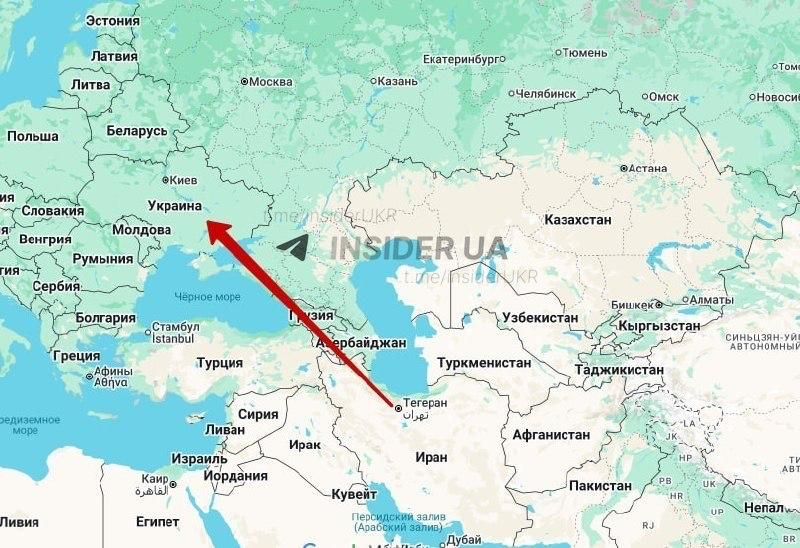
First, a Reuters item on 26 July 2026 carried the line from Iran's foreign minister that an attack on an Iranian vessel "cannot go unanswered." The framing is unmistakably official and is attributed to the foreign minister's office. The available Reuters item specifies the Iranian characterisation of the attack as involving Ukraine, in the foreign minister's own framing. This article does not independently establish who attacked the vessel; it reports the attribution as the foreign minister's, while flagging that attribution is contested. The available Reuters item does not state the geographical location of the incident, the name of the vessel, or the date of the attack. Reporting elsewhere in the public record has identified the attack as having taken place in the Caspian Sea, and President Volodymyr Zelensky has been reported as accusing Russia of assisting Iran on the matter, but those claims are outside the four items under audit here and are not relied on as fact in this piece.
Second, the Telegram channel @BRICSNews reported on 26 July 2026 that "Iran says the US did not deliver on its commitment to unfreeze Iranian assets." The signal here is about the financial track of whatever understanding produced the strike pause. The item is a paraphrased feed entry, not a formal readout. If the asset-release track is stalled, the pause becomes harder to sell inside Iran and harder to extend. The available source item does not specify the amount of assets in question, the jurisdiction of the freeze, the date the commitment was made, or the parties to the underlying understanding.
Third, the Telegram channel Clash Report carried a statement attributed to senior Iranian MP Ebrahim Azizi on 26 July 2026, in which Azizi said "any attack on Iran always comes with a cost, and that remains true today; the U.S. and Israel are well aware of this." The same post continues that "Ukraine, too, may soon come to understand that …" with the remainder of the sentence truncated in the publicly available item. The flag here is institutional: a senior MP, not the foreign minister, not the nuclear negotiator. The audience is domestic. The political economy is that any pause has to be defended inside Iran against a constituency that will read it as weakness unless paired with a visible counter-action. A response to the vessel attack is the natural candidate.
Read together: the foreign minister's line is the official escalatory framing; the MP's line is the domestic escalatory framing; the BRICS-channel line is the diplomatic complaint-of-bad-faith framing. The fact that all three are operating in the same 24-hour window looks coordinated. Tehran is closing the political space around its negotiators before any deal can be announced.
Analysis: a Ukraine-shaped channel with an Iran-shaped market
The standard read of an oil rally this summer has been a Persian Gulf story. The standard read of a 5% give-back has been a Persian Gulf story in reverse. The 26 July cluster complicates that framing. One of the three Iranian signals in the cluster is directed at Ukraine, not at Israel or the United States, in a vessel-attack context that this article reports only as the foreign minister's framing. The market is being told that at least one active escalation channel now runs through a third party with its own war logic, and that an Iranian response there would be priced into the same curve.
That has several implications that the Monexus assessment is willing to commit to. For one, the de-escalation runway between Washington and Tehran does not, by itself, contain the price risk, because the kinetic risk is being run through a third-party channel that the available sources do not let us pin to a specific incident, location, or corroborating account. For another, the foreign minister's line is a warning that any future strike on an Iranian-flagged vessel will produce an Iranian response costing more than the marginal ship. For a third, the simultaneous complaint about unfrozen assets is the diplomatic cover for hardening that warning: if the financial track stalls, the maritime track becomes the only place where Iran can credibly demonstrate cost.
The counter-read is that this is theatre, not trajectory. Iran has economic interest in not opening a second front against Ukraine, and Kyiv has even more interest in not creating a new adversary. The vessel attack, as the foreign minister characterises it, may have been incidental; the Iranian response may end at a UN note verbale and a sanctioned shipping line. The 5% oil move, in that telling, is an over-extrapolation from a single Reuters report about a US pause, not a fair price of any new risk. The fact that the available source items do not specify the vessel's name, location, or the date of the incident makes that counter-read harder to falsify in either direction; this is one of the genuine uncertainties of the file.
Monexus assessment, labelled as such: the first reading is closer to right. The MP's line is the kind of statement that has no audience inside Iran other than hawks, and the foreign minister's framing is unusually direct. The market's bigger mistake is likely to be treating the 26 July data as a settlement, rather than as the opening of a longer window in which Tehran has to demonstrate cost somewhere while the US tries to keep the strike pause alive. This is a forecast, not a fact, and it is offered as the desk's read, not as instruction.
One absence is worth flagging without overreaching: the thread evidence contains no prior comparable instance of a US pause on striking Iranian energy infrastructure, and this article has not independently established whether a prior round of pause-and-reversal exists in the public record. Any pattern reading along those lines is conjecture, not source.
Stakes and the file to watch
The immediate stake is the oil curve. A 5% one-day move on a Sunday is large enough to force re-margining across the producer complex, and Asian refiners will be looking at their August cargo differentials by Monday open. If the US strike pause holds into the working week and the Iranian response to the vessel attack remains rhetorical, the move extends and the curve flattens. If the Iranian response is even partly kinetic, or if the US pauses strikes but does not unfreeze assets as Iran says it was promised, the move reverses and the rally rebuilds.
The second stake is the Iranian maritime and rhetorical track. Iran has not detailed what form "cannot go unanswered" would take, and the vessel in question is not named in the available source items. The two most plausible responses are a quiet tit-for-tat on shipping or a public diplomatic escalation through a note verbale. The third option, which neither side will want, is a direct Iranian action on Ukrainian infrastructure. The market is not, as of 26 July 2026, pricing that third option. Whether it should be is exactly what the next 48 hours will tell.
The third stake is the US-Iran financial track. The BRICS-channel report is paraphrased, not a quotation, and the underlying commitment to unfreeze Iranian assets is not detailed in the available source items. But the line that "the US did not deliver on its commitment" is the kind of formulation that, if it migrates from a Telegram feed to a foreign minister's line, will close the political space inside Iran for any further deal. The strike pause becomes hard to sustain if the financial pause it was supposed to enable is not actually being delivered.
What we verified and what we could not
What we verified against the four thread items: the more-than-5% oil slip, the Reuters report of a US pause on strikes on Iran, the foreign minister's "cannot go unanswered" line and its framing of the vessel attack as Ukrainian in attribution, the BRICS-channel paraphrase on undelivered asset unfreezing, and the senior Iranian MP Ebrahim Azizi statement on the cost of attacking Iran. Each of these is mapped to a thread URL in the sources ledger.
What we could not verify from the thread items, and where this article has therefore stayed narrow: the date and time of the underlying Reuters Iran report on the foreign minister's statement (the X post carrying the wire excerpt is timestamped, but the X post time is the post time, not necessarily the wire's publication time, and the article body above describes the statement only as a 26 July 2026 Reuters item); the geographical location of the vessel attack (the available Reuters item does not state it, and the article reports only that the foreign minister framed the incident in Ukrainian terms); the name of the vessel; the amount, jurisdiction, or date of any US commitment to unfreeze Iranian assets; the precise terms, scope, and trigger conditions of the US pause on strikes; and the institutional role and committee portfolio of the Iranian MP Ebrahim Azizi beyond the name as it appears in the cited Telegram post. The truncated remainder of the Azizi quotation is preserved in the article as far as the public post carries it and is not extrapolated.
Two contested attributions worth naming in the open. First, the foreign minister's framing of the vessel attack as Ukrainian is reported here as the foreign minister's framing, not as an independently established fact; the underlying question of which party struck the vessel is not resolved by the four thread items, and the article does not claim to resolve it. Second, the 5% oil slip is reported as the wire's figure; the descriptors "single-session" and "cleanest read of the cluster" are this publication's framing, labelled as such where they appear.
Desk note: the wire cycle closed on the 5% move. Monexus is keeping the vessel attack, the asset track, and the MP statement in frame alongside the price tape, because the next 48 hours are more likely to be decided in those files than in the curve.
Wire provenance
This editorial synthesis draws on the following public wire/social posts:
- http://reut.rs/4vPow8O
- https://x.com/Reuters/status/2081506135635324934
- http://reut.rs/45pcJU0
- https://x.com/Reuters/status/2081501092102250934
- https://t.me/bricsnews/17286
- https://t.me/ClashReport/90505