Iran strikes US HIMARS at Kuwait's Arifjan base in 18th wave of 'Operation Sa'eqeh'
The Iranian Army says it hit US HIMARS launchers at Camp Arifjan in Kuwait with surface-to-surface missiles, the 18th round of an operation Tehran launched in retaliation for strikes on its territory.
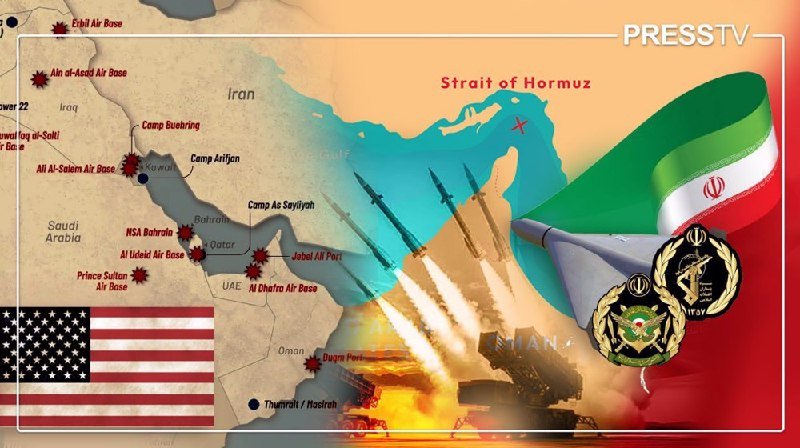
The Iranian Army announced at roughly 22:29 UTC on 20 July 2026 that it had fired surface-to-surface missiles at US Army HIMARS launchers stationed at Camp Arifjan in Kuwait, calling the strike the eighteenth stage of an operation Tehran has named "Sa'eqeh." The claim, carried simultaneously by Iranian state outlets Fars, Al-Alam Arabic, Press TV and Tasnim, was accompanied by footage the army released showing missile launches toward the Gulf state. The framing: retaliation for earlier strikes on Iranian territory that Tehran attributes to the United States.
What makes the announcement unusual is the target and the staging. Kuwait hosts one of the US Army's largest pre-positioned stocks of equipment in the Gulf, and Camp Arifjan has been a logistics hub for movements into and out of the wider region for two decades. Striking it, even symbolically, is a marked escalation in the public posture of Iran's regular ground force, which until recently has spoken of missile deterrence largely through the IRGC rather than through army public relations.
The army takes the microphone
The Iranian Army's public relations unit, not the IRGC, is the named author of the strike announcement. The army's framing is direct: surface-to-surface missiles, targeting HIMARS systems belonging to "the terrorist American army" stationed at Arifjan, in response to what it calls "the missile attacks of the Great Satan on parts of our country." Press TV carried the announcement in English at 22:27 UTC, and the IRNA-aligned outlet Tasnim published the fuller text of the army's statement a few minutes later. The phrasing matters: by routing the announcement through the army rather than the Revolutionary Guards, Tehran is signalling that this round sits inside a chain of command that reaches into the conventional armed forces, not only the paramilitary wing that has carried out most cross-border strikes of the last year.
Iranian state media also released a video described as footage of the launches, published by the Tasnim- and Fars-linked channels on Telegram. Independent verification of the footage, including geolocation of the launch tubes and impact points, was not available at the time of publication. The army's statement claims hits on HIMARS systems, but does not provide evidence of destruction on the ground at Arifjan. Kuwaiti authorities and US Central Command had not issued on-the-record statements in the immediate window after the announcement.
What Arifjan is, and why it sits where it does
Camp Arifjan sits in southern Kuwait, roughly 50 kilometres from the Saudi border and within easy reach of the Persian Gulf shipping lanes out of which a large share of the world's seaborne oil transits. The base is best known publicly as a logistics and pre-positioning site: a place where armour, ammunition and heavy equipment are stored so they can be moved quickly in a crisis. Its role in the public Iranian imagination, as the target of an army missile salvo, is more pointed than a strike on, say, a US naval vessel would be: it is stationary, well-mapped, and inside a host Arab state that does not share a border with Iran.
That geography places Kuwait in an awkward position. It is a US-designated major non-NATO ally and has hosted US Central Command's forward headquarters at Camp As Sayliyah for years. Its government has not publicly aligned itself with either side of the latest US-Iran exchanges, and the cabinet in Kuwait City has historically avoided being pulled into the rhetorical tit-for-tats between Tehran and Washington. Press TV's choice of a Kuwaiti site rather than a base in Iraq or in the Gulf itself is therefore itself a signal: it brings a Gulf Cooperation Council state directly into the line of fire without putting Iranian missiles onto Iranian-allied territory.
The pattern inside the salvo
Operation Sa'eqeh, the umbrella under which the army says these strikes are being carried out, was launched in stages, with the eighteenth now publicly identified. Each stage has been announced through Iranian state channels with a similar template: a weapon system named, a target named, footage released, and a justification rooted in alleged prior US or Israeli action on Iranian soil. The cycle has become predictable enough that the question for outside observers is no longer whether a strike will be claimed but what the underlying political aim is. The two readings, neither falsified by what is on the public record, sit in tension.
The first reading is that the army is performing deterrence for a domestic audience. Iranian outlets frame each round as evidence that the country's conventional forces can reach US positions across the Gulf, and the announcement timing (late on a Monday evening, when domestic news cycles are thin) suggests a calculation about how the claim travels inside Iran rather than how it lands in Washington. The second reading is that the operation is meant to widen the geography of any future negotiation, signalling that Kuwaiti, Iraqi and Gulf-state territory is a relevant variable that any deal with Tehran will have to absorb. The structural frame, in plain terms: a long-running shadow war is being slowly moved into the open, with each side defining what the new normal looks like.
What remains unresolved
Three points are unsettled on the public record. First, the operational outcome: the Iranian army asserts hits on HIMARS systems, but no independent imagery of the base, no Kuwaiti government statement, and no US acknowledgement were available within the first hour after the announcement. Second, the political reading: Kuwait's silence is itself a fact, but it is silent in a way that could mean either quiet acquiescence to the US presence on its soil or active diplomatic displeasure at being made a target. Third, the trajectory: the operation is now labelled as the eighteenth stage, which implies a numbered campaign with an endpoint in mind. The sources available do not say what that endpoint is, or what would count, in Iranian military terms, as a final round.
How Monexus framed this vs the wire: the Iranian state outlets that broke the story are the only sources on the public record for the strike claim. The piece treats their announcement as fact-with-citation rather than as confirmed battlefield outcome, and flags that independent corroboration is pending.
Wire provenance
This editorial synthesis draws on the following public wire/social posts:
- https://t.me/farsna
- https://t.me/alalamarabic
- https://t.me/presstv
- https://t.me/wfwitness
- https://t.me/tasnimnews_en