Tehran draws a red line around Kharg as Trump threats collide with stalled nuclear talks
Iran's Foreign Ministry spokesperson Esmaeil Baqaei warned on 20 July 2026 that any US move on Kharg Island would carry consequences, as Tehran insisted it will only negotiate on the basis of mutual commitment and pushed back against adding new conditions to the diplomatic track.
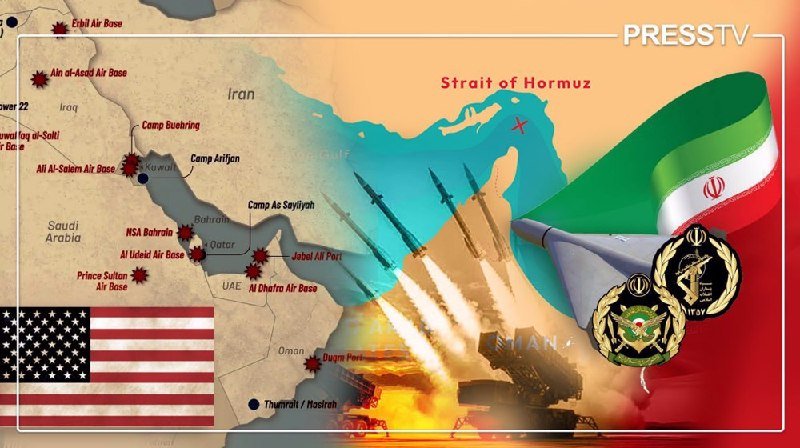
Iran's Foreign Ministry spokesperson Esmaeil Baqaei used his regular media briefing on 20 July 2026 to deliver a two-part warning: any American attempt to seize Kharg Island would carry consequences, and Tehran would not negotiate a new nuclear arrangement under conditions unilaterally imposed by Washington. The performance, carried across Iranian state outlets in near real time, marks the most pointed Iranian response to recent US presidential rhetoric on the Strait of Hormuz since the start of the second Trump administration's second-term diplomacy with the Islamic Republic.
What is now a public signalling contest is also a quiet test of how far the White House is willing to push the oil-export chokepoint that carries a substantial share of seaborne crude out of the Persian Gulf. Tehran's messaging is calibrated for two audiences at once: a domestic one that reads defiance as the floor of acceptable politics, and a foreign one that needs to know the cost of escalation has been priced into the diplomatic record before any decision is taken.
The Kharg line in the sand
At 08:55 UTC on 20 July, state-affiliated outlets carried Baqaei's reply to a question about comments attributed to US President Donald Trump regarding the possible seizure of Kharg Island. "They will face the repercussions," Baqaei said, in language the official IRNA account framed as a direct warning to Washington, noting that "there are numerous people in th[e country]" prepared to respond. The phrasing, deliberately left open-ended in the truncated read-out, is the kind of formulation Tehran has historically used when it wishes to signal that the response would not be limited to a diplomatic note.
Kharg Island handles the overwhelming majority of Iran's crude exports. Any disruption there would, in a matter of days, lift insurance and freight rates through the Strait of Hormuz and tighten a global crude market that is already sensitive to Saudi and Iraqi volumes. The threat being discussed is therefore not symbolic: it concerns the physical infrastructure through which Iranian oil reaches buyers in Asia and beyond. The Iranian position is that this infrastructure sits inside Iranian sovereignty, and that any unilateral action against it would be treated as an act of war rather than a negotiating instrument.
Diplomacy on Tehran's terms
A second thread of the same briefing, aired at 08:10 UTC via the Mehr News account, returned Baqaei to the question of negotiations. Asked about the possibility of re-opening talks and whether Iran would bring new conditions, the spokesperson narrowed the diplomatic lane. Iran, he said, is currently focused on defending [its rights] rather than expanding the agenda. The same brief added that Tehran would judge any future engagement by the principle of reciprocity: commitment on one side is met with commitment on the other, and a breach by one party voids the value of the other party's concessions.
By 07:44 UTC the Tasnim News English feed had put a sharper frame on the same logic. Iran, Baqaei said, "implements the principle of 'commitment against commitment' in negotiations," and accused the American side of having "hastily invalidated the validity of the memorandum of understanding." The phrasing locates the breakdown not in Iran's behaviour but in Washington's, and it does so in vocabulary the foreign-policy establishment in Tehran has used for years when it wants to argue that sanctions, snapbacks or unilateral moves have already gutted whatever agreement was nominally on the table.
What Tehran is offering, then, is a return to a framework rather than a fresh negotiation. The implicit ask is that the United States meet Iran partway on the question of compliance history before any new conditions can be introduced. That is a meaningful constraint, because it sets up a precondition that the Trump administration has so far shown little appetite to accept.
The American lever and its limits
The Kharg Island threat is best read as part of a wider coercive toolkit rather than a stand-alone policy. The argument from Washington, articulated in fragments across recent statements, is that Iran's oil revenue funds the networks the United States and its Gulf allies consider destabilising, and that the export terminal on Kharg is the narrowest point at which that revenue can be choked. Iranian officials read the same geography differently: Kharg is also the narrowest point at which any disruption would ricochet through Asian energy markets, and the costs would land on importers from Beijing to New Delhi.
The Iranian counter-read is structural. Even a successful operation against the terminal would not, on its own, end the Islamic Republic's ability to ship oil: smaller ports, swap arrangements, and overland transfers through neighbouring states remain options, at degraded volumes. Meanwhile, the political cost inside Iran of a foreign strike on the country's main economic artery would be near-total, eliminating the domestic space in which any Iranian faction could be seen to compromise. That asymmetry is the point of Baqaei's phrasing. It is meant to make the cost-benefit calculation in Washington unattractive before any operation is planned.
Stakes and the next thirty days
If the present trajectory holds, two tracks will run in parallel. The diplomatic track will continue to inch forward on procedural questions, with both sides trading complaints about the other's sincerity and neither moving on substance. The coercive track will see more explicit discussion of US options on Kharg, accompanied by Iranian warnings that the response would not be confined to the Gulf. The signal that the posture is changing, if it changes, will most likely come not from a press briefing but from a visible movement of naval assets, an Iranian escalation through proxies, or a sanctions designation that closes a particular loophole.
The interesting question is not whether Iran can be coerced at the negotiating table. That is contested, and the Iranian read of the same negotiating history has been laid out in print. The interesting question is whether Washington's coercive instruments can be made to bite faster than Iran's ability to re-route, retaliate, or wait. On the evidence of 20 July, both sides are communicating in a register that assumes the other side is bluffing. The market, which tends to price such assumptions faster than diplomats correct them, will be the first place the answer shows up.
What the sources do not yet say is how the European and Chinese governments are reading the exchange in private. Beijing is the single largest customer for Iranian crude and would have the most direct exposure to a Kharg shock; the public messaging so far comes only from the Iranian side, and the diplomatic picture remains incomplete until Washington, Brussels and Beijing put their own read on the record. For now, Tehran is speaking loudly and in its own voice. Whether anyone is listening closely enough to de-escalate, rather than simply to amplify, is the question the next briefing cycle will begin to answer.
Desk note: Monexus leads with Iranian state-affiliated sources because they are the parties producing news on 20 July; Western wire coverage on the Trump Kharg comments is not yet available in the source thread, so we have quoted Tehran's response at length and resisted the temptation to reconstruct Trump's original wording from fragmentary recall.
Wire provenance
This editorial synthesis draws on the following public wire/social posts:
- https://t.me/Irna_en
- https://t.me/mehrnews
- https://t.me/tasnimnews_en
- https://t.me/Irna_en/1
- https://t.me/tasnimnews_en/1