Manesar engineer named, Delhi High Court orders CBSE birth-record fix, and a swelling Jantar Mantar crowd tests police arithmetic
A single Monday produced three separate tests of Indian state capacity: an alleged labour conspiracy in Haryana, a Delhi High Court rebuke to the CBSE over birth records, and a Jantar Mantar protest that police say is now a stampede risk.
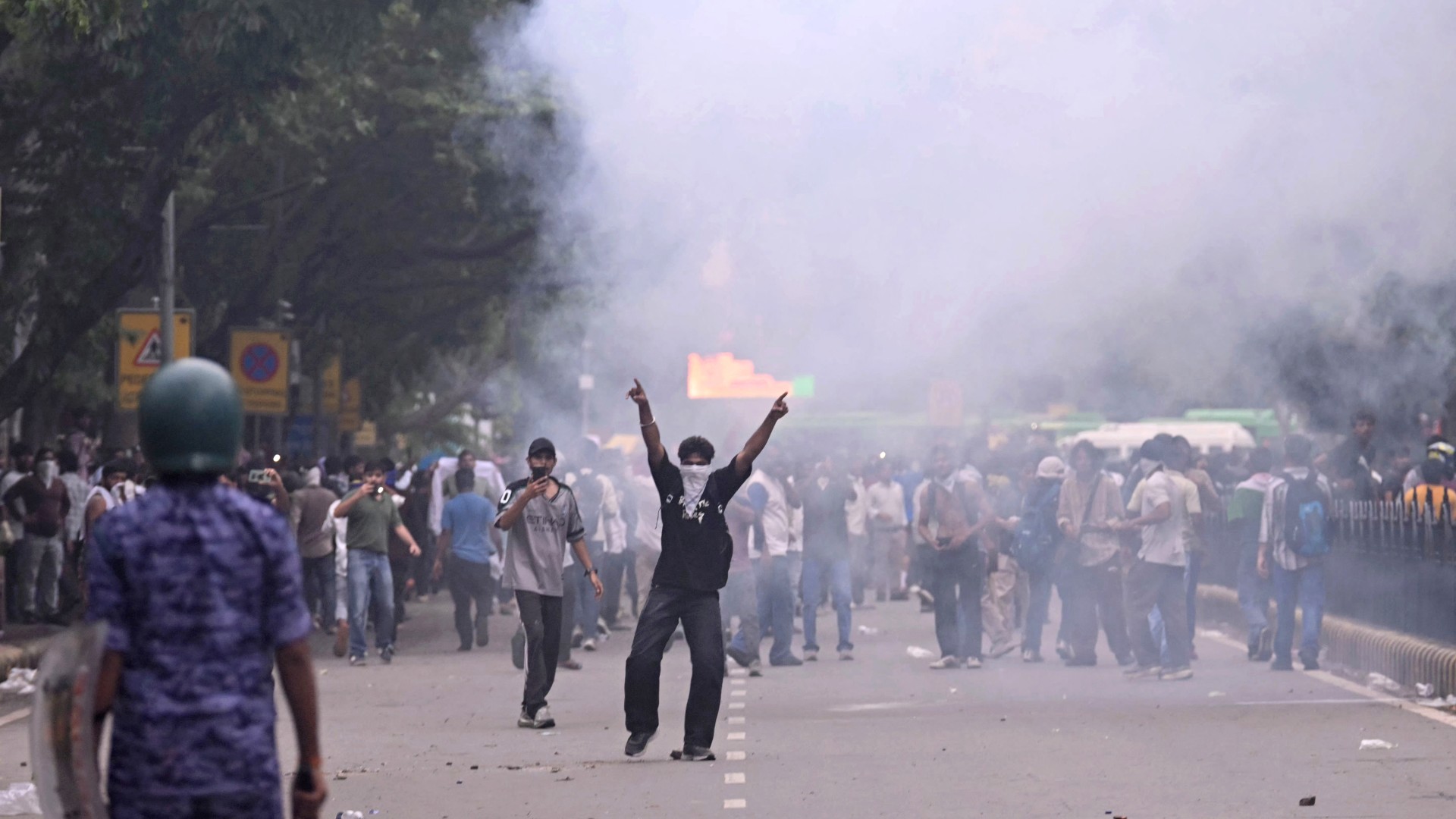
At 06:52 UTC on 20 July 2026, the Indian Express published three separate dispatches that, read together, sketch a state juggling three institutional stress points at once: an alleged labour conspiracy in Haryana's Manesar industrial belt, a Delhi High Court order punishing parents and rebuking the Central Board of Secondary Education, and a swelling protest at Jantar Mantar that Delhi Police now publicly classify as a stampede risk.
Each story sits on its own legal or administrative rail, and the Indian Express reported them independently on the same morning. The overlap is editorial rather than causal, but the pattern is what matters. India's courts, its central schooling regulator, and its metropolitan police are all being asked to absorb high-stakes, high-volume public pressure in the same week, with very different tools, and with very different timelines for resolving the disputes that have landed in their laps.
The Manesar charge sheet
The Supreme Court was told by police that an engineer "conspired to incite workers" during the Manesar labour unrest, according to the Indian Express's report published at 06:52 UTC on 20 July 2026. The framing, as reported, is that the alleged conspirator is not a worker but a technically credentialed outside figure, an occupational distinction Indian labour jurisprudence has long treated as significant when assessing who organises, and who merely participates in, a walkout. The Indian Express did not, in the dispatched headline, name the engineer or specify the firm; the report was filed to the Supreme Court in the form of police submissions, meaning the substantive claims will now be tested in pleadings rather than in press exchanges. That procedural detail matters: in Indian industrial disputes, the police affidavit often sets the ceiling of the prosecution case, and any softening has to happen on the record before a bench.
Counter-narrative in these cases usually runs through the workers' union, which routinely disputes both the characterisation of intent and the legal personality of the alleged organiser. The Indian Express report carries the police account; the workers' version is not in the same dispatch and would need to be sought from the union side, or from labour-beat reporting that follows the case into hearings.
A court order the CBSE cannot ignore
In a separate bench ruling reported at 06:52 UTC on 20 July 2026, the Delhi High Court fined a set of parents Rs 2 lakh and ordered the Central Board of Secondary Education to correct a student's birth record. The headline itself is a useful summary of the court's posture: penalty against the family, direction against the regulator. Indian school-record disputes turn on the interaction between municipal birth-registration systems and central-board documentation, and when the two diverge, it is ordinarily the family that carries the paperwork burden. By fining the parents while simultaneously ordering CBSE to act, the court has signalled that it treats the discrepancy as a shared failure, not a one-sided clerical lapse.
The structural interest here is administrative. CBSE sits under the Union Ministry of Education and feeds examination, migration, and higher-education admission pipelines nationwide; a court direction against it sets a precedent that other benches can pick up. Whether the board complies within the timeframe implied by the order, or seeks a stay, will determine how widely the precedent travels.
Jantar Mantar, by the numbers Delhi Police is using
Two Indian Express dispatches on the same morning cover the protest at Jantar Mantar from adjacent angles. At 05:52 UTC on 20 July 2026, the paper reported that Delhi Police had mobilised what it described as a "1,400-cops alert" after the crowd swelled at the site. By 06:52 UTC, the same outlet carried the CJP's claim of ongoing "talks" alongside a Delhi Police stampede warning as the crowd continued to grow.
The arithmetic is the story. Jantar Mantar, the Mughal-era observatory in central New Delhi that has functioned as the city's default protest ground for decades, has a finite footprint. Once Delhi Police begin to brief the press on specific personnel deployments and on stampede risk, they are doing two things at once: reassuring the bench that they have the situation in hand, and pre-positioning the public for a clearance if one becomes necessary. The CJP's counter-claim of talks is a reminder that protest organisers and city police usually maintain at least one back-channel even as the front-channel escalates, and that the public posture of imminent clearance is not always the operational plan.
What the three stories share
Each of the three Monday-morning dispatches turns on the gap between an institution's stated capacity and the volume of demand placed on it. Manesar tests whether police can convert an industrial dispute into a criminal-conspiracy case that survives Supreme Court scrutiny. The Delhi High Court order tests whether CBSE will comply with a direction that treats the regulator as a respondent rather than an arbiter. Jantar Mantar tests whether Delhi Police can hold a finite space open against a swelling crowd without the operation tipping into the stampede the force itself has now publicly warned about.
A plausible alternative reading is that the three stories are unrelated, and the Monday-morning clustering is coincidence inside the Indian Express's newsroom cycle rather than evidence of systemic pressure. That reading holds: there is no source item in the morning's dispatches tying the Manesar case to the CBSE order to the Jantar Mantar protest, and treating them as a single phenomenon would over-read the wire. What can be said, with the sources on hand, is that on a single July morning in 2026, the Supreme Court was asked to accept a conspiracy theory of a labour dispute, the Delhi High Court punished parents and directed a central regulator, and the capital's police briefed the press on the stampede arithmetic of a protest they have not moved to clear.
What remains uncertain is the disposition of the Manesar case in the Supreme Court, the timeline for the CBSE's compliance with the birth-record direction, and whether the Jantar Mantar deployment scales up or draws down as the day progresses. The Indian Express's morning wire gives the starting state of each file; the afternoon and evening wire will determine which of them moves first.
This publication covered the three dispatches as separate legal and administrative stories rather than as a single "Indian institutional stress" narrative, on the grounds that the Indian Express's own framing did not link them and that combining them without a sourced connective claim would over-read the morning's wire.