A city under lockdown, a ceiling fan, a Bollywood shrug: Delhi on July 20
Three unrelated stories in Delhi on 20 July 2026 say something jointly about how a city of thirty million absorbs pressure: a justice-led march behind barricades, a hospital ceiling fan that killed a patient, and a film star's cryptic reply to questions about his own health.
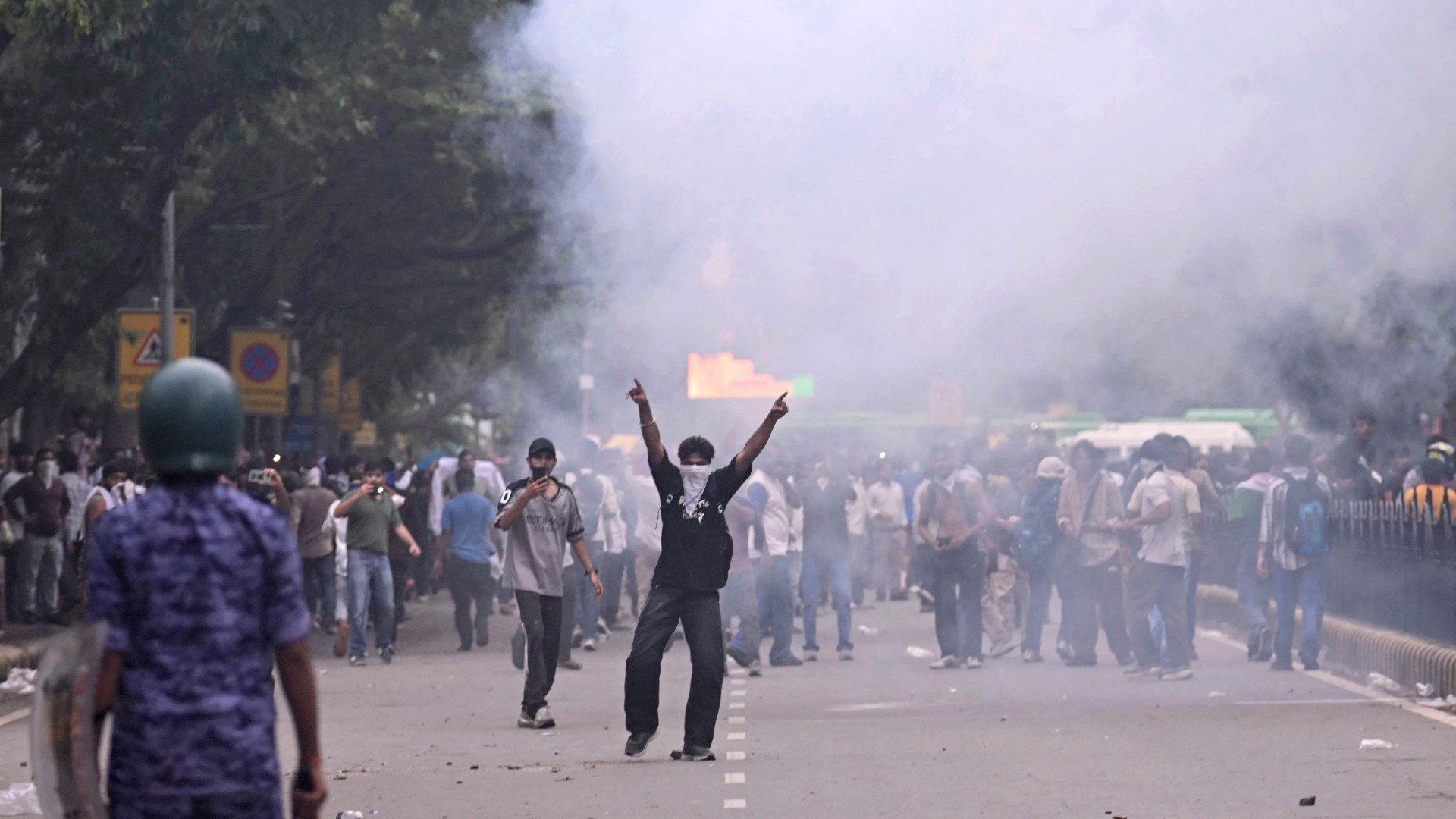
At 03:52 UTC on 20 July 2026, the wires out of Delhi carried three pictures of the same city in the same hour. Riot-control vehicles idled along a central avenue to clear a path and seal it off at the same time, a ceiling fan in a government hospital came loose from its mount and killed a patient, and a Bollywood star used the opening line of a children's prayer to deflect a question about his own fitness.
Read separately, each item is small. Read together, they sketch the surface texture of a capital that is simultaneously performing a constitutional drama, absorbing a routine infrastructure failure, and supplying celebrity distraction, all before noon local time. None of the three is decisive on its own. Together they suggest how a city of around thirty million people absorbs simultaneous pressures, distributing them across courts, hospitals and a parallel entertainment news cycle that swallows serious stories before they can set the agenda.
A march fenced in before it starts
The Indian Express reported that Delhi had been turned into a fortress in anticipation of a march called by the Chief Justice of India (CJP), the country's top judicial officer. Riot-control vehicles, barricades and security personnel were deployed along the route.
The detail that defined the day's coverage was not the march itself but the perimeter around it. A judicial officer choosing to march, in a country where the executive has historically been the principal mover of street politics, is itself an unusual event, and the security response signalled that the authorities were preparing for friction at the gate rather than at the destination. The Indian Express's report did not specify the CJP's stated demands or destination beyond noting that the march was scheduled to proceed, suggesting those details had not been finalised at the time of filing.
A ceiling fan, a patient, a system
In a second item on the same news pull at 03:52 UTC, The Indian Express reported that a patient died several hours after a ceiling fan fell on him at a Delhi hospital. No age, diagnosis, ward type or hospital name was given in the wire copy.
The bare facts carry weight on their own. A fan in an Indian government hospital is not exotic infrastructure. It is ordinary, expected and, in many older wards, decades old. That one of them detached and killed a patient points to a maintenance regime that assumes fixtures are permanent rather than inspected. The Indian Express's framing did not extend beyond the incident report; the institutional response, whether an inquiry has been ordered and from which body, and whether the family will receive compensation, were not on the wire at filing time.
The star who turned a question into a refrain
The third item, also from the 03:52 UTC pull, was lighter in tone and heavier in reach. The Indian Express reported that actor Salman Khan, one of Hindi cinema's most-watched commercial stars, posted a cryptic response to public concern about his health. The post reused a line from a well-known devotional refrain, rendered by The Indian Express as "Aap ki tabiyat kaisi hai?" ("How is your health?").
Khan, who is now in his sixties and has spent more than three decades as one of the most-searched public figures in South Asia, is no stranger to medical bulletins. Speculation about his health has moved markets in his own family-controlled production house, Yash Raj Films-adjacent trade coverage and the wider Indian entertainment economy at points over the past decade. That his reply to the question was a flipped interrogation, rather than a denial or a confirmation, is consistent with a public-figure playbook that keeps the rumour cycle alive by never closing it.
What the three items jointly sketch
Read in order, the threads line up by editorial gravity rather than by topic. A judicial march had to be physically contained before it could be read as a political act. A ceiling-fan failure in a hospital was reported as an isolated incident rather than as evidence of a maintenance regime under strain. A film star's health became a vector for a viral post precisely because it is unanswerable in a single sentence.
What unites them is the speed at which a major Indian news outlet moved them from filed copy to the public feed on the same hour. The Indian Express is read across the legal, administrative and entertainment press corps; a single wire pull pushes three unrelated registers of the capital into adjacent paragraphs, where they compete for the same reader attention in the same minute.
There is, of course, a more cautious read. A security perimeter around a CJP's march could equally be read as a precaution against disorder on a day when courts are open and foot traffic is heavy. A ceiling-fan failure in a single ward could be a one-off, with a particular fan, a particular mounting and a particular patient, rather than a system-wide defect. Khan's cryptic reply could simply be the joke his own audience already enjoys.
What neither the cautious read nor the structural one can address is what the sources themselves leave out. The Indian Express's coverage of the march did not name the CJP, did not list demands and did not specify which avenue the security cordon was drawn along. The hospital report did not name the institution or the patient, which makes it impossible, from this wire alone, to corroborate the incident against any parallel reporting. Khan's post was reproduced in translation without a timestamp, and The Indian Express did not link to the original social media post.
How Monexus framed this: the wire ran three Delhi stories in a single hour; we read them as one picture of a capital absorbing pressure across courts, hospitals and celebrity culture, not as three unrelated items.