CJP march on Parliament ends in lathicharge, 118 personnel hurt and 70 detained as Delhi police push protesters back
A citizenship-list campaign group's march on Parliament met batons and tear gas in central Delhi on 20 July 2026, with police reporting 118 injured personnel and 70 detained protesters.
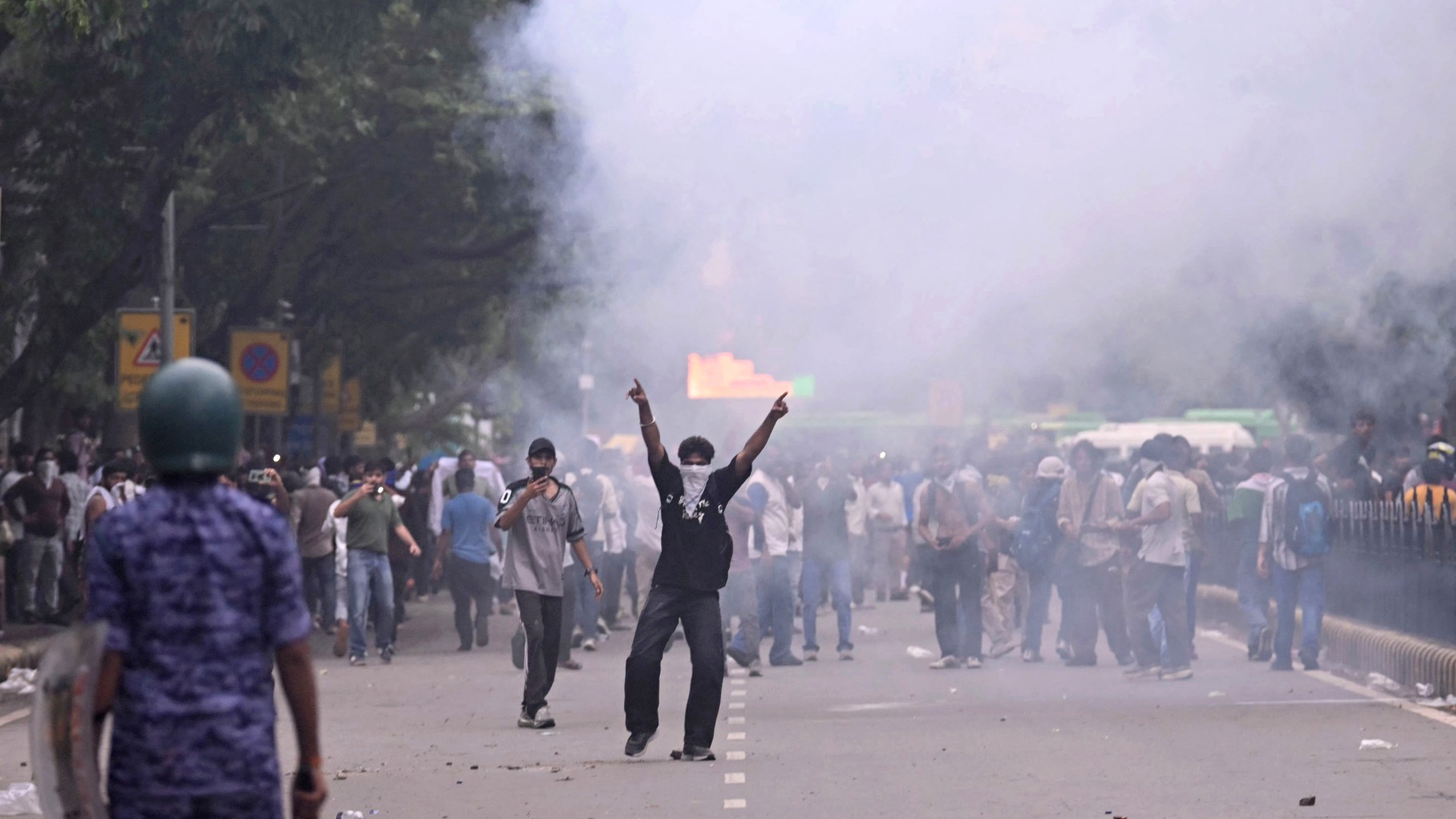
At 21:52 UTC on 20 July 2026, Delhi Police put a number to a day of confrontation in the capital: 118 of its own personnel injured and 70 protesters taken into custody after the Citizens for Justice and Peace (CJP) attempted to march on Parliament through central Delhi. The Indian Express, reporting the police briefing, said officers responded with baton charges and tear gas as demonstrators tried to push past barricades towards the legislature. The march was organised by CJP, a civil-rights group long associated with post-2002 Gujarat riot cases and minority-rights litigation.
What was billed as a citizens' protest over what organisers describe as the marginalisation of India's Muslim minority ended in the kind of street theatre that has become familiar in Lutyens' Delhi, a long procession, a sealed perimeter, and a decisive police push at the barricades. The interesting story is not whether batons fell; it is what the optics of 20 July say about who gets to stand in front of Parliament, and on whose terms.
The march, and where it stopped
The Indian Express's account describes protesters crossing from the designated holding area towards Parliament Street, with police forming human chains and using lathis and tear gas to hold the line. The framing in Indian Express's lead dispatch is telling: the story was filed under Delhi Police's own casualty figures, not under the protest's stated demands. The casualty ledger from one side was treated as the lead; the grievances of the other were treated as context.
That ordering is itself a fact about how the Indian press handles crowd-control stories in the capital. The wire on 20 July reads: police hurt, protesters detained, then, in a follow-up, the human interest of mothers whose sons came home injured, one quoted saying it amounted to an "attack on the country's children." The protest's substantive agenda, by contrast, appeared in the body of the coverage rather than at the top.
The official line, and what the framing hides
Delhi Police's narrative, injured personnel, detentions, a march that had to be stopped, is the one that travels furthest in the evening bulletin. It is also incomplete. A protest that draws a coalition under the CJP banner typically carries a specific list of legislative and judicial grievances; the police briefing, by design, recasts those as public-order problems rather than political claims.
The counter-frame, carried by the demonstrators and by parts of the Muslim-rights ecosystem online, is that the march was a last-resort exercise of civic voice after years of unanswered petitions. That reading does not appear in the police communiqué, and it only appears in Indian Express's parallel human-interest piece through the voice of an affected mother rather than through the organisers directly. The structural pattern is recognisable to any reader who has watched Indian protest coverage in the last decade: state apparatus defines the perimeter of acceptable speech, and the press reports from inside that perimeter.
Numbers, and what they actually establish
Three figures from the police briefing do most of the work in the day's coverage: 118 injured personnel, 70 detained protesters, and a protest described as having "stormed" the heart of Delhi. Each of those numbers is a frame as much as a fact.
"Stormed" implies an offensive breach; "attempted to march on" implies a recognised protest form. The 118 personnel figure establishes police as the aggrieved party and forecloses, for many readers, any sympathy for the demonstrators. The 70 detentions establishes the scale of the state's response without specifying charges. None of the three figures, taken alone, settles who initiated contact at the barricades, which is the question a longer investigation would have to answer from video evidence and eyewitness accounts.
Stakes, and what to watch
For the CJP and its allies, the cost of 20 July is straightforward: 70 of their people are in custody, an unknown number are injured, and the visual record is one of retreat from Parliament Street. For Delhi Police, the immediate cost is medical and political; 118 injured officers is a number that buys sympathy in tomorrow's headlines but raises questions about operational planning for an announced march.
The filing to watch is the chargesheet. If the 70 detainees are charged under standard protest-related sections, the story ends on the back page within a week. If bail becomes contested, or if charges escalate, the march returns to the front page as a test of judicial process. Either way, the precedent set by how Delhi handles a permitted citizens' march on 20 July 2026 will condition the next one.
What remains genuinely uncertain is the sequence at the barricades: whether the police line moved first, whether the front ranks of the march attempted to breach a fixed perimeter, and how injuries were distributed on both sides. The wire reports do not resolve this; the police briefing is, by definition, interested. The fuller picture will emerge from the detainees' first appearance, from the injured officers' medical statements, and from the video that, as always in Delhi, will surface within 48 hours.
This publication reports from the wire ledger as it stood at 22:00 UTC on 20 July 2026. Where Delhi Police and the march organisers gave conflicting accounts, both are recorded; the judgement on which framing holds is left to the reader, pending corroboration from independent eyewitness reporting and the detained protesters' first court appearance.