Burnham in: a Greater Manchester mayor steps into Downing Street as Britain's seventh PM in a decade
Keir Starmer left Downing Street on 20 July 2026 with 'good grace and a smile.' Andy Burnham, the Greater Manchester mayor, will be the seventh prime minister to take office in ten years.
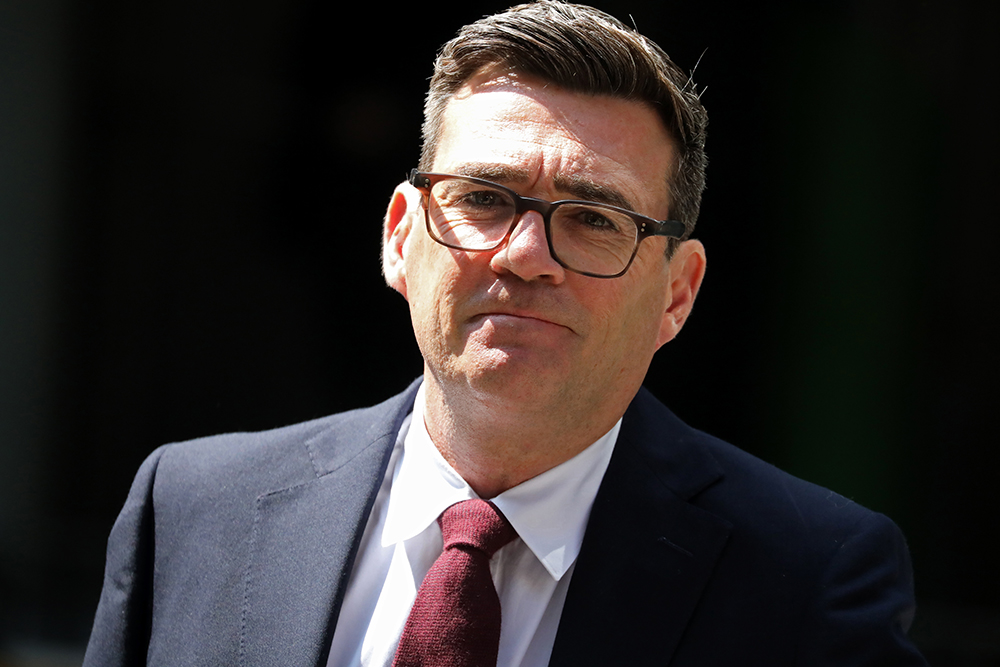
At 10:23 UTC on 20 July 2026, Keir Starmer stepped away from the lectern outside 10 Downing Street and handed the keys of British government to a Greater Manchester mayor whose politics were forged on council estates and in town halls rather than the Westminster village. Starmer told the cameras, in his farewell line, that he left "with good grace, I go with a smile and I go proud of everything that we have achieved," the Disclose TV feed of the doorstep speech showed at 10:31 UTC. He will formally tender his resignation to King Charles, who will then ask Andy Burnham to form a government, according to the Reuters wire at 10:23 UTC the same morning. Deutsche Welle, reporting on the handover earlier at 09:28 UTC, framed the moment bluntly: Burnham will be the seventh prime minister in ten years to take office in Britain.
The handover is not a coup. It is the institutional finish line of a Labour leadership race that Starmer lost, with Burnham having secured the party leadership the week before. But the scale of the turnover the headline implies is real. Seven prime ministers in a decade is the kind of figure that, written in any other G7 capital, would prompt a serious conversation about state capacity. In London it has become a weather pattern: something to dress for and then forget.
The road from Manchester
Burnham's pitch to Labour members was not the technocratic one Starmer sold in 2024. Where Starmer cast himself as the steady, prosecutor's-hand lawyer who could be trusted with the country's books, Burnham made a regionalist case. As mayor of Greater Manchester since 2017, he built a profile around devolved transport funding, integrated health and social care, and an outspoken regional patriotism that occasionally put him at odds with his own party leadership. He earned a second term and a third, and then a national platform. The leap from city-region executive to prime minister is unusually large for British politics, but the precedent exists in older pages of the same book: Stanley Baldwin came from Salford.
Starmer's valedictory note was generous. "I wish Andy Burnham every success," he said, according to the ClashReport wire at 10:19 UTC. "He has my full support." There was no visible rancour on the steps. That matters less than it looks. The smooth transfer is a procedural necessity, not a verdict on the two men's relationship, which had cooled visibly during the leadership contest. Starmer's government leaves behind a fiscal inheritance that the Office for Budget Responsibility will, in due course, set out in numbers, and a foreign policy that has been stretched across Ukraine, the Indo-Pacific and a fast-moving Middle East.
A decade of revolving doors
The "seventh in ten years" framing deserves scrutiny before it curdles into cliché. The count includes Liz Truss's 49-day administration in 2022, Boris Johnson's two terms interrupted by his own resignation, three Conservative leaders who never reached a general election, and now two Labour prime ministers back-to-back. The arithmetic is correct, but it understates the political fact. Britain has had four governments in five years, and each handover has come with a market wobble, a sterling print, or a gilts tantrum. The Truss episode alone shaved a quantifiable sum off the value of sterling-denominated assets; the political class absorbed that shock and moved on.
There is a counter-narrative worth taking seriously: that high turnover is the cost of a political system that, unlike its European neighbours, has no formal coalition discipline and no proportional safety valve. Prime ministers fall when their caucus turns; the parties do not have to share power with anyone. The price of majority government is the brittleness of majority government. The current trajectory may therefore be less a sign of decadence than of a constitutional design that produces sharp pivots rather than the slow drifts of continental politics. That is a defence of the system, not of any individual occupant of it.
The structural question
What is harder to defend is the cumulative effect on Whitehall's capacity to plan. Civil service reform, infrastructure pipelines, defence procurement, the energy transition: each requires a horizon longer than a parliamentary term, and each has been re-cut by successive chancellors and prime ministers to fit the political needs of the moment. The Civil Service has reportedly lost senior policy talent at rates that, taken across a decade, begin to look like a slow bleed. Whether Burnham, as a mayor who actually delivered housing and tram extensions, can arrest that is the open question of his premiership.
His regionalist credentials may serve him well here. Devolution has been the quietly successful constitutional story of the last twenty years in the United Kingdom, and a prime minister who has spent nine years running one of its flagship authorities is unusually well-placed to push the next phase. Expect early movement on English devolution, mayoral combined authorities, and a fiscal framework that gives metro mayors something closer to the tax-varying powers of the devolved nations. The Treasury will resist. The prime minister who has just watched a mayor of Greater Manchester take his job may not feel especially inclined to defer.
What to watch
Three dates will set the early shape of the government. First, the formation of the cabinet, expected within 24 to 48 hours of Burnham's kiss on the hands at Buckingham Palace, and the signal it sends about his factional balance. Second, the next fiscal event, where the new chancellor will have to lay out whether the inheritance from Starmer's team is honoured, softened, or re-cast. Third, the next local and mayoral elections, which will be the first real reading on whether the Labour base has simply traded one figurehead for another, or has in fact reoriented around a regionalist politics that may not survive intact inside the Westminster machinery.
The sources do not specify the contents of Starmer's private conversations with the King, nor the timetable for Burnham's appointment beyond the same-day ceremony. What is on the record is the order of events: Starmer's farewell remarks at 10:31 UTC, the Reuters confirmation of the resignation-then-commission sequence at 10:23 UTC, Starmer's public endorsement at 10:19 UTC, and the Deutsche Welle framing of the larger turnover at 09:28 UTC. The arithmetic of seven prime ministers in ten years is the Deutsche Welle figure; it is worth holding onto because it is the line that will travel.
Desk note: the wire led on the personality and the procedural fact; Monexus framed this as a structural story about turnover, devolution, and state capacity, not as a coronation or an obituary.
Wire provenance
This editorial synthesis draws on the following public wire/social posts:
- https://t.me/disclosetv
- https://t.me/ClashReport