Tuchel's England reach for third place as the manager's possession question refuses to go quiet
A third-place playoff against France gives Thomas Tuchel a stage and a problem at once: the manager who insists ball possession is not England's DNA must now deliver a result on the back of a tournament that has exposed exactly that tension.
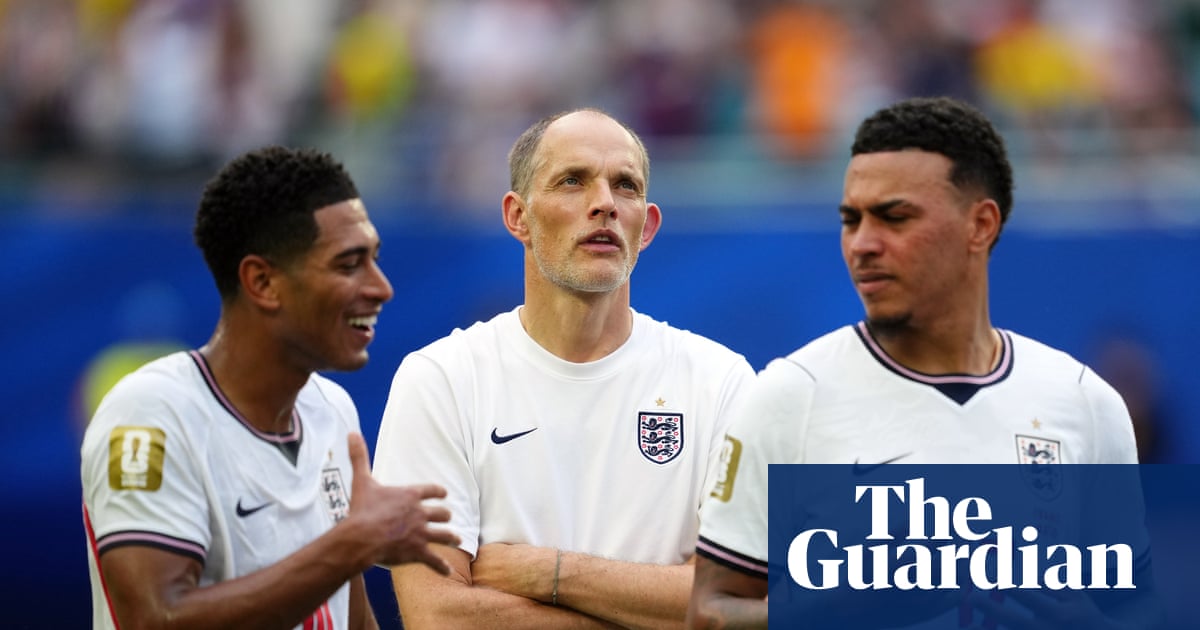
On 18 July 2026, the Guardian's live blog confirmed the only fixture left for England at this tournament: a third-place playoff against France at the MetLife Stadium in East Rutherford, New Jersey. The post kicks off at 22:00 BST (17:00 EDT, 07:00 AEST on 19 July), a stage the squad reportedly greeted with bafflement rather than anticipation. The puzzlement is the story. England's players have spent a month running into a coaching idea that contradicts the grain of their own training, and a defeat in the semi-final has done nothing to soften the contradiction.
Tuchel has now framed the question in public and will find it very hard to walk it back. In a column published the same morning, the Guardian's Jonathan Liew argued that the head coach's declaration that ball possession is not in the team's DNA is an opinion that should disqualify him from the job. That is a strong claim from a senior football writer at a paper of record. It is also the claim the next 48 hours will either prove or soften, depending on whether England look anything like a side comfortable on the ball against a France team that, in patches through this tournament, has been the most controlled in the competition.
A manager's fingerprint, half-applied
Tuchel's argument, in the version players describe, runs roughly like this. He inherited a squad built over a decade to sprint, press and counter. Asking those players to suddenly hold 60 percent of possession against elite opposition is not philosophy, it is malpractice. The structural fix he is reported to want is a longer rebuild: bring in technicians, phase out the press-first attackers, accept short-term pain for a style that can win a tournament rather than just reach one. The squad, by Liew's account, is not buying it. Several senior players are described as "puzzled" by instructions that ask them to play into spaces the system then leaves empty.
This is the perennial England problem wearing a new coat. A foreign coach arrives with a coherent worldview, finds a playing pool shaped by a decade of academy priorities and Premier League incentives, and asks it to change in a summer. It rarely works. What is different this time is the candour. Tuchel has effectively told the public, before a ball has been kicked in the playoff, that his current squad is not built for what he wants to build. That is either an act of brutal honesty or an act of self-exculpation in advance. The French fixture will not settle which.
France as the wrong opponent at the right time
The draw has handed England the worst possible opponent for a match of this kind. France, even with the rotation a third-place playoff invites, will sit on the ball. Didier Deschamps's side in this tournament has been patient in possession and lethal in transition, a profile that turns England's counter-attacking instincts into a coin-flip rather than a weapon. For Tuchel, the game offers a single clean test: can his XI show enough control of the ball, for long enough, to make his public thesis look less like resignation and more like diagnosis?
Liew's column implies the answer is already no. The argument there is that a manager who believes possession is foreign to his players' nature is a manager who has decided, at some level, that the job is unwinnable on his own terms. England, on that read, are not a project; they are a workplace Tuchel has applied to manage without accepting the brief.
The structural frame, without the lecture
Strip out the personalities and what remains is a recurring pattern in elite international football: the gap between the calendar a coach is given and the calendar they actually need. National-team managers have six to ten camps a year. Possession-based systems, the ones Tuchel used to win the Champions League with Chelsea, are built in training grounds across months, not days. A coach who tries to graft that onto a squad in pre-tournament camps is buying trouble. A coach who decides not to graft it on, then says so publicly, is buying something worse.
There is also the English football economy underneath the argument. The Premier League rewards counter-pressing, set-piece intensity and transitional speed. It pays coaches and academies to produce those traits. A national-team coach pointing at possession as the missing ingredient is, in effect, asking an industry that has just finished another £8bn broadcast cycle to retool for a different sport. The industry will not. The FA's leverage is real but bounded; the club system has the players for most of their waking hours.
Stakes, and the silence that is not silence
If England lose to France on Saturday evening, the post-mortem will land on Tuchel whether or not the dismissal is deserved. A third-place finish at a World Cup is, in raw terms, England's best result since 2018. It will not be received that way. The FA has invested political capital in Tuchel's appointment, and the broadcast ecosystem that funds the national game treats tournament outcomes as the only metric that matters. A semifinal exit followed by a third-place loss becomes a story about a manager who arrived with answers and left with a shrug.
If England win, the question does not go away. It just gets deferred to the autumn, when the Nations League begins and Tuchel either starts to add the technicians he says he needs or settles into a more cautious England that wins friendlies and loses knockout games. Liew's column is a marker, not a verdict. The match in New Jersey is a chance to shift the marker, but not to remove it.
What the sources do not settle
The live blog from 18 July 2026 confirms the fixture, the kick-off time and the basic mood in the England camp. It does not name which players are most "puzzled", nor does it specify which tactical instruction is generating the friction. Liew's column asserts the disqualifying nature of Tuchel's possession comment but does not cite a specific dressing-room source. Readers should treat the friction as well-attested in tone and under-attested in detail. The shape of the story is clear; the precise sequence of conversations that produced it is not on the public record, and it would be foolish to pretend otherwise.
What is on the record is enough. A senior coach has told the public that his team cannot do the thing most elite teams are now expected to do. A senior columnist has replied that this should cost him the job. On Saturday evening in New Jersey, the players will provide whatever evidence the next round of the argument needs.
Desk note: Monexus framed this as a coaching-versus-squad-fit story rather than a moral or cultural one, on the view that the relevant facts are tactical, calendar-driven and structural to the Premier League pipeline, not about national character.