Restored to the Source: 'Manhunter' and the Director's Cut Delusion
Variety's new restoration essay on Michael Mann's 1986 serial-killer film reopens a tired argument and lands on an uncomfortable conclusion: extended cuts almost never improve a film, and the marketplace has spent three decades pretending otherwise.
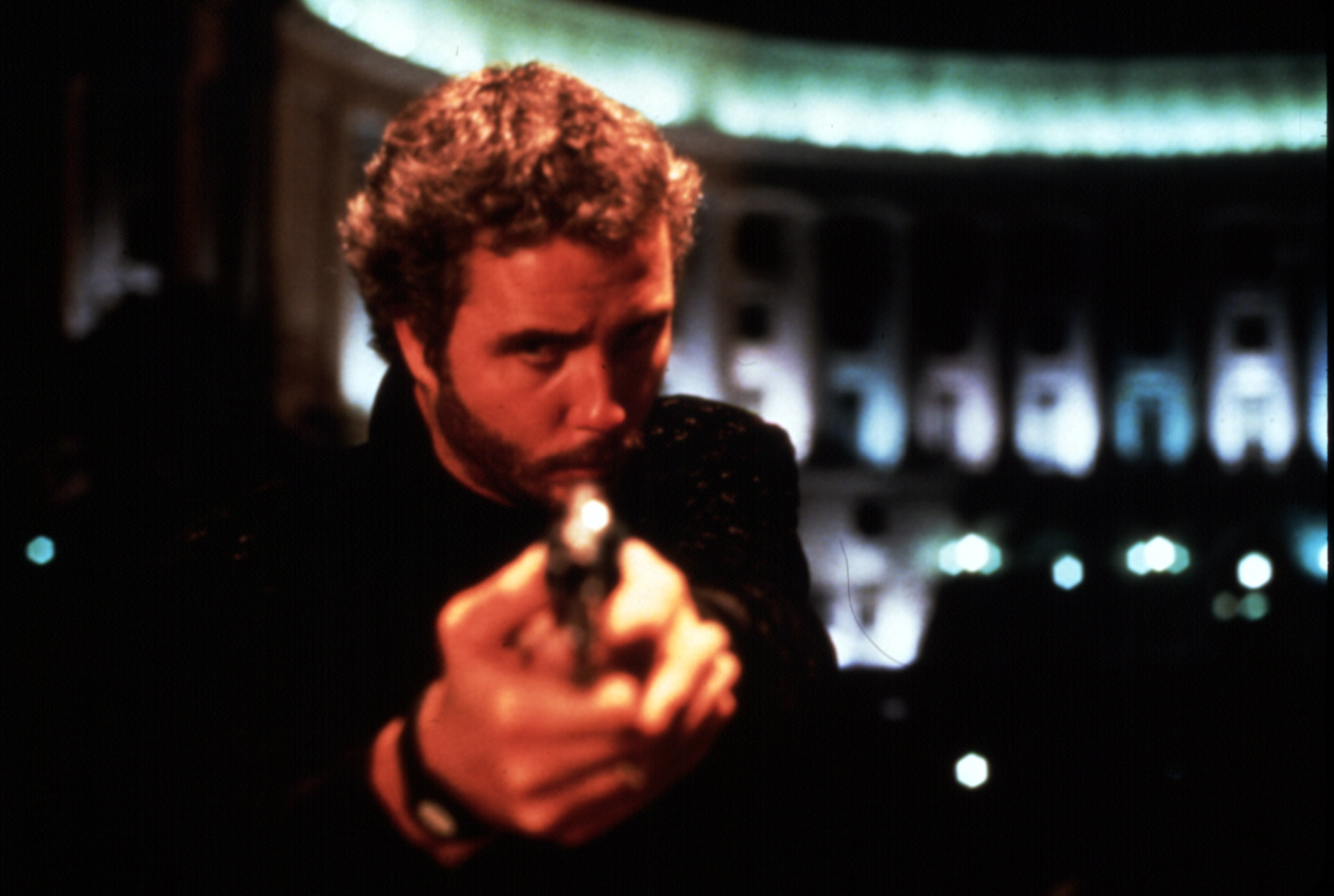
The reissue arrives 18 July 2026 as a near-clinical case study. Variety's Owen Gleiberman uses the new 4K restoration of Michael Mann's 1986 serial-killer film Manhunter to argue, with the kind of patience the subject rarely receives, that director's cuts are almost never an improvement on the films they claim to redeem. The version Mann has been quietly polishing since the late 2010s, now marketed as Manhunter: The Final Cut, is the test case. It is also the proof.
The thesis lands where most cinephile arguments about extended editions only gesture. Since the home-video era normalised the "definitive" re-release as a marketing event, the auteur cut has functioned less as artistic recovery than as brand extension. Restorations can rescue a film's texture; recuts routinely flatten it. The same studio apparatus that green-lit a sharper negative in 1986 is now packaging a director's second guess as a premium product, with new cover art, new liner copy, and the quiet implication that audiences never quite got the original right.
The case against the longer cut
Gleiberman's evidence is internal and unfussy. The 1986 theatrical cut of Manhunter runs a lean 119 minutes and builds its dread the way Mann builds everything: through patient architecture, elliptical dialogue, and a hero who solves the case by learning to inhabit the killer's interior. The longer restoration, per the review, restores roughly an additional eight minutes of footage, much of it material Mann himself trimmed for rhythm and tonal balance. Watching the new cut, Gleiberman finds the additions feel like padding restored by reflex rather than by re-edited intent. The film breathes where it used to cut. The pacing that made the original feel like a procedural with the volume turned down now reads, in stretches, as merely slow.
The argument generalises beyond Mann. Across the catalogue of "final" cuts (Coppola's Apocalypse Now Redux, the various Lucas revisions, the Donnie Darke and Blade Runner debates that recur every Blu-ray cycle), the pattern holds. Restored footage almost always works against the film it returns to. Shot coverage that the director cut for a reason tends to be cut for a reason. The new scenes feel orphaned because they were orphaned on purpose, and reassembling them doesn't reverse the decision; it only exposes the seams.
The auteur cut as a product line
The deeper story is commercial. Manhunter: The Final Cut is not a one-off. It sits inside a thirty-year apparatus in which home-video labels (Criterion, Arrow, Shout, Vinegar Syndrome, and the studio-affiliated boutique labels) have built profitable catalogue lines around the idea that the original cut was incomplete. The pitch is seductive: a film you already own, returned to you as the version the director always wanted you to see. The reality, per Gleiberman's reading of Mann's own film, is that the director often wanted the other version, the one the studio released, and the new cut is what happens when nostalgia and second thoughts blur together on a digital timeline.
The marketing logic is the giveaway. New cover art, new title cards, a fresh "Final Cut" suffix designed to make previous purchases feel provisional. The retail frame tells the audience what the analysis is supposed to find: that the theatrical cut was a compromised artefact, and that buying the new one is a small act of auteur fidelity. The product does not need to be better; it needs to feel necessary.
Why the film still works
Gleiberman is unambiguous on the underlying point. Whatever the reissue's editorial argument, Manhunter is, on its 1986 terms, the greatest thriller of its era, and the restoration does not change that. The film's claim on the canon rests on three structural choices Mann made the first time around: casting a leading man (William Petersen) who plays obsession as exhaustion; building the serial-killer scenes as a hallucinatory interior monologue rather than a stalking sequence; and refusing, almost religiously, to score the violence for cheap catharsis. None of those choices require additional footage. They are encoded in the cut that already exists.
This is where the essay becomes a quiet polemic. The great films of the late twentieth century are not great because their directors had unlimited time and access to every take. They are great because someone, on a particular day, made a particular set of cuts. Reopening the negative doesn't restore that day. It postpones it.
What the marketplace keeps refusing to learn
The pattern is by now well-documented, even if the marketing never acknowledges it. Director's cuts rarely outperform their theatrical versions with critics, rarely change the consensus rankings, and rarely displace the cut a generation grew up with. They sell, because collectors buy, and because the rhetoric of restoration carries genuine prestige. But the prestige is borrowed from the original; the new cut is, almost always, a slightly worse version of the film it claims to honour.
Manhunter: The Final Cut is the cleanest recent illustration of that asymmetry. Mann's 1986 cut survives intact, and the eight additional minutes do not improve the case for it. If anything, they confirm the discipline of the original edit. The reissue is worth buying for the restored image. It is not worth buying for the restored running time.
That distinction is, increasingly, the only one worth making in the catalogue aisle.
This piece focuses on Variety's restoration essay as a lens on a recurring industry pattern; Monexus frames the auteur cut as a product category rather than as an artistic statement, in contrast to the cinephile-press tendency to treat each new release as a one-off event.